

Dubai culture isn’t an oxymoron – it’s why people are staying
My daughter was born in Dubai this year. That fact alone has changed how I think about this city more than anything else in my five years here. What started as a base of operations has become a place where I am putting down roots and raising a family. It's become home.
My wife and I met at Cambridge University in the UK. I grew up in the US and worked in China for over a decade. We both had careers that could have taken us anywhere in the world. When we decided to build Evertruss, our strategy advisory business, Dubai stood out not just as a global business centre but as a city investing in something deeper: a real quality of life that some cities are sadly losing.
My perspective deepened through advising organisations across the UAE's cultural and education sectors. I expected conversations to focus on investments and economic growth. Instead, they centred on how to build a creative ecosystem that would last, by nurturing local talent and creating communities where people felt they belonged.
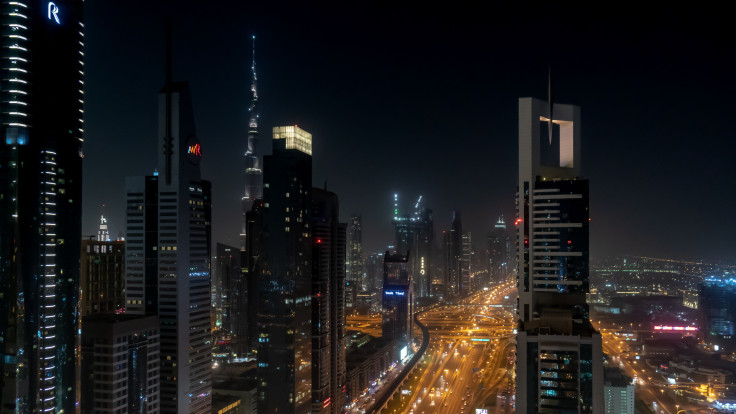
For many people outside the UAE, it is easy to look at the skyline and the tax advantages and conclude that Dubai is just a city-sized shopping mall. But for those of us who live here, Dubai is a place where communities form and where more people are building a life rather than just passing through.
Bizarrely, this hit me hardest when conflict broke out in the region. While some residents temporarily left, we chose to stay. What struck me during that period was how many conversations - both with those who remained and those who left -were about getting back to the lives, communities, and routines we had built in Dubai. With a newborn daughter and a growing business, Dubai was where we wanted to remain and many of our friends shared the same instinct.
Over time, I have seen Dubai's evolution from a city that attracts talent to one increasingly focused on keeping it. The question has shifted from how Dubai brings people here, to how it gives them reasons to stay. Culture is one of the clearest signs of that transformation.
A city becomes a home when people see themselves reflected in it; when they can experience creativity, ideas, and traditions that are rooted in place. The growth of local events like Sikka Art and Design Festival, Art Dubai, and the Emirates Airline Festival of Literature shows that cultural life is becoming a defining part of Dubai's identity. Sikka's open-call model gives up-and-coming regional artists, designers, and musicians a platform to share their work. Art Dubai connects local and global creative communities. The Emirates Airline Festival of Literature brings together internationally acclaimed authors and homegrown voices, creating space for Arabic and global literary traditions to sit side by side.
Behind these events is a broader investment in the infrastructure that allows culture to take root: creative districts, galleries, and major cultural institutions that give artists and audiences space to flourish. According to the Financial Times, in 2024 Dubai ranked first globally for foreign investment in cultural and creative industries.
Design is increasingly becoming part of Dubai's economic infrastructure, shaping how people experience the city and how businesses compete. Cities that build lasting cultural identities are the ones that develop talent rather than simply import it, creating opportunities for local artists, designers, and entrepreneurs to build careers and eventually share their work with the rest of the world.
Becoming a parent has made me think about that future differently. I still pay attention to the business environment but I also notice the schools, cultural infrastructure, and neighbourhoods that my daughter will enjoy as she grows up. Success is no longer measured only by whether entrepreneurs can thrive in Dubai but by whether families can too.
That connection between culture and education now feels obvious to me. A creative economy needs people who are inspired and given opportunities from an early age. Schools are where that starts.
Today, Dubai's education ecosystem is one of the world's most diverse, encompassing 227 schools and more than 387,000 students representing 185 nationalities. Higher education is expanding just as quickly, with enrolment at Dubai's private universities rising 20% last year to a record 42,026 students.
Perhaps most tellingly, more young people are choosing to continue their studies after secondary school in the UAE. Since 2022, the number of pupils graduating from GEMS (Dubai's largest private school group) who enrol in UAE universities has nearly doubled. For me, somewhere in this city's cultural institutions, schools, and creative communities, is my daughter's Dubai. I suspect many parents feel the same way.
Cities rarely become home overnight. They do so gradually, through the confidence people have in building businesses, joining communities, supporting local artists, enrolling their children in school and imagining a future in the same place.
Over the past five years, I've watched Dubai make that transition. For me, it is no longer simply where I work. It is home.
Joe Drury is co-founder and managing partner of Evertruss, a boutique strategic advisory firm for the culture, education, and creative sectors.
© Copyright IBTimes 2026. All rights reserved.