Economic Uncertainty Persists As Stocks Whipsaw And The Iran War Flares Up Again. Consumer Sentiment Improved Still
However, the figure is still more than 10% below the one hit in July of 2025.


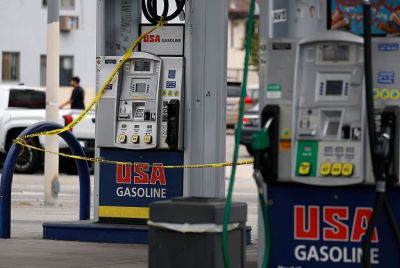
Consumer sentiment improved for the second month in a row in July even though gas prices climbed again as the war between the U.S. and Iran flares up.
Concretely, the index from the University of Michigan showed a 12% increase from June, clocking in at 55.2, above the preliminary reading of 54.4.
Joanne Hsu, director of the University of Michigan's survey of consumers, noted in a statement that despite the gains, "sentiment is 11% below a year ago, reflecting a generally somber view of the economy amid five years of elevated inflation and persistent high prices."
"Consumers remain focused on pocketbook issues like purchasing power, while political or military developments remain more in the background," she added.
The latest economic data showed that the U.S. economy grew 1.5% in the second quarter, less than expected.
The figure stood below the estimates of analysts surveyed by Reuters, who previewed the figure would stand at 2.1%. Figures given ranged between 0.8% and 2.9%.
The outlet noted that the survey was conducted before the release of June's advance economic indicator, which showed a slight contraction in the goods trade deficit. Some economists cut their estimates based on the figure.
Consumer spending, however, remained resilient. The indicator represents over two-thirds of the U.S. economic activity and bounced back in the second quarter, clocking in at 3.2% after slowing to 0.5% in the first quarter. As well as tax refunds, higher-income households boosted the figure.
The Federal Reserve left interest rates unchanged unchanged on Wednesday, with officials noting in their statement that "economic activity is expanding at a solid pace despite elevated uncertainty that owes, in part, to the conflict in the Middle East." They added that job growth has "kept pace with the workforce and the unemployment rate has changed little." However, the decision was not unanimous, with three officials dissenting and favoring an interest rate hike.
Another report detailed that the personal consumption expenditures price index, the Fed's primary forecasting tool, fell a seasonally-adjusted 0.1% in June, in line with forecasts. The core PCE, which excludes more volatile components like food and energy, gained 0.1%, less than expected, and clocked in at 3.3%.
© Copyright IBTimes 2026. All rights reserved.
- Recommended For You