

Investors Are Feeling Calm At The Moment. UBS’ CEO Says They Should Be Worried.
Sergio Ermotti said markets are showing too little volatility even though wars, trade tensions and persistent inflation add to global risks.

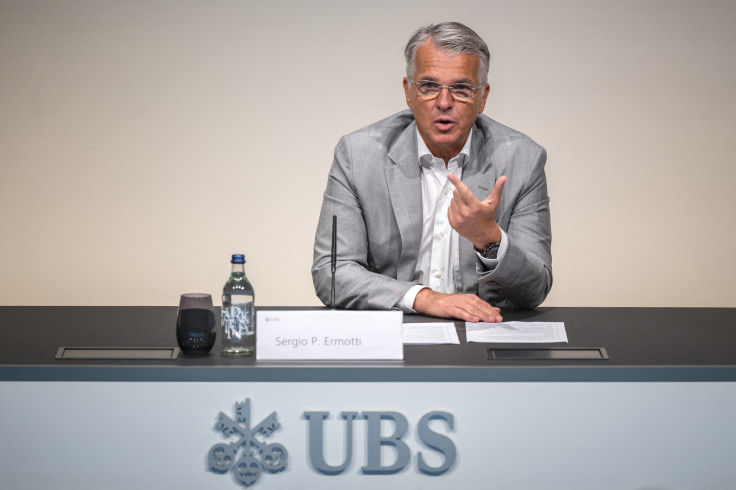
UBS CEO Sergio Ermotti warned that financial markets have grown complacent even as investors contend with wars, trade tensions, higher borrowing costs and persistent inflation, saying recent market stability does not reflect the number of risks facing the global economy.
"There has been a level of complacency in financial markets in the last few years," Ermotti told CNBC on Thursday. Given the economic and geopolitical environment, he said he would have expected considerably higher market volatility.
Investment in artificial intelligence, data centers and other new technologies has helped support economic activity and financial markets despite periods of turbulence, Ermotti said. At the same time, investors are confronting new risks before existing ones have been resolved.
"New problems or new issues are emerging without any of the old ones being addressed or being closed," he said.
Those risks include the wars involving Iran and Ukraine, which have disrupted energy markets and shipping, as well as continued tensions between the United States and China that have put pressure on global supply chains. Inflation and higher borrowing costs have added another challenge for households, companies and investors.
The uncertainty has prompted some of UBS's wealthy clients to diversify their portfolios rather than make large bets on individual markets or asset classes. Ermotti said clients have been spreading investments across sectors and regions in recent quarters while maintaining exposure to AI and technology.
"It's quite difficult in this environment and not really advisable to have too many strong convictions," he said.
The diversification has not produced a major change in clients' overall asset allocation over the past year, according to Ermotti, nor has UBS seen evidence of a broad move away from U.S. assets or the dollar.
Some client money shifted into global emerging markets about a year ago, but Ermotti said those flows largely reflected investors deploying excess cash rather than selling existing U.S. investments or reducing dollar exposure.
"It was more how excess cash was deployed rather than people back trading from the U.S. or from the dollar, so I think that narrative has abated," he said, describing the dollar as continuing to serve as "a reference currency."
Interest rates are another factor influencing portfolio decisions as central banks continue to deal with inflation pressures. Ermotti expects borrowing costs to remain elevated and said he anticipates additional rate increases from major central banks in the coming months.
The Federal Reserve kept its benchmark interest rate in a target range of 3.5% to 3.75% at its July meeting, saying inflation remained elevated relative to its 2% goal. Three policymakers voted for a quarter-point increase, while the Fed's next policy meeting is scheduled for Sept. 15-16.
The European Central Bank raised its three key interest rates by 25 basis points in June as higher energy prices stemming from the Middle East conflict increased inflation pressure. It held rates steady in July, leaving its deposit facility rate at 2.25%, and said uncertainty remained high as it assessed the broader inflation impact of the energy shock.
Ermotti said he expects both the Fed and ECB to raise rates, with the Bank of Japan also moving toward tighter policy as inflation remains a concern for central banks.
"The ECB may start hike process. The Fed will follow. We do expect a couple of hikes in the next few months," he said.
Those expectations come as the Fed continues to describe U.S. inflation as elevated relative to its target. At its July meeting, policymakers said economic activity was expanding at a solid pace despite uncertainty stemming partly from the Middle East conflict, while supply shocks had pushed up prices in sectors including energy.
The ECB has similarly focused on energy-driven inflation pressures. Its June staff projections put euro-area headline inflation at an average 3% in 2026, up from earlier projections because of higher energy prices, before easing to 2.3% in 2027 and 2% in 2028.
Ermotti said those inflation pressures make a return to the lower borrowing costs of previous years less likely in the near term.
"Inflationary pressure is still there, and it's not abating, and therefore, I think it's reasonable to expect higher rates for the foreseeable future," he said.
© Copyright IBTimes 2026. All rights reserved.