

Latercase Pixel 10 Pro Hands-On Review: Protection Without The Bulk
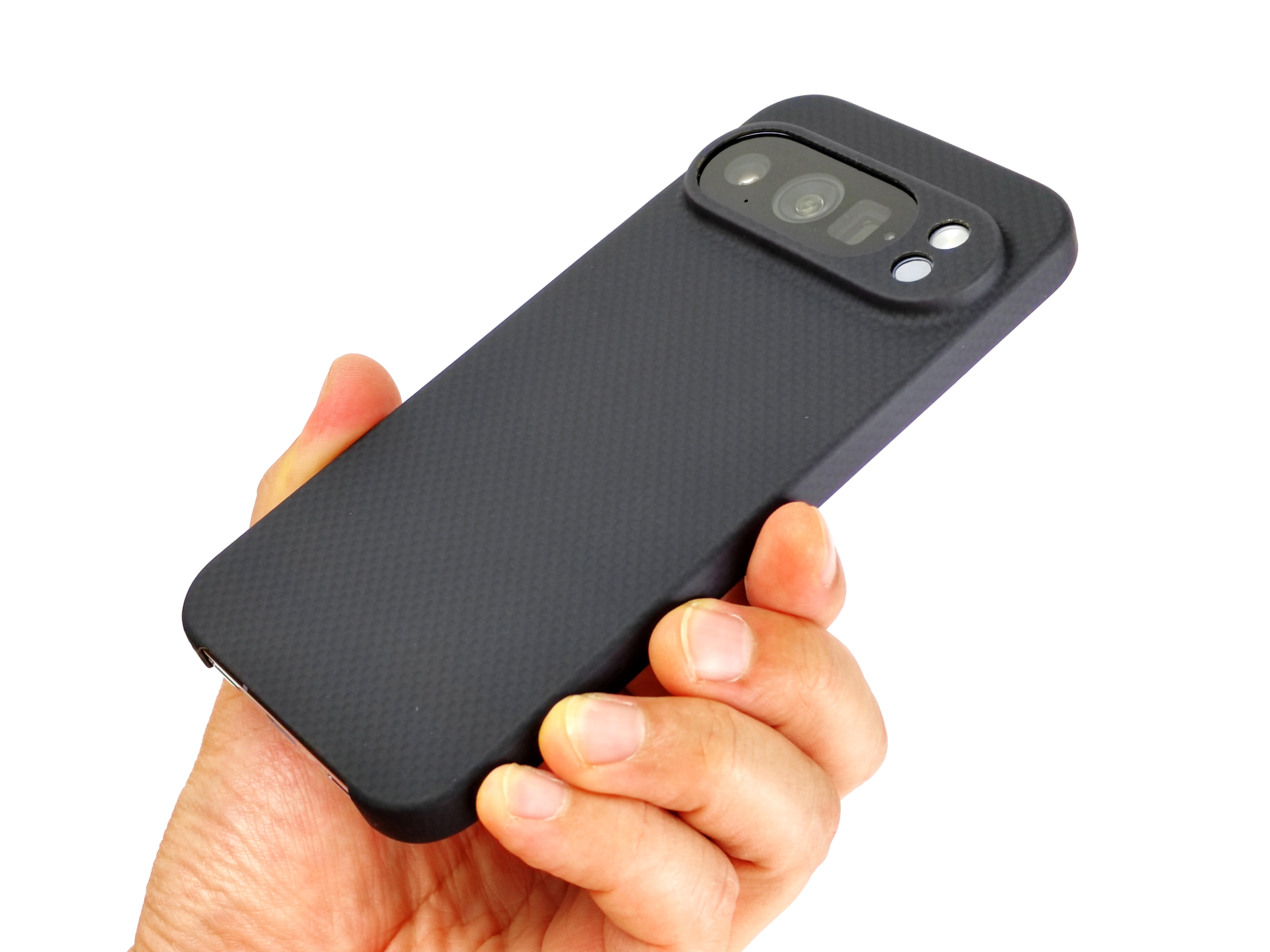
Protecting the increasingly precious device in our hands is more relevant than ever before. While smartphones have become enormously more powerful over the years, their fragility has not really improved at the same pace, and arguably may have become worse as we moved from relatively sturdy unibody designs to phones with fragile glass covering both sides.
This leaves us with the familiar choice between carrying the phone naked and risking hundreds of dollars in repairs after one unlucky drop, or wrapping it in a thick armored case that can substantially change the size, weight and feel of the device. Ultra-thin aramid-fiber cases attempt to sit somewhere between those two extremes, providing a physical shell without making the phone feel like it has been placed inside another much larger object.
Latercase, founded by Lewis Hilsenteger of Unbox Therapy, has become one of the more recognizable names in this category, but it certainly did not invent the aramid case, nor does it need to have done so. Similar cases are readily available from Amazon, AliExpress and numerous other manufacturers, which makes the more relevant question whether Latercase actually does anything better than those cheaper alternatives.
After spending time using the Midnight Latercase with the Google Pixel 10 Pro, I think there are several small but meaningful differences, particularly in the fit, camera protection and surface texture, although its obsession with remaining thin also creates one important compromise for Pixelsnap users.
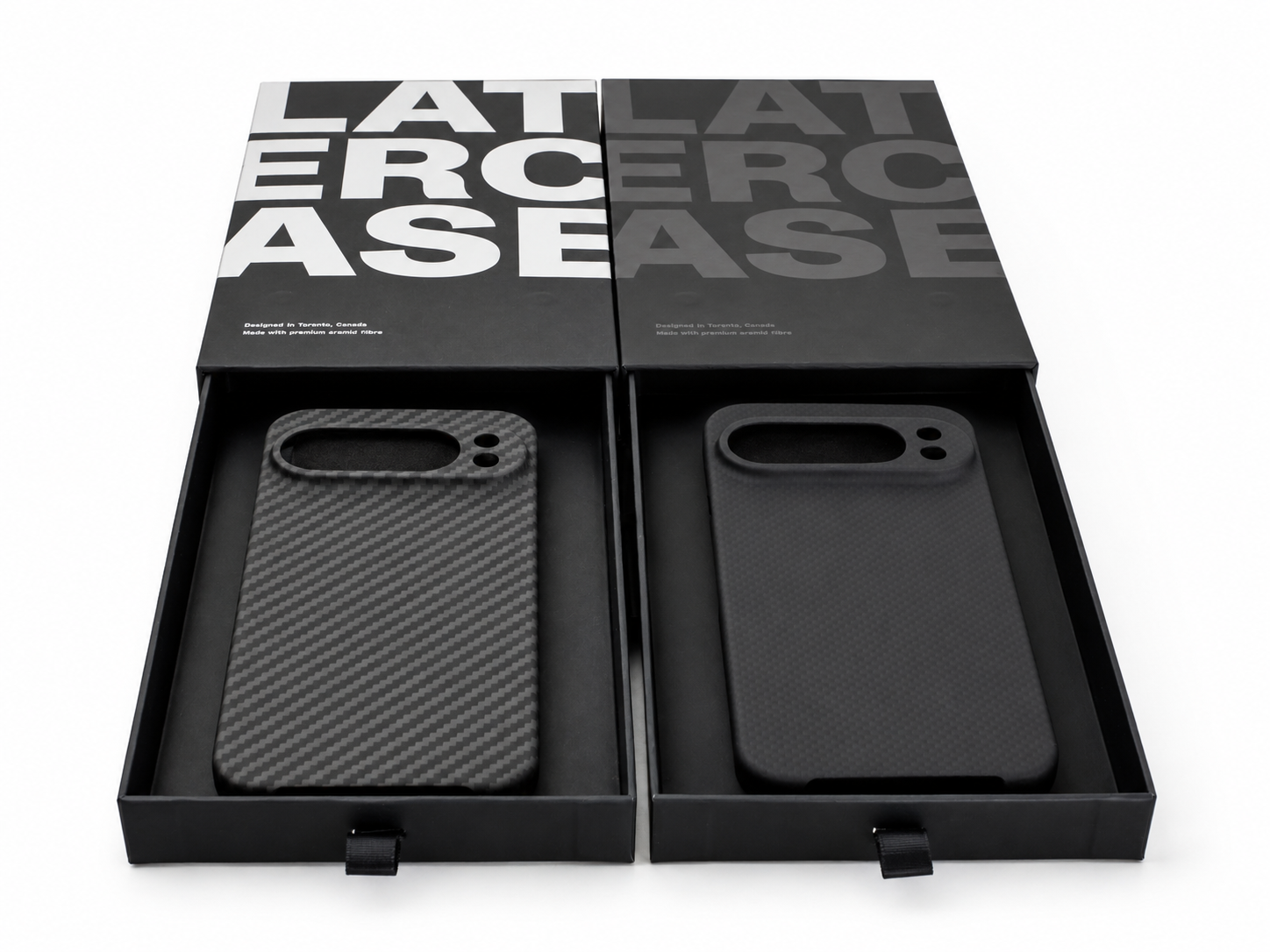
Pros
• Extremely light at only 12.7 grams in my testing
• Adds almost no noticeable thickness
• Very tight and precise fit
• Textured aramid finish provides noticeably better grip
• Excellent camera-bar coverage
• Large cutouts preserve the Pixel's original button tactility
• Particularly good for front-pocket carrying
• Keeps the Pixel feeling very close to a naked phone
Cons
• Limited impact protection compared with rugged cases
• Large cutouts leave sections of the frame exposed
• Magnetic attachment is considerably weaker through the case
• Not ideal for magnetic car mounts, stands or grips
• Cheaper aramid-fiber alternatives are widely available
Lighter Than Three Sheets Of Paper
The first thing that impressed me about the Latercase was simply how little weight it adds to the Pixel 10 Pro. My Midnight version measured only 12.7 grams on my small scale, and to put that into some perspective, a normal sheet of letter-sized photocopy paper weighs roughly 5 grams.
In other words, the entire case weighs less than three sheets of paper, and at around 0.6mm thick, the increase in dimensions is similarly difficult to notice. Once the Pixel 10 Pro is clipped inside, I never get the sensation that I am holding a phone inside a second object, which is something even relatively slim conventional cases can struggle to achieve.
This is particularly relevant for those of us who keep a phone in a front pocket throughout the day. A few additional millimeters around an already sizable flagship can become surprisingly noticeable when walking around, sitting down or traveling, whereas the Latercase preserves most of the Pixel's original pocketability.
For a business traveler who may be taking the phone in and out of a pocket dozens of times between airports, cars, hotels and meetings, this lack of bulk becomes one of the product's biggest strengths.
Surprisingly Precise Fit
Considering how little material there is, I initially expected the Latercase to feel somewhat loose or flimsy, but the fit turned out to be one of the areas where it feels particularly well executed. The Pixel 10 Pro clips in very tightly, with the small bends around the edges gripping the phone firmly enough that I never felt it would simply separate from the case during an impact.
This is important because Latercase does not have a thick rubber rail around the phone to hold everything together. The precision of the aramid shell itself is doing most of the work, and there is very little room for error when the entire case is only around 0.6mm thick.
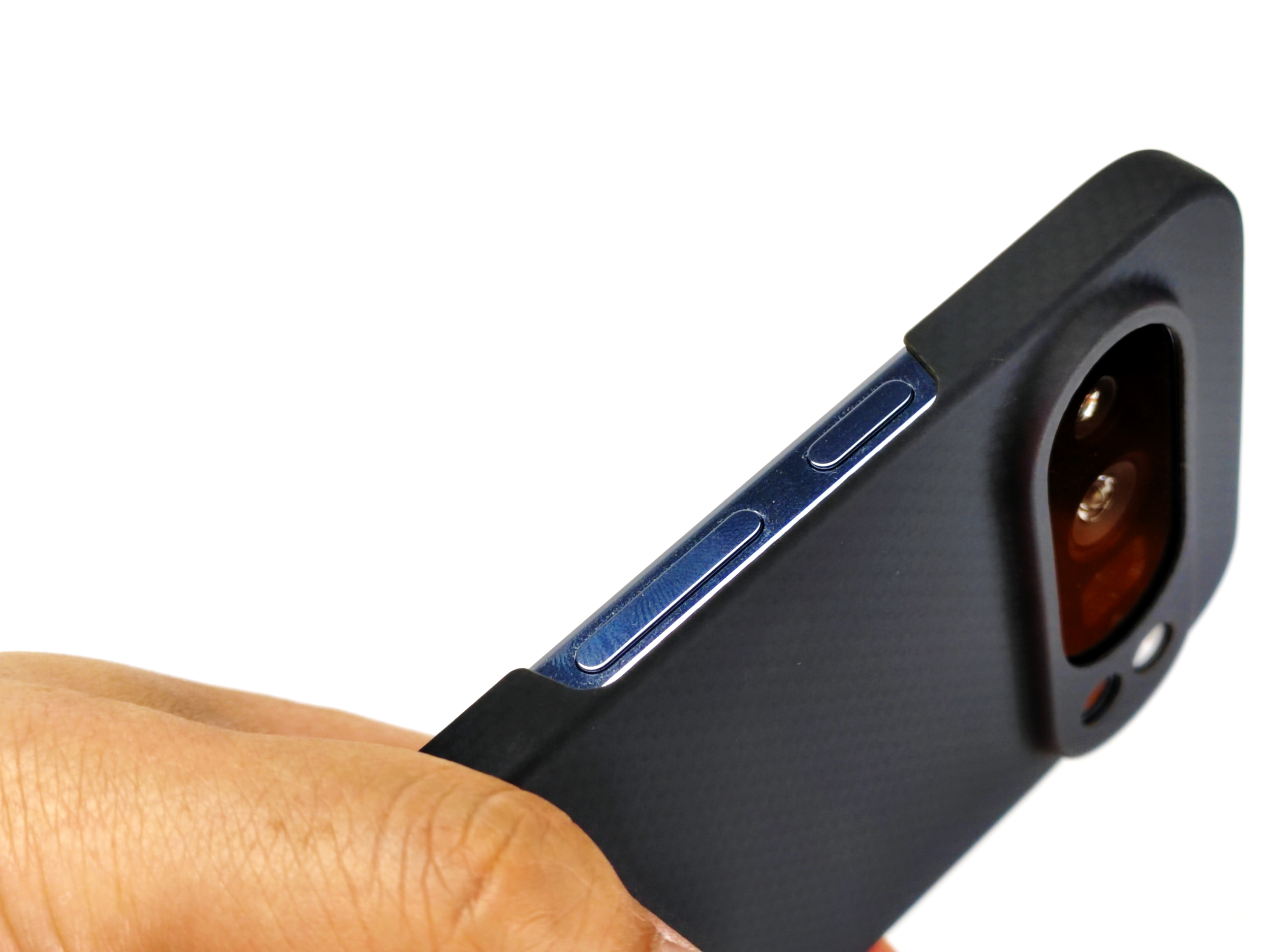
There is also a small lip around the front display that rises just slightly above the naked glass. If the phone lands face-down on a completely flat surface, that gives the display at least some separation from the ground, although with my glass screen protector installed, the protector and the lip are basically flush.
I would therefore not confuse this with the substantial raised bezel on an armored case, but there is enough of an edge to provide some additional protection without noticeably changing the way swiping from the side of the display feels.
The Cutouts Keep The Pixel Feeling Like A Pixel
Latercase made some interesting choices with the cutouts around the Pixel 10 Pro, particularly because it does not attempt to completely surround every part of the frame. The bottom has a generous opening around the USB-C port and speakers, while the top similarly has a substantial cutaway around the microphone and antenna area.
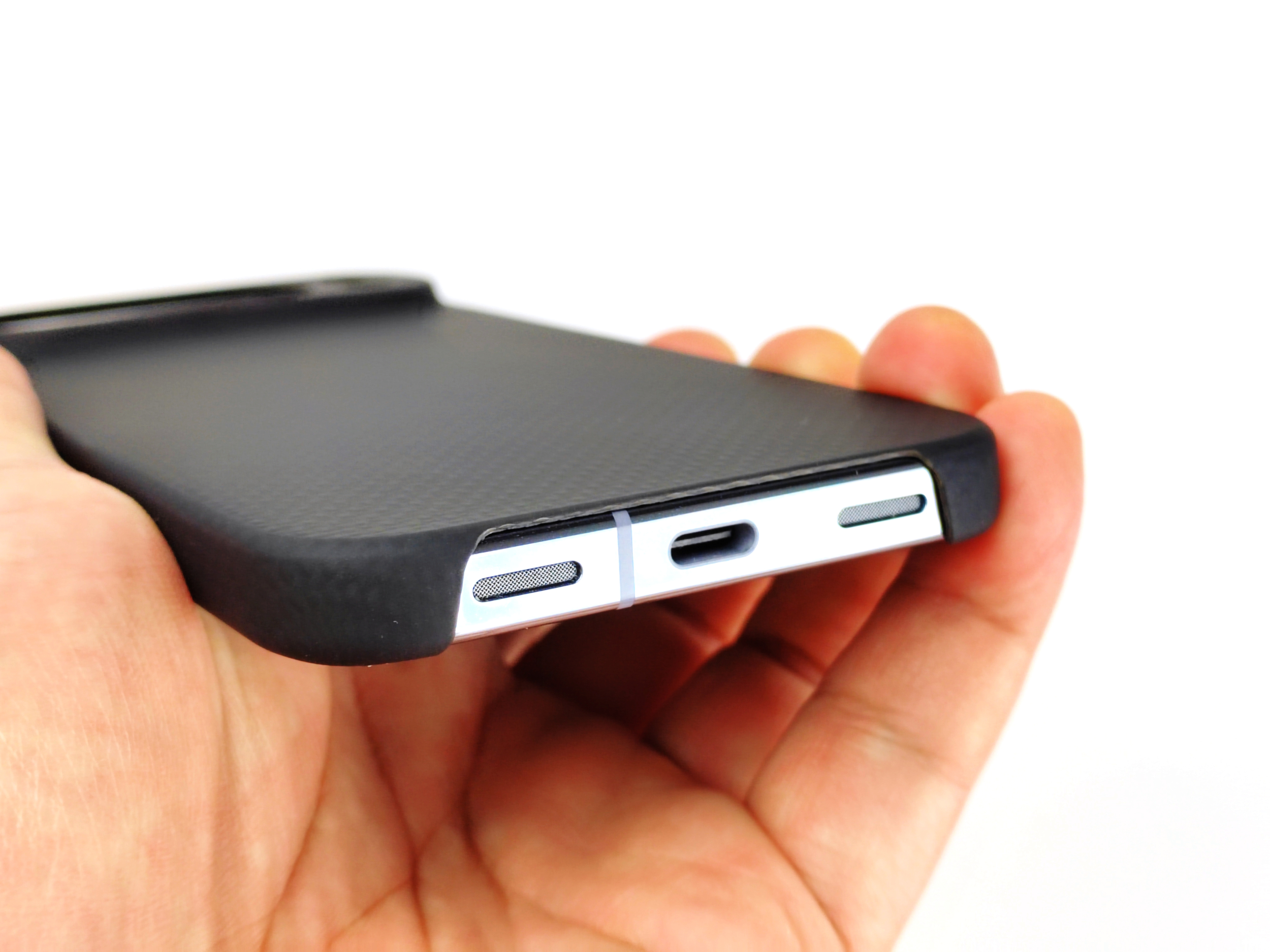
The power and volume buttons are also left completely exposed rather than covered with extensions built into the case. That obviously means less protection around those portions of the frame, but the benefit becomes apparent every time I actually use the phone, since I am still pressing Google's original buttons and getting exactly the same tactile response as I would without a case.
This sounds like a small advantage, but even well-designed molded case buttons tend to change the feel slightly, either by becoming softer or requiring additional pressure. Latercase effectively removes itself from that interaction, which is very much in keeping with the philosophy of adding protection without changing the basic experience of using the Pixel.
Of course, there is no way around the compromise. If the phone happens to land directly on one of the exposed portions of the frame, there is less material protecting it than there would be with a conventional wraparound case.
The Camera Bar Gets A Completely Different Treatment
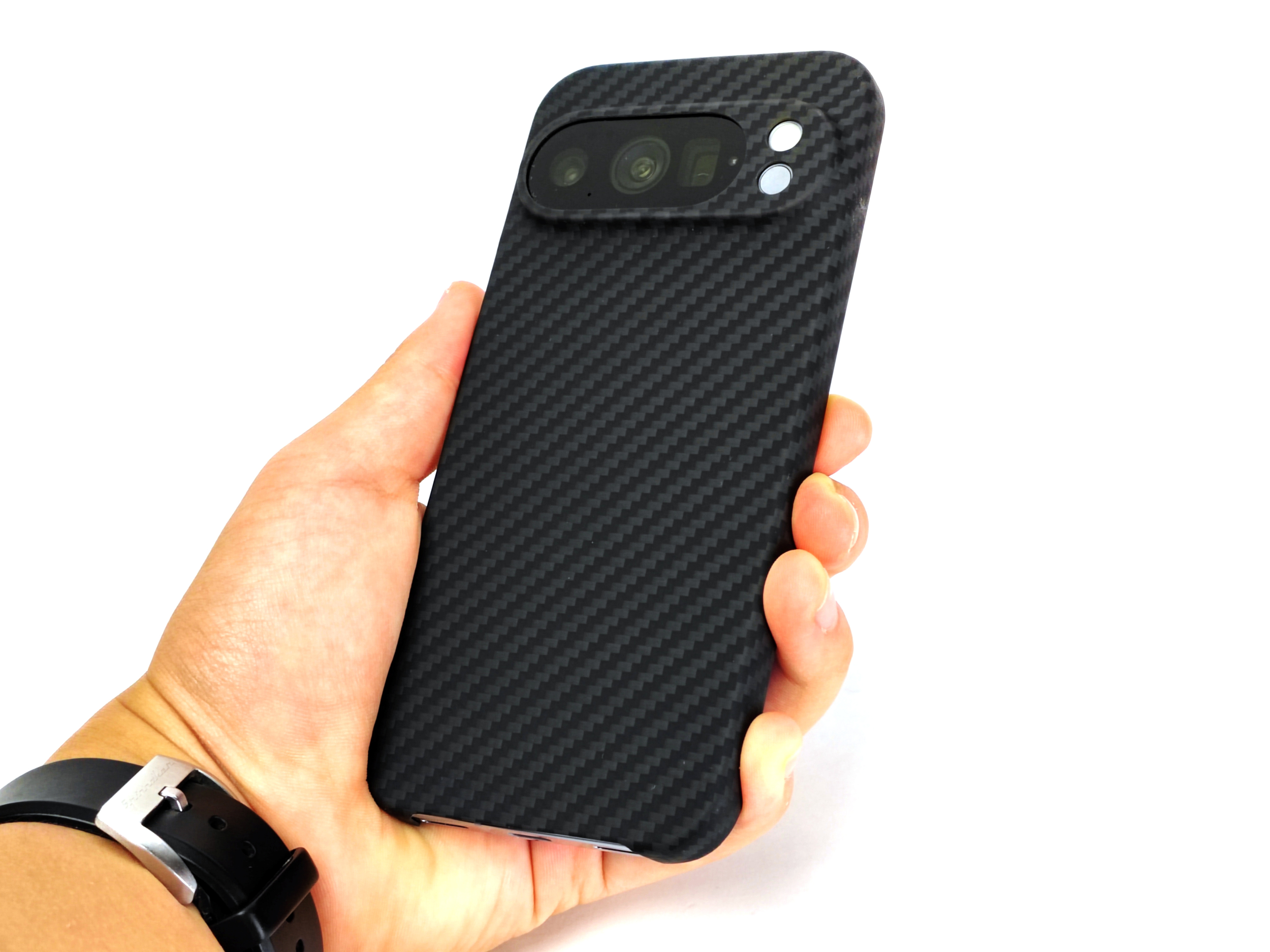
Interestingly, Latercase becomes much more conservative when it reaches the Pixel 10 Pro's camera bar. Instead of simply leaving the large housing exposed, the rear shell curves upward and continues across most of it, leaving precise openings for the camera glass, flash and thermometer sensor.
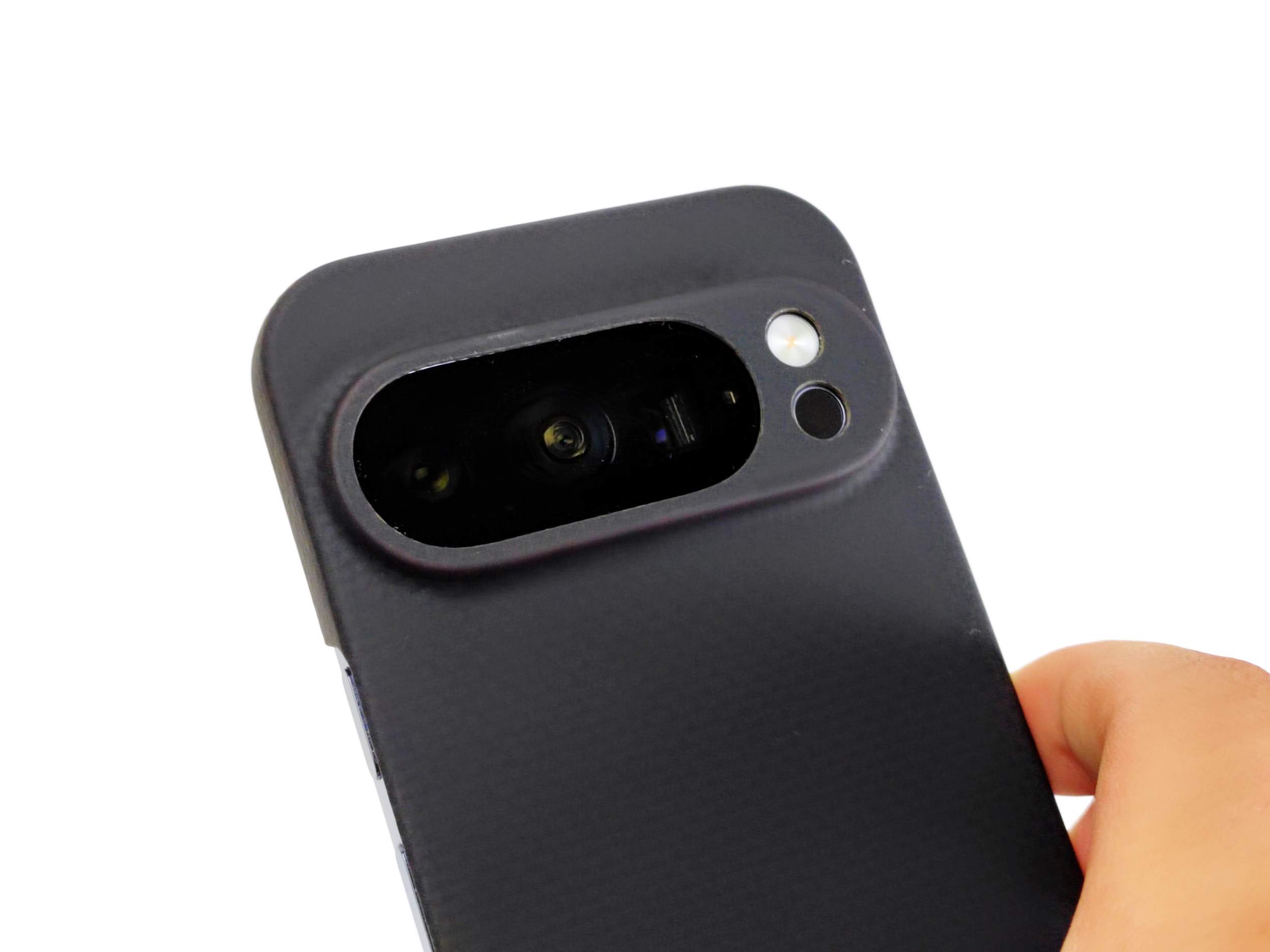
This is probably my favorite part of the entire design. The camera bar is one of the more prominent areas of the Pixel and naturally becomes one of the first parts of the phone to make contact with a surface, so having additional coverage here makes considerably more sense to me than simply cutting a giant opening around it.
There is also an aesthetic advantage. Because most of the camera housing is hidden beneath the same woven finish as the back of the case, the original color of the phone becomes far less visually dominant and the entire rear takes on a much more consistent appearance.
Whatever Pixel 10 Pro color you start with, most of the back becomes Midnight once the Latercase is installed. I personally prefer this approach over cases that leave the entire camera bar exposed, because the result looks more integrated and intentional rather than simply being a shell with a large hole cut into it.
Latercase Fixed My Biggest Problem With Aramid Cases
I have owned other aramid-fiber cases before, and while I have always liked how thin and refined the material can feel, there is one characteristic that consistently bothered me. Aramid cases tend to be extremely smooth.
There is often an almost powdery or satin-like sensation when running a finger across them, which can feel pleasant, but it also means that there is not much texture for the fingers to catch onto. They are generally less slippery than bare glass or polished metal, but I have always found it slightly contradictory for a product designed to protect a phone to make it easier to slide out of my hand.
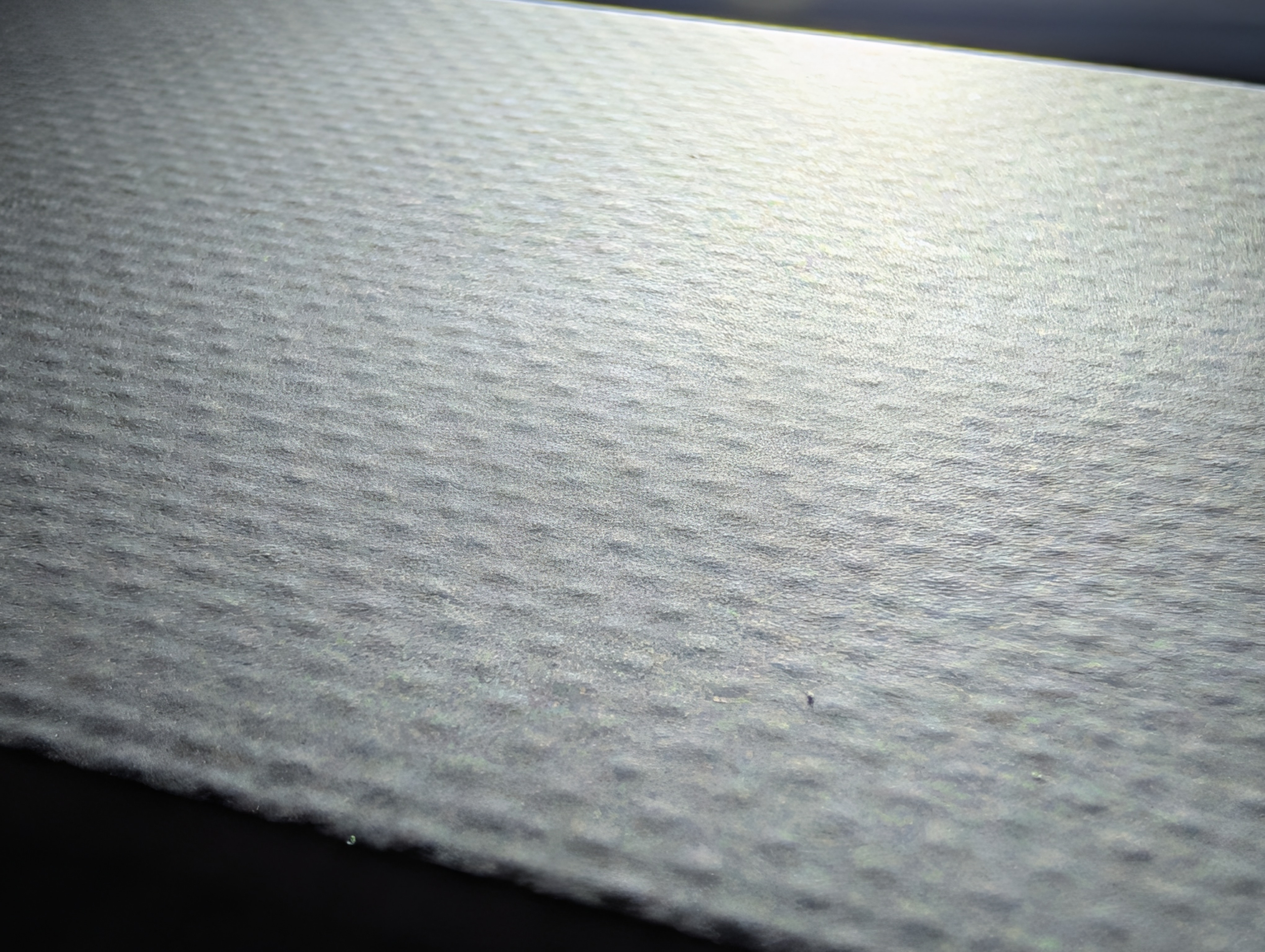
Latercase feels noticeably different. At first glance, the surface still looks relatively smooth, but when I run my fingers across the back I can actually feel the woven aramid texture, and shining light across the case from the side makes those tiny variations in the surface much easier to see.
The texture is subtle enough that I would never describe it as rough, but there is just enough there to give my fingers noticeably more purchase on the phone. Compared with some of the smoother aramid cases that I have owned, the Pixel feels considerably more secure in my hand.
This is also one of those qualities that is almost impossible to communicate through a photograph on a product page. Two aramid cases can look virtually identical online, but once you actually pick them up, the finishing can make them feel like very different products.
Better Grip Is Part Of The Protection
Phone-case protection is usually discussed in terms of what happens after the device has already hit the ground, but I think grip deserves to be considered part of that equation as well. Preventing the phone from slipping out of my hand in the first place may be just as useful as adding another millimeter of material to absorb an impact afterward.
The Latercase does not use rubber rails, raised ridges or any of the aggressive textures found on rugged cases, yet the exposed weave provides enough friction that I have noticeably more confidence holding the Pixel 10 Pro. For a case that is otherwise trying to disappear around the phone, this is a meaningful advantage.
Of course, improved grip does not suddenly turn 0.6mm of aramid into an armored case, and there are obvious limits to how much impact absorption such a thin shell can provide. But if the comparison is between the Latercase and using the Pixel completely naked, I would much rather have both the rigid outer layer and the additional grip.
Pixelsnap Is The Biggest Compromise
The biggest downside to the Latercase became particularly obvious on the Pixel 10 Pro because Google's Pixelsnap magnetic system makes having a strong magnetic connection on the back of the phone much more useful than it would have been on some older Android devices. Magnetic wireless chargers, desktop stands, car mounts and grips all become much more convenient when the phone can attach securely without any additional hardware.
Latercase does not include an additional magnetic ring inside the shell, and because the case is so thin, I can still feel the Pixel's own magnets through it. Bringing a compatible magnetic charger toward the rear produces enough pull to help locate the correct charging position, so the magnets have certainly not disappeared.
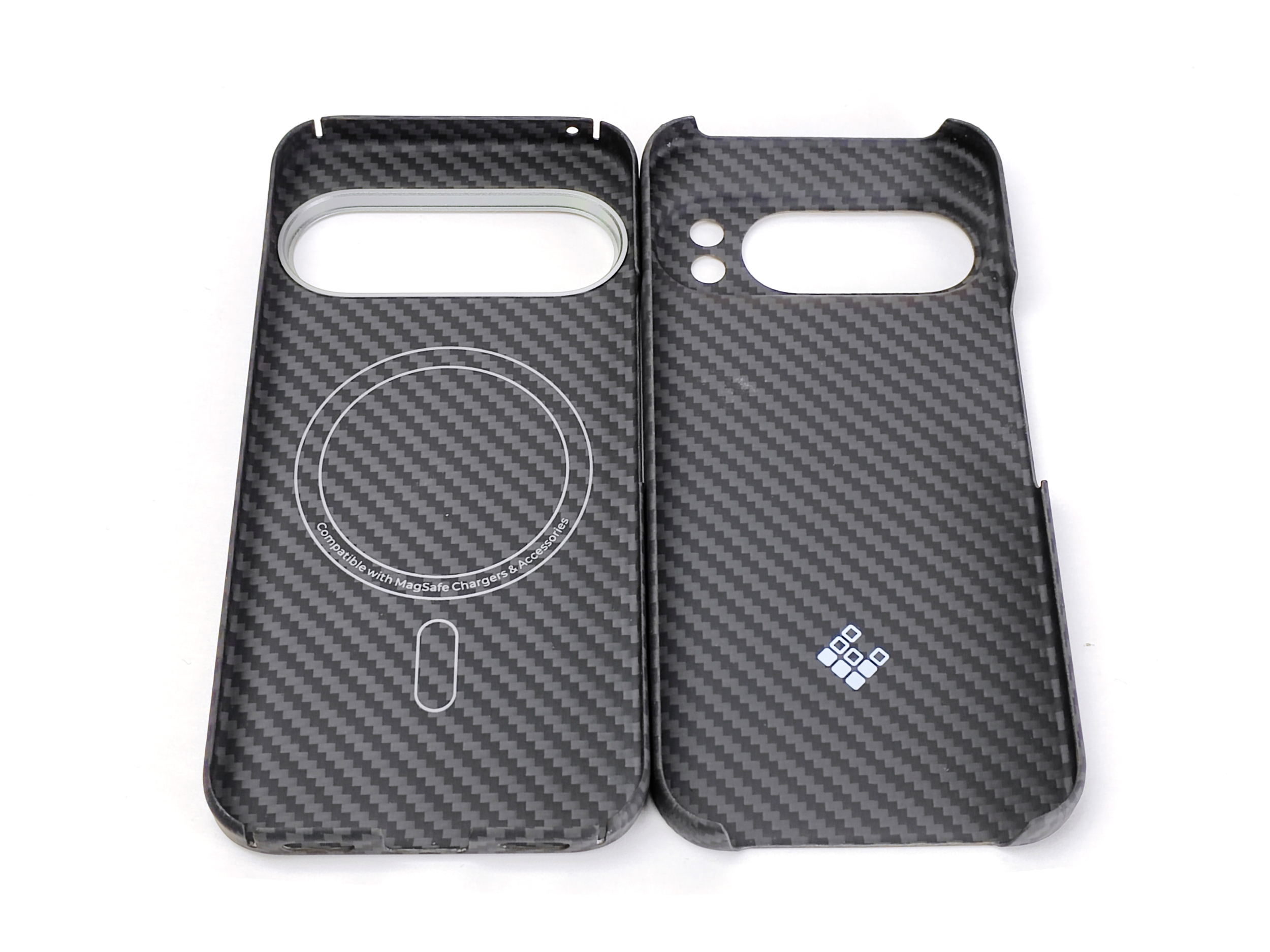
However, the attraction is considerably weaker. I would not trust the remaining magnetic strength to securely hold the Pixel 10 Pro on a vertical car mount or suspended from a desktop stand where the magnets are expected to support the entire weight of the phone.
The same issue applies to magnetic grips such as those from PopSockets or OhSnap. If those accessories are a regular part of how you use the phone, this could easily become the biggest reason not to choose the Latercase.
The Magnetic Limitation Makes Sense
While the weaker magnetic attachment is disappointing, there is also an obvious reason why it exists. Adding a substantial magnetic array into the Latercase would require adding more material and thickness, which runs directly against the reason the case exists in the first place.
For someone who regularly uses a magnetic car mount, wallet, desktop stand or grip, accepting a slightly thicker case with stronger built-in magnets will probably be the more practical choice. In that scenario, the magnetic accessories are already a more important part of the daily experience than saving a fraction of a millimeter.
On the other hand, someone specifically shopping for a 0.6mm aramid case is probably prioritizing the sleekest profile possible, and may have little interest in attaching another bulky accessory to the back anyway. If all I need is normal wireless charging with a little magnetic assistance for alignment, the limitation becomes considerably easier to accept.
That is why I would characterize this as a trade-off rather than a design mistake. Whether it matters depends almost entirely on how much of your daily phone setup has already become dependent on magnetic accessories.
Not An Armored Case, And It Doesn't Need To Be
It would be unfair to compare the Latercase directly with a thick rugged case using reinforced corners, thick TPU and air cushions to survive serious drops. There simply is not enough material here to absorb the same amount of impact, while the generous cutouts around the Pixel also leave some parts of the frame exposed by design.
If I were taking the Pixel somewhere where repeated drops onto hard surfaces were likely, I would choose a considerably more substantial case. Latercase makes far more sense as protection against everyday wear, scratches, surface contact and the smaller accidents that happen while carrying and using a phone normally.
What it does provide is a rigid physical layer across most of the rear and sides, some separation around the front glass, considerably more coverage around the camera housing and noticeably better grip. That is already enough to make me much more comfortable placing the Pixel down on a desk or carrying it around than I would be using the phone completely naked.
I think that is the better way to understand what Latercase is trying to do. It is not asking someone who loves a giant rugged case to suddenly accept minimal protection; it is offering an alternative to the person who normally dislikes cases enough that they are tempted to use no protection at all.
Is Latercase Really Different From Other Aramid Cases?
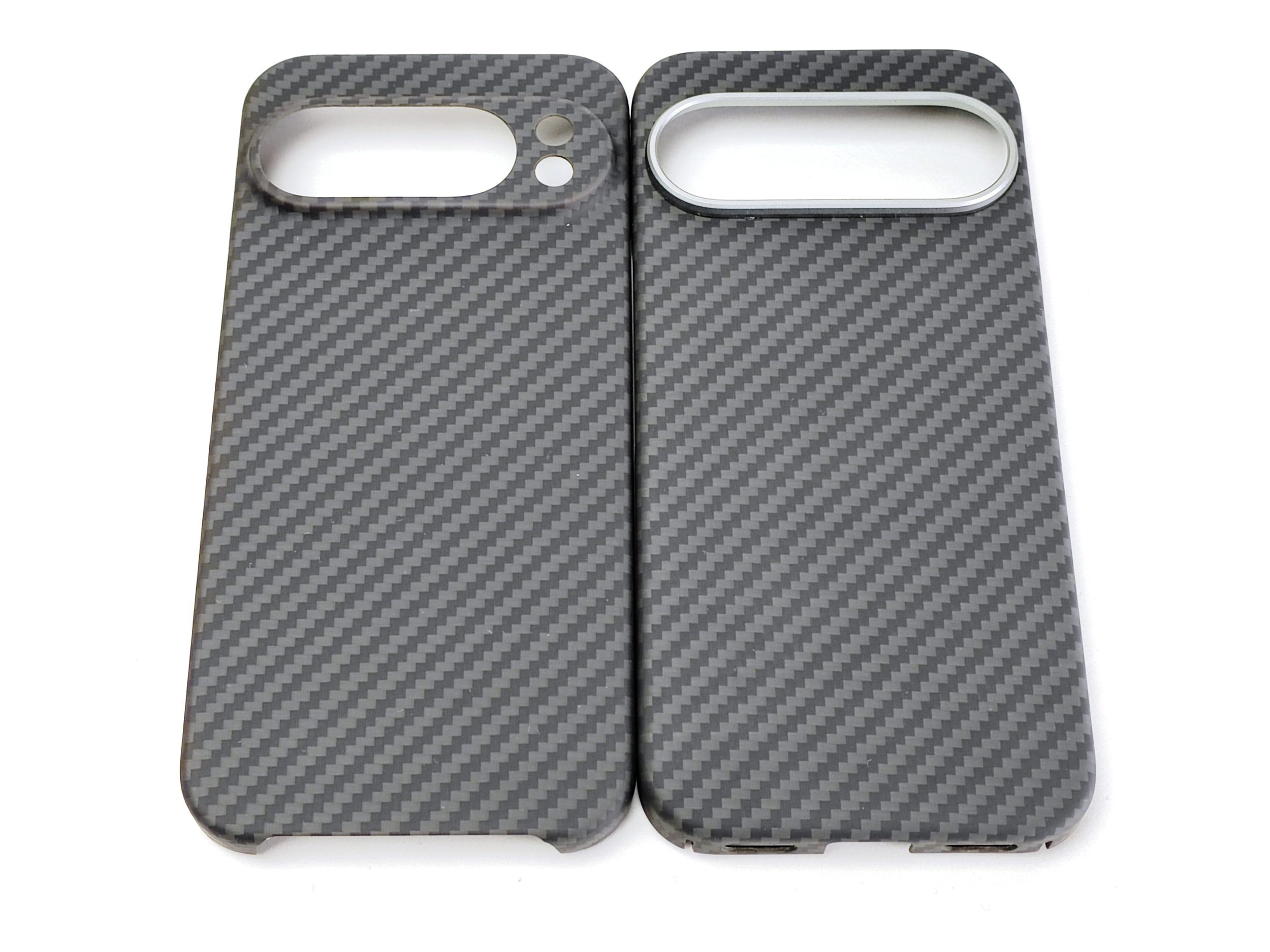
This was ultimately the biggest question I had going into the review, because aramid cases themselves are no longer rare. A quick search turns up numerous inexpensive alternatives that appear very similar in product photography and promise essentially the same thin woven shell.
Latercase has never needed to claim that it invented this type of product for the comparison to matter. The question is simply whether the company has refined the concept enough that the difference can actually be felt once the case is in the hand.
In my experience, it has. The fit around the Pixel 10 Pro is exceptionally precise, the bends around the edge are tight, the camera housing has been integrated particularly well and, most importantly for me, the surface texture provides noticeably better grip than several smoother aramid cases that I have previously owned.
None of these improvements individually changes what an aramid case fundamentally is, but this is also such a simple product that fit and finish become most of what there is to judge. There are no hinges, electronics or complicated moving parts to differentiate one model from another, which means that small differences in manufacturing and finishing become much more important.
If someone already owns an aramid case and is completely satisfied with it, I do not think the Latercase provides some revolutionary reason to immediately replace it. But for someone specifically trying to find one of the better-executed versions of this type of case, the difference becomes much easier to understand after actually using it.
A Case That Makes Sense For Business Travelers
For business travelers, I think the Latercase is particularly interesting because there are situations where reducing bulk becomes almost as important as adding protection. A phone may spend an entire day going in and out of a front pocket, being placed on airport counters, airplane trays, hotel desks and meeting tables, where carrying something unnecessarily large can become annoying very quickly.
At 12.7 grams, I essentially forget that the Latercase adds any weight to the Pixel 10 Pro, while the roughly 0.6mm thickness means the phone still slides into my front pocket almost exactly as it does without a case. There is none of the bulky edge that can make a large flagship feel substantially larger once it has been surrounded by rubber.
The additional grip becomes especially useful in this environment as well. When walking through an airport, getting out of a car or simply pulling the phone out of a pocket repeatedly throughout the day, having a little more control over the device can be more useful than specifications about theoretical drop protection.
For someone who normally keeps a phone in a handbag or backpack, a few extra millimeters from a larger case may not matter nearly as much. For front-pocket users, however, every bit of thickness is noticeable, and Latercase is one of those rare products where the lack of material is essentially the main feature.
Who Is The Latercase Actually For?
I don't think someone who has happily used thick rugged cases for years is suddenly going to pick up a Latercase and decide that this is enough protection. If maximum drop resistance is the priority, there are much more appropriate products that surround the phone with considerably more cushioning.
Instead, Latercase makes sense for the person who has repeatedly purchased normal cases and eventually taken them off because they disliked how much larger the phone became. If you are constantly tempted to carry the Pixel 10 Pro naked because you enjoy the dimensions and materials of the original device, the Latercase provides enough protection to make that decision feel considerably less risky.
It is also a good fit for business travelers and professionals who want the phone to remain easy to carry without exposing the glass and camera housing to every surface they encounter throughout the day. The lack of strong Pixelsnap attachment needs to fit your accessory habits, but if magnetic mounts and grips are not a major part of your workflow, there is very little about the case that interferes with normal use.
In that sense, the Latercase is not really asking whether you want more or less protection. It is asking how much of the original phone experience you are willing to sacrifice in order to get it.
Final Verdict
Latercase did not invent the aramid-fiber phone case, but after using the Pixel 10 Pro version, I think the value comes from how well it refines the concept. The fit is extremely precise, the camera-bar coverage is excellent, and the textured surface gives me noticeably more grip than several smoother aramid cases I have owned, all while adding only 12.7 grams and around 0.6mm of thickness.
There are obvious compromises. The large cutouts leave parts of the Pixel exposed, impact protection cannot match a rugged case, and the weaker Pixelsnap connection makes it less suitable for magnetic car mounts, stands or grips.
For business travelers, front-pocket users and anyone who normally dislikes cases because of the added bulk, however, the Latercase strikes a very good balance. It gives the Pixel 10 Pro better grip and useful everyday protection while keeping the phone remarkably close to its original size and feel, and for that type of user, I would recommend it.
David is a tech enthusiast/writer who is often on the move, but since the pandemic is on a mission to explore gadgets to improve his 'home work'. This is a contribution to an ongoing IBTimes review series on gadgets for Home Productivity.
Frequently Asked Questions
How Much Does The Latercase For Pixel 10 Pro Weigh?
My Midnight Pixel 10 Pro Latercase measured 12.7 grams on a small scale, which is less than the approximate weight of three ordinary sheets of letter-sized photocopy paper. The additional weight is therefore extremely difficult to notice during normal use.
How Thick Is The Latercase For Pixel 10 Pro?
The Latercase is approximately 0.6mm thick, allowing it to add very little to the overall dimensions of the Pixel 10 Pro. The phone remains much closer to the feeling of using it naked than it does with most conventional protective cases.
Does Latercase Protect The Pixel 10 Pro Camera Bar?
Yes. The aramid shell curves upward and covers most of the camera housing while leaving openings for the camera glass, flash and thermometer sensor. I particularly like this implementation because it provides additional coverage while also creating a more consistent appearance across the rear of the phone.
Does The Latercase Have A Raised Edge Around The Screen?
There is a small lip that rises slightly above the naked display, providing some separation if the phone is placed or lands face-down on a completely flat surface. With my glass screen protector installed, however, the protector sits approximately flush with the edge of the case.
Does Latercase Work With Pixelsnap Accessories?
The Pixel's built-in magnetic attraction can still be felt through the extremely thin shell, and I found that it can help a compatible wireless charger locate the correct position. The connection is considerably weaker, however, so I would not rely on it for a magnetic car mount, desktop stand or grip that needs to support the weight of the phone.
Is The Latercase Slippery?
I found it noticeably grippier than several other aramid cases I have owned. The woven texture can actually be felt through the surface finish, giving my fingers more purchase without making the case feel rough or rubberized.
Does Latercase Offer Serious Drop Protection?
No. A case this thin cannot provide the same impact absorption as a rugged case with thick bumpers and reinforced corners, particularly because there are also fairly large cutouts around portions of the Pixel's frame. I would consider it better suited to everyday protection, scratches, surface contact and smaller accidents.
Is Latercase Better Than Cheaper Aramid Cases?
The underlying aramid-fiber concept is not unique to Latercase, but I found the precision of the fit, camera-bar treatment and textured surface more refined than several other aramid cases I have used. The additional grip was the most noticeable difference for me.
Who Should Buy The Latercase For Pixel 10 Pro?
I think it makes the most sense for people who normally dislike conventional cases because of the additional weight and thickness, particularly business travelers and anyone who carries a phone in a front pocket. If maximum drop protection or strong magnetic accessory compatibility is more important, a thicker case will probably be the better choice.
© Copyright IBTimes 2026. All rights reserved.