Lindsey Graham Championed a Russia Sanctions Package Before His Death. The Senate Just Passed It.
The sanctions target Russian leaders and its oil sector.

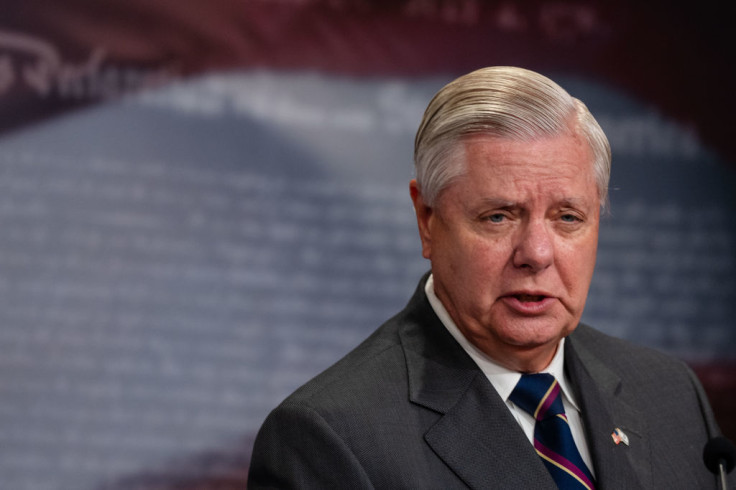
The Senate approved a Russia sanctions bill pushed by late Sen. Lindsey Graham before his death in July.
The package, which targets the country's leaders and oil industry, had the support of 86 senators and was only rejected by 11. The bill now makes it to the House, in recess until September.
The bill imposes tariffs of up to 100% on the countries that are in the top five buyers of Russian crude oil or gas. The list includes China and India. It also targets Russian President Vladimir Putin, oligarchs and financial institutions.
"These sledgehammer sanctions and tariffs will stop all who are complicit in this murderous, criminal war of aggression against a brave free people," said Democratic Sen. Richard Blumenthal, adding that he believes Graham would have been "proud of what we've done."
The war continues in the meantime, with a recent report claiming that Putin is considering a limited assault on a NATO country to test the alliance.
The assessment from U.S. intelligence officials claimed such a scenario could take place in the next few years, with another possibility being a cyberattack.
The Wall Street Journal detailed that previous assessments believed that Putin wouldn't make such a decision while still fighting in Ukraine, but the thinking changed earlier this year as the war continues and Kyiv manages to strike deep into Russian territory and inflict damage on its oil industry while keeping the front lines largely unchanged.
The goal of attacking a NATO country, the report added, would be fracturing the transatlantic alliance. Such an attack could take place between this fall and 2029. The likelihood of it happening is low but grows as time goes by and Putin does not manage to make strategic gains in the war.
Spokespeople for the Defense Department and NATO's Supreme Headquarters Allied Powers Europe did not comment on the report. Col. Martin O'Donnell, a NATO spokesman, said "we are always thinking through and preparing for any number of scenarios. NATO is watching and we are ready to deter and defend as necessary, which we continue to demonstrate."
© Copyright IBTimes 2026. All rights reserved.
- Recommended For You