

Meta Launches Muse To Delve Into The AI Agent Market. Its Stock Is Climbing.
The launch of Muse is part of Meta's multibillion-dollar effort to regain ground against OpenAI, Anthropic and Google after a series of setbacks in its AI strategy.


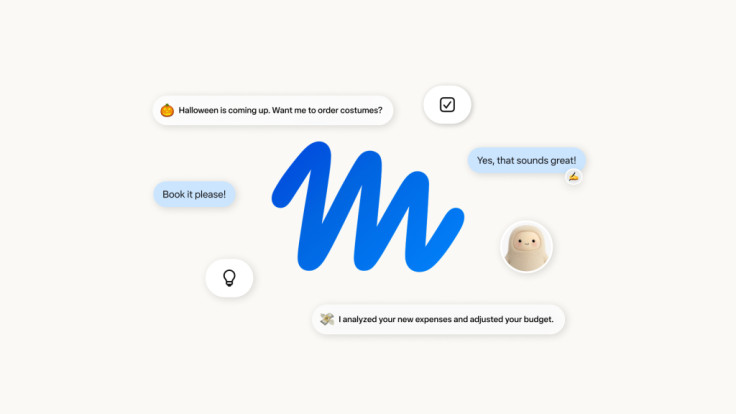
Meta's new personal AI agent, Muse, is designed to shop, plan trips, send emails, and complete other everyday tasks on behalf of users, bringing autonomous AI to a potentially massive consumer audience.
The launch is part of Meta's multibillion-dollar effort to regain ground against OpenAI, Anthropic, and Google after a series of setbacks in its AI strategy. Muse, powered by the company's in-house Muse Spark model, is now being positioned as a centerpiece of that comeback. The market appeared to welcome the announcement, with the company's stock climbing almost 6% on Wednesday at 10:55 a.m. ET.
Muse is intended to act rather than simply respond. After receiving a goal, Meta says the agent can open a browser, fill out forms, and negotiate on a user's behalf. It can also continue working after the app is closed, returning when circumstances change or when approval is needed for an action such as a purchase.
The assistant will roll out in the United States on iOS, Android, and the web, with support for AI glasses planned. Most users will have free access, while paid subscriptions will offer additional capabilities. Meta has not disclosed subscription prices or the limits that will apply to free accounts.
Meta's central selling point is accessibility. The company says Muse requires no technical experience and can be used through its dedicated app or WhatsApp. It can also remember information users share, allowing it to make personalized suggestions without requiring the same details to be entered repeatedly.
That approach reflects a broader strategic shift. During Meta's July earnings call, CEO Mark Zuckerberg described personal agents as the foundation for future products and revenue, arguing that AI must become simple enough for billions of people to use. The company projected 2026 capital expenditures of $130 billion to $145 billion.
Muse is entering an increasingly crowded market. OpenAI, Anthropic and Microsoft already offer agents capable of handling complex workflows, while Google has been developing consumer-oriented AI assistance. Meta's claim that Muse is the first personal agent built for everyone therefore rests less on an entirely new category than on its ambition to make the technology mainstream.
The challenge is that a useful personal agent needs access to sensitive information. To address those concerns, Meta says Muse operates on an isolated virtual computer in the cloud and cannot see users' passwords or payment methods. A separate agent called Sentinel monitors its activity and is designed to prevent internet access without approval.
Meta also says users can opt out of having their interactions used to train its AI models and instruct Muse to forget specific information. The company has not clarified whether training is enabled by default.
© Copyright IBTimes 2026. All rights reserved.