

Middle East Clashes Could Hit The World Economy. Growth Could Be Slashed to 1.3%, World Bank Says
The World Bank currently projects global economic growth of 2.5% in 2026 under its baseline scenario.

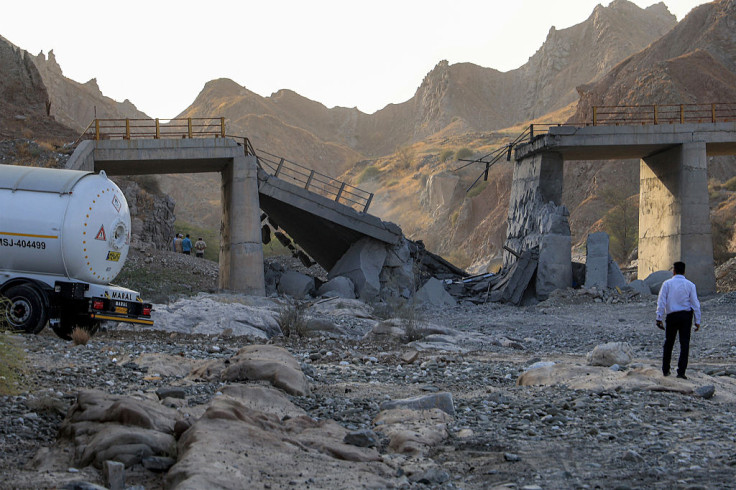
Global economic growth could slow dramatically next year if the war in the Middle East continues to escalate, with the World Bank's chief economist warning that a prolonged conflict could reduce worldwide expansion to just 1.3% in 2026, nearly half the institution's current baseline forecast.
In an interview with Reuters, World Bank Chief Economist Indermit Gill said the conflict poses one of the biggest threats to the global economy.
The World Bank currently projects global economic growth of 2.5% in 2026 under its baseline scenario. However, Gill told Reuters that if the war continues for another six months or longer, growth could fall to as little as 1.3%. "The risks are very substantial," Gill told Reuters, noting that the longer the conflict lasts, the greater the economic consequences are likely to become.
Much of the concern centers on energy markets. Fighting in the region has heightened fears over the security of critical shipping routes, including the Strait of Hormuz and the Bab el-Mandeb, through which a significant share of the world's oil and liquefied natural gas exports passes. Any prolonged disruption could push crude prices higher, increasing costs for businesses and consumers alike while slowing economic growth.
The World Bank's downside scenario also projects that global inflation could climb to about 4.5% in 2026 if the conflict intensifies. Higher inflation would complicate efforts by central banks to lower interest rates after years of aggressive monetary tightening. Instead, policymakers could be forced to keep borrowing costs elevated for longer, further weighing on investment, consumer spending and business expansion.
Gill warned that the combination of weak economic growth and stubborn inflation raises the possibility of a stagflation-like environment, where economies struggle with slow output while prices remain high. Such conditions would be especially difficult for governments already grappling with elevated debt levels following the pandemic and years of higher interest rates.
Developing economies are expected to bear the greatest burden if the conflict drags on. Many lower-income countries remain heavily dependent on imported energy and food, making them particularly vulnerable to higher commodity prices. Rising fuel costs can strain government budgets, increase inflation and reduce spending on priorities such as healthcare, education and infrastructure.
Gill also cautioned that prolonged economic weakness could worsen debt challenges across emerging markets, where many governments are already facing rising borrowing costs and limited fiscal flexibility. Slower global trade and weaker investment flows would add further pressure on countries still working to recover from recent economic shocks.
Despite the bleak near-term outlook, Gill pointed to artificial intelligence as a potential source of longer-term economic growth. He told Reuters that while advanced economies may face significant labor market disruptions as AI adoption accelerates, many developing countries could benefit from productivity gains without experiencing the same degree of job displacement. If implemented effectively, AI could eventually help offset some of the structural economic challenges facing emerging markets.
The warning follows the World Bank's June Global Economic Prospects report, which lowered its global growth outlook and cited heightened geopolitical tensions as one of the principal risks facing the world economy. The institution has repeatedly warned that ongoing conflicts, trade fragmentation and elevated uncertainty continue to undermine business investment and global commerce.
© Copyright IBTimes 2026. All rights reserved.