

Moonshot Pushes Kimi K3 Into the U.S. Market. Microsoft, Amazon and Google Weigh Revenue-Sharing Deals.
Moonshot is seeking as much as 30% of the revenue generated from K3-related services offered through Microsoft's Azure, Amazon Web Services and Google Cloud, according to a new report.

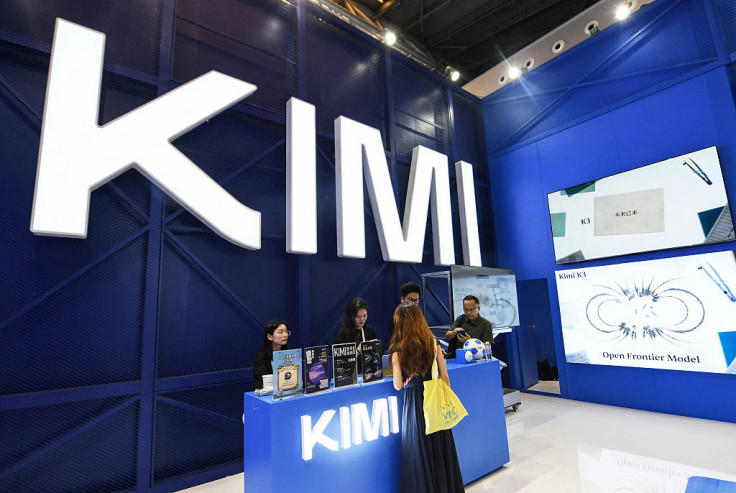
China's Moonshot AI is reportedly in talks with Microsoft, Amazon and Google over revenue-sharing agreements that could bring its powerful Kimi K3 artificial intelligence model to some of the world's largest cloud platforms.
According to Reuters, the Beijing-based AI startup is seeking as much as 30% of the revenue generated from K3-related services offered through Microsoft's Azure, Amazon Web Services and Google Cloud.
If completed, the agreements could represent the first major revenue-sharing deals between a Chinese AI developer and leading U.S. cloud providers, creating a potentially significant new distribution channel for Chinese AI technology in the American enterprise market.
The negotiations remain at an early stage and may not result in agreements, the outlet noted. Several issues have yet to be resolved, including the exact revenue split, access to data and mechanisms for auditing token usage. Tokens are the units of text processed by AI systems and are commonly used to calculate charges for customers accessing models through cloud services.
Moonshot's proposed 30% share is broadly consistent with terms the company has reportedly discussed with other large customers using its open-weight model. Kimi K3 has attracted international attention since its release in July.
The model contains 2.8 trillion parameters and has produced competitive results in independent evaluations. Artificial Analysis found that its performance was comparable to OpenAI's GPT-5.5 and Anthropic's Claude Opus 4.8, particularly for complex tasks requiring multiple steps.
Despite being an open-weight model that users can download and modify, K3's enormous size makes cloud distribution especially important. Running a 2.8 trillion-parameter system requires significant computing resources, making it impractical for many businesses to deploy the model entirely on their own infrastructure.
That makes companies such as Microsoft, Amazon and Google crucial gateways to enterprise customers. Moonshot has already reached revenue-sharing agreements with some smaller cloud platforms, according to Reuters. Chinese IT services company Chinasoft International disclosed an agreement with Moonshot in July, although it did not reveal how the companies would divide revenue.
Any partnership with major U.S. cloud providers, however, would arrive amid significant political scrutiny. U.S. Treasury Secretary Scott Bessent said last month that Moonshot could be added to a U.S. trade blacklist. American officials have also accused the Chinese startup of improperly using Anthropic's Fable model to develop Kimi K3 and illegally obtaining Nvidia chips.
Moonshot has rejected claims that K3's performance resulted from distillation, a technique in which developers use outputs from another AI system to help train their own model. According to Reuters, the company told China's National Business Daily that K3's improvements resulted from original changes to its underlying architecture.
Founded in 2023 by Carnegie Mellon-trained AI researcher Yang Zhilin, Moonshot has quickly emerged as one of China's most closely watched AI startups. Its investors include Chinese technology giant Alibaba. Moonshot raised more than $2 billion in May and is preparing for a potential Hong Kong initial public offering, while Alibaba is separately seeking revenue-sharing agreements with major users of its own new open-source AI model.
© Copyright IBTimes 2026. All rights reserved.