Samsung Says The AI Chip Boom Isn’t Slowing. It Expects Supply To Stay Tight Until 2028
Record quarterly earnings reinforced the company's AI momentum as demand for advanced memory chips continued to outpace supply across the industry.


Samsung Electronics says the artificial intelligence boom is far from reaching its peak, warning that tight supplies of advanced memory chips could persist until at least 2028 as technology companies continue expanding AI infrastructure at an unprecedented pace.
The South Korean technology giant delivered another record quarter, reporting operating profit of 89.5 trillion won ($118.7 billion) on revenue of 171.5 trillion won, extending a run of earnings driven largely by demand for AI memory products. The company also raised expectations for the second half of the year, saying investment in AI data centers and enterprise computing continues to support strong orders for high-bandwidth memory (HBM), server DRAM and enterprise solid-state drives, Samsung said in its second-quarter earnings release.
The outlook matters well beyond Samsung's balance sheet. The company is one of the world's largest suppliers of memory chips used in AI servers, competing alongside SK Hynix and Micron Technology to supply the components powering Nvidia's latest AI accelerators and hyperscale data centers. Samsung said customers are increasingly seeking long-term supply commitments as competition for advanced memory intensifies, giving the company greater visibility into future demand, according to the company's earnings call, CNBC reported.
Samsung executives said supply constraints are expected to remain through next year before tightening further in 2027, adding that demand growth linked to AI token generation and increasingly sophisticated AI models is likely to keep pressure on the industry's production capacity into 2028. Management said several large customers are already pursuing multi-year procurement agreements to secure future supplies of AI memory products.
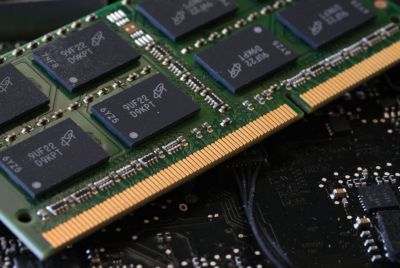
The company's semiconductor division remained the primary growth engine during the quarter. Samsung reported record sales of both DRAM and NAND flash memory, attributing the gains to expanding deployments of AI servers and broader adoption of high-performance computing. It also confirmed that shipments of its sixth-generation HBM4 products increased during the quarter and said the industry's first HBM4E samples had been delivered to major customers for evaluation.
Those products are expected to play an important role in the next generation of AI hardware. HBM4 technology is designed to deliver significantly higher bandwidth and power efficiency for advanced graphics processors, including platforms expected to support Nvidia's Vera Rubin AI architecture. The company said it continues investing heavily in next-generation fabrication facilities and advanced packaging technologies to meet future customer requirements, Samsung said.
The strong earnings add to mounting evidence that AI infrastructure spending remains one of the semiconductor industry's biggest growth drivers. Earlier this week, SK Hynix also reported another record quarterly profit, supported by continued demand for HBM products, although its earnings narrowly missed analyst expectations. Together, the results from the world's two largest memory manufacturers suggest hyperscale cloud providers continue accelerating AI deployments despite the industry's rising capital costs, Reuters reported.
Investment across the sector has expanded rapidly over the past year. Companies including Microsoft, Amazon, Alphabet and Meta Platforms have collectively committed hundreds of billions of dollars toward new AI data centers, networking equipment and advanced computing infrastructure. That spending has fueled strong demand for memory chips capable of supporting increasingly complex generative AI models, Bloomberg reported.
Samsung said it is responding by increasing investment in manufacturing capacity, including expansion work at its Pyeongtaek semiconductor campus, while continuing research into next-generation memory technologies. Capital expenditures within the memory business rose from the previous quarter as the company invested in fabrication facilities and supporting infrastructure to strengthen long-term production capabilities, according to Samsung's earnings report.
Despite the semiconductor division's strength, the company's consumer businesses delivered a more mixed performance. Samsung's Mobile Experience division recorded a quarterly operating loss as higher component costs offset healthy sales of the Galaxy S26 flagship smartphones and the Galaxy A lineup. Executives said elevated semiconductor prices contributed to margin pressure across the mobile business, illustrating how the AI boom is benefiting memory suppliers while increasing costs for device manufacturers.
Separately, Samsung continues expanding into businesses beyond semiconductors. The company recently established a dedicated robotics division reporting directly to Chief Executive Jun Young-hyun, identifying robotics alongside artificial intelligence as a strategic growth area. Executives said Samsung is evaluating partnerships with startups and potential mergers and acquisitions to strengthen its position in the emerging robotics market, Samsung said.
Samsung also addressed recent speculation about a potential U.S. listing, saying it is not currently considering issuing American Depositary Receipts (ADRs). Management acknowledged that an ADR could remain one of several options for enhancing long-term shareholder value but said no review is underway at this time.
The company further highlighted its expanding collaboration with Broadcom, building on agreements covering both advanced memory products and foundry technologies. Samsung said the partnership is intended to support growing AI workloads as customers seek integrated semiconductor solutions for next-generation computing platforms.
© Copyright IBTimes 2026. All rights reserved.
- Recommended For You