

AI Stock Losses Prompt Crackdown On Leveraged ETFs In South Korea

KEY POINTS
- Driven by a massive wave of retail investors leveraging bets on AI chipmakers Samsung and SK Hynix, the KOSPI index recently slid 25% into a technical bear market, triggering more than half of the circuit breakers in the market's history over just six months.
- The extreme price swings are increasingly disconnected from the actual performance of chipmakers whose profits are stable and rising.
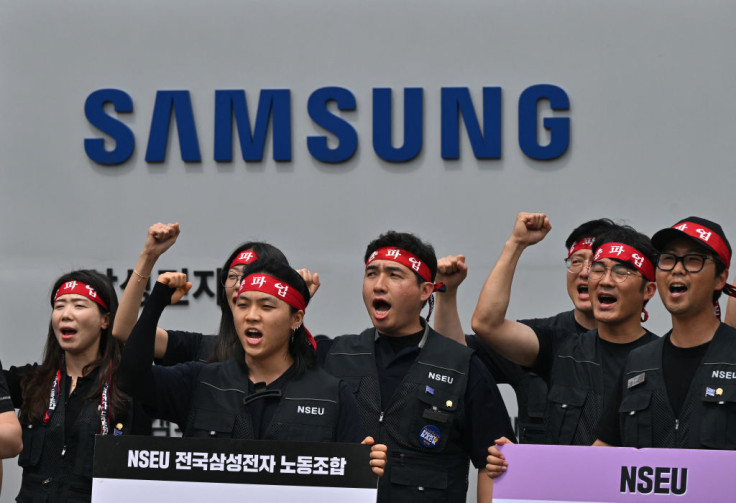
South Korea is banning the creation of new leveraged exchange-traded funds (ETFs) tied to chip giants Samsung Electronics and SK Hynix after these ETFs amplified wild swings in the country's stock market. Fueled by enthusiasm for AI-linked semiconductor stocks, the KOSPI surged 116% from the start of the year to a record high on June 22, allowing South Korea to briefly displace India as the world's sixth-largest stock market.
The rally quickly unraveled and by July 16, the benchmark had fallen 25% from its peak and re-entered bear market territory. On the same day, the KOSPI plunged 6.37% after gaining 6.24% the day before, underscoring the increasingly unhinged swings that earned the index the nickname "Roller Kospi."
The volatility inflicted heavy losses on retail investors, with 1.2 million leveraged retail accounts reaching margin call levels, and over 300,000 accounts liquidated by brokerages, Binance reported.
The Financial Services Commission (FSC) said it will temporarily halt new listings of single-stock leveraged ETFs until market conditions stabilize. Beginning August 5, retail investors will also need a minimum cash balance of 30 million won ($20,300) to trade the products, which is triple the previous requirement.
The move marks a sharp reversal after South Korea approved the products in late May. Regulators hoped they would help deepen domestic capital markets and stem investment outflows but instead these instruments destabilized the market. Retail investors rushed to cash in on the AI boom by using leveraged ETFs to bet on daily stock price movements of the country's two leading chipmakers, Samsung Electronics and SK Hynix.
Unlike many AI-related companies like OpenAI and Anthropic, which currently operate at a loss, Samsung Electronics and SK Hynix are enjoying massive profits due to surging demand for high-bandwidth memory chips used in AI data centers. Analysts broadly expect their revenues and profits to remain strong, yet ironically their share price fluctuations have become increasingly erratic. And because Samsung and SK Hynix now account for more than half of the benchmark KOSPI index, changes in their stock prices can dictate the overall direction of the country's stock market.
Market failsafe mechanisms have been repeatedly triggered recently. Since the start of 2026, the exchange has recorded seven market-wide circuit breakers—more than half of the 13 times the mechanism has been activated since first being introduced in 2000 — along with dozens of temporary trading halts triggered by intensifying volatility.
"The market is wandering from fundamentals," CLSA Chief Equity Strategist Alexander Redman told Reuters, noting that Samsung and SK Hynix continue to trade at relatively low price-to-earnings multiples despite improving earnings prospects.
Stephen Innes, managing partner at SPI Asset Management, summed up the role of leverage to the South China Morning Post: "Leverage did not create the semiconductor correction. But it gave the market a steeper staircase, removed the handrail and invited everyone to run."
© Copyright IBTimes 2026. All rights reserved.