Trump & Hegseth Reportedly Clashed Over Key Aspect Of Iran War: Missile Depletion
Trump criticized unnamed officials leaking information about military stockpiles, calling the disclosures "treasonous."

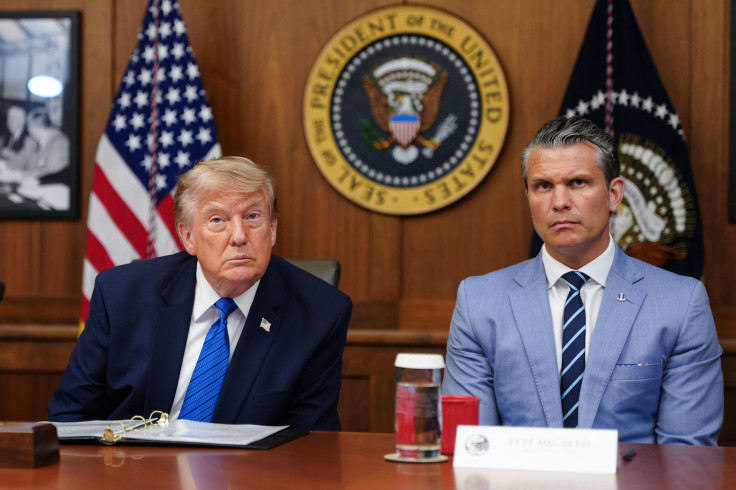
President Donald Trump privately confronted Defense Secretary Pete Hegseth during a Cabinet meeting at Camp David last week after learning that U.S. missile stockpiles had been depleted far more severely than he had believed, according to a new report.
The Washington Post detailed that the tense exchange reportedly reflected growing frustration inside the White House over the costs and sustainability of the ongoing military campaign against the country.
The outlet detailed that Trump questioned Hegseth about why he had not been fully informed about critical shortages of long-range precision-guided missiles and air defense interceptors, telling the defense secretary he believed the problem "had been fixed."
Two people familiar with the conversation told the newspaper that the president's concerns centered on the impact the shortages could have on future military operations.
The reported shortages have become a key factor influencing military planning, with one source telling The Washington Post that they contributed to Trump's decision to cancel what he later described as "the biggest attack since World War II". At the same time, negotiations over the Strait of Hormuz continue.
Publicly, Trump has sought to downplay concerns about military readiness. In a Truth Social post overnight, he insisted the United States possesses "massive amounts" of munitions and said additional weapons are being manufactured and shipped as needed.
He also criticized unnamed officials leaking information about military stockpiles, calling the disclosures "treasonous." Behind the scenes, however, officials familiar with the situation described a far more difficult reality.
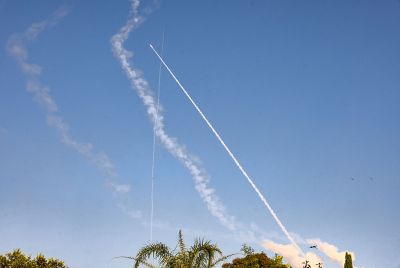
During the first month of the conflict alone, U.S. forces reportedly fired more than 850 Tomahawk cruise missiles, over 1,000 Patriot and Terminal High Altitude Area Defense interceptors, and more than 1,300 Army Tactical Missile Systems, or ATACMS.
One official told The Washington Post the ATACMS inventory has been depleted to the point that "there's basically none left," echoing reporting earlier this week by Reuters. The rapid depletion has extended beyond offensive operations.
Limited supplies of Patriot and THAAD interceptors have also complicated efforts to defend against Iranian missile and drone attacks, forcing commanders to become more selective about which incoming threats warrant interception.
The shortages are also affecting allies as well. Ukraine has struggled to replenish its own air defense systems as Western stockpiles shrink, leaving the country increasingly vulnerable to long-range Russian missile strikes.
According to the report, Hegseth pushed back during the Camp David discussion, denying responsibility and allegedly blaming Deputy Defense Secretary Stephen Feinberg for failing to ensure Trump fully understood the extent of the inventory problems. Both the White House and Pentagon strongly rejected that characterization.
"This is 100% fake news. Literally never happened. And President Trump has the utmost confidence in Secretary Hegseth," White House press secretary Karoline Leavitt said in a statement provided to The Washington Post.
The reported dispute nevertheless adds to ongoing questions surrounding Hegseth's standing inside the administration. Earlier this year, the defense secretary faced scrutiny following the "Signalgate" controversy, in which classified information was shared in a messaging group that mistakenly included a journalist. Trump publicly defended Hegseth at the time, praising both his appearance and leadership.
Military officials have warned for months that replenishing depleted arsenals will not happen quickly. Chairman of the Joint Chiefs Gen. Dan Caine reportedly cautioned Trump even before the conflict began that existing stockpiles were insufficient for a prolonged war.
The Pentagon has requested an additional $67 billion in emergency funding to replenish inventories, part of a broader proposed $1.5 trillion defense budget that includes tens of billions of dollars for missile production. However, the funding package has stalled in Congress amid partisan disagreements over defense spending.
Defense analysts say even once Congress approves additional funding, rebuilding inventories will take years rather than months. Modern missile systems such as Patriot interceptors require lengthy manufacturing timelines, meaning contracts signed today may not translate into operational weapons for up to two years.
© Copyright IBTimes 2026. All rights reserved.
- Recommended For You