

Trump Prepares New Economic Blows Against Iran. China Could Be Caught in the Crossfire.
Since the Iran war began in February, Washington has expanded restrictions and launched a naval blockade.

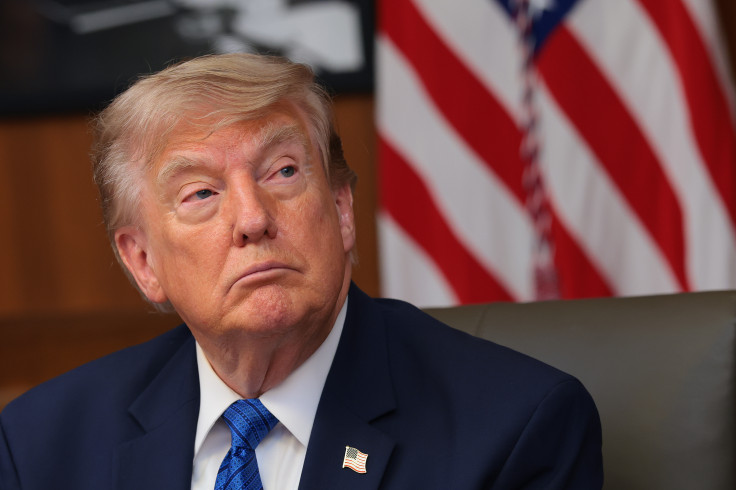
President Donald Trump is considering a new wave of economic pressure on Iran that could reach beyond Tehran itself, potentially targeting Chinese banks, oil refiners and countries that continue doing business with the Islamic Republic as Washington searches for ways to intensify its financial campaign.
Trump vowed Friday to hit Iran hard economically, one day after Treasury Secretary Scott Bessent said the administration was preparing measures against Tehran that have "never been seen" and could be announced as soon as next week, according to Reuters.
The threat comes after decades of U.S., United Nations and European Union sanctions targeting Iran over its nuclear program, human rights record and support for militant groups. Since the Iran war began in February, Washington has expanded maritime, energy and financial restrictions and launched a naval blockade.
The Trump administration has already dramatically widened its sanctions campaign. Data from the Treasury Department's Office of Foreign Assets Control shows more than 1,000 people, vessels and aircraft have been sanctioned since Trump began his second term.
Recent actions have focused on Iran's shadow oil fleet, shipping insurers, networks accused of helping Tehran acquire weapons and digital exchanges. U.S. measures have frozen an estimated $500 billion in Iran-linked cryptocurrency.
But experts told the outlet that Washington still has several potentially powerful options, some of which carry significant economic and geopolitical risks. One of the most immediate targets could be China's independent oil refineries, commonly known as "teapots." China purchased more than 80% of Iran's shipped oil, making Chinese refiners crucial to Tehran's ability to generate revenue from crude exports.
Washington could expand secondary sanctions against companies buying Iranian oil. Previous measures have discouraged some larger independent Chinese refiners, although smaller operators can be harder to pressure because they have limited exposure to the U.S. financial system.
A potentially more consequential step would involve Chinese banks. OFAC has already sanctioned smaller entities in China and Hong Kong accused of processing Iranian oil revenues and supporting weapons procurement.
Treasury has also warned two larger Chinese banks that they could face secondary sanctions if Iranian funds move through their systems, Reuters reported, although U.S. officials have not publicly identified the institutions.
Sanctioning major Chinese financial institutions could send a much stronger warning across the banking sector, but it could also provoke retaliation from Beijing. That risk comes as the Trump administration attempts to contain tensions with China ahead of an expected meeting between Trump and Chinese President Xi Jinping later this year. U.S. officials are particularly concerned that Beijing could restrict exports of critical minerals needed for advanced technologies.
Another option is simply accelerating sanctions against the network of companies, individuals, shippers and financial intermediaries that help Iran circumvent existing restrictions.
That strategy has limitations. Brett Erickson, managing principal of Obsidian Risk Advisors, described the process to Reuters as a "whack-a-mole" campaign because Iran can create new entities when existing ones are sanctioned.
Such an effort could severely restrict Iranian imports of food, energy and textiles, but experts question whether it could be effectively enforced or whether increased economic hardship would translate into greater domestic pressure on Tehran.
Trump could also return to secondary tariffs against countries trading with Iran. The Supreme Court has struck down the legal basis previously used for such tariffs, but legislation passed by the Senate last week could provide the president with new tariff authority targeting countries that facilitate Iranian commerce or weapons procurement. The bill still needs approval from the House, where opposition to its tariff provisions from Democrats and some Republicans could complicate its passage.
© Copyright IBTimes 2026. All rights reserved.