The U.S. And Iran Are Reportedly Discussing a Deal To Reopen The Hormuz Strait. Oil Is Climbing Anyway.
Tehran said it can fully reopen the waterway in seven days if its conditions are met.


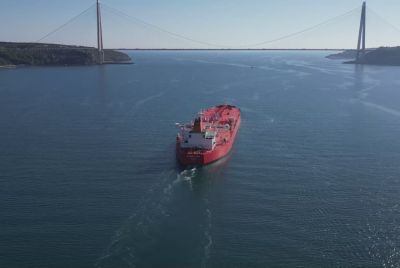
The U.S. and Iran are discussing a deal to end hostilities and gradually reopen the Strait of Hormuz, according to a new report.
However, the talks still face challenges because neither side wants to take the first step, Reuters detailed, citing a source familiar with the conversation.
An Iranian official said a way out would be them taking partial steps, with Iran allowing unrestricted traffic to resume while the U.S. lifts its blockade of the country's ports and allows Tehran to access frozen assets.
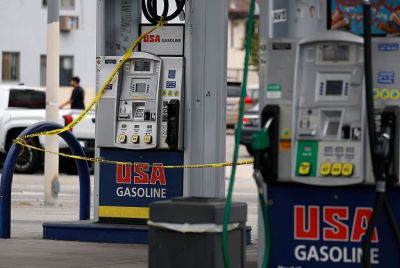
Oil prices are soaring despite the report. Brent crude, the international benchmark, climbed more than 4% and topped $107.5 at 3:21 a.m. ET, while West Texas Intermediate, the U.S. benchmark, gained 3.37% and stood above $95 at the same time.
Iran has said it can reopen the Strait of Hormuz in a matter of seven days if it reaches a deal with Washington.
The countries have held talks on the sidelines of the United Nations General Assembly, with President Donald Trump calling it "productive." "I think there's a lot of momentum for them to make a deal. That's what we are hearing from everybody," he added.
Secretary of State of State Marco Rubioalso claimed that discussions were positive, but were not a major breakthrough, adding that the Iranian Revolutionary Guard Corps is an impediment to any deal.
Both parties have also doubled down on threats at the same time.
Iran said President Donald Trump's most recent threats against the country if a deal to end the war is not reached soon are a sign of "strategic desperation."
Iran's General Staff said on Wednesday that "such words demonstrate America's strategic dead end in its aggression against the Iranian nation, and the repetition of baseless claims and threats, given the exhaustion of the U.S. military, is not a sign of power but a sign of their strategic desperation."
In a statement published in the country's semi-official news agency Merh, the force added that the threats are also a tool for domestic propaganda rather than something based on realities on the ground.
Paraphrasing the statement, the outlet also noted that Iranian forces believe Trump's threat do not "change power calculations and will never compensate for America's diminished position in the new global order or its humiliating defeats in the war against Iran and the Resistance Front."
Iranian President Masoud Pezeshkian also challenged the U.S. during his address to the UNGA, saying the country "seeks no one's permission to defend itself."
During his address, Pezeshkian also claimed the country is not looking to obtain nuclear weapons and framed the country's actions during the war as defensive.
"We only seek to live independently," the president claimed. "We need strength to be able to defend ourselves" and "don't seek anyone's permission to defend our country."
© Copyright IBTimes 2026. All rights reserved.
- Recommended For You