

Russia and China May See a Weakened Trump as Their Chance to Act More Aggressively: Analysis
Brookings fellow Robert Kagan warned that Russia and China could act more aggressively as U.S. military resources are strained by the Iran conflict and political uncertainty grows in Washington.

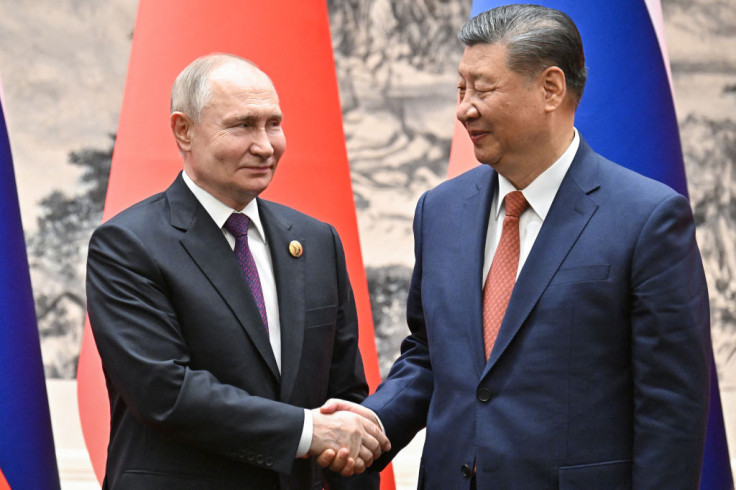
Russia and China could view President Donald Trump's midterm election losses as an opening to pursue their ambitions more aggressively, particularly as the Iran war strains American military resources, Brookings Institution senior fellow Robert Kagan warned Thursday.
Speaking to CNBC's "Squawk Box Asia" after Democrats won both chambers of Congress, Kagan said Moscow and Beijing might conclude they have a limited window to act before a future administration changes Washington's approach to its adversaries.
"If it's clear that Donald Trump is on his way out, and the United States may be returning to something like normal, I don't want to overstate that, but they may feel both of them, both Russia and China, may feel that the time to move is in the next two years," he said.
Kagan went on to argue that the conflict with Iran has exposed limits in Washington's military capacity, potentially complicating its ability to respond to another crisis, particularly in Asia. "Everybody can see how much our stocks are depleted in terms of interceptors and missiles, which are of vital interest in the Asian theater," he said.
The Congressional Budget Office estimates that the conflict had consumed as much as two-thirds of U.S. missile-defense interceptors since June 2025, largely through operations defending Israel from Iranian attacks. According to that reporting, replenishing inventories could leave supplies constrained for several years.
Kagan also pointed to the deployment of three American aircraft carriers to the Middle East, arguing that concentrating naval power there had reduced the forces available in Asia and could encourage greater Chinese assertiveness.
Taiwan is a central concern in that calculation since Beijing claims the self-governing island as its territory, while Washington supplies weapons intended to help Taiwan defend itself. The United States has no mutual defense treaty with the island.
Trump approved an $11 billion Taiwan arms package in December but subsequently held back another package worth approximately $14 billion, describing it as a "bargaining chip" in negotiations with China.
"I think Trump's only interest right now is in cutting economic deals with China," Kagan said. "I don't think he has any real interest in confronting China, but that is going to lead China to be even more aggressive."
Former CIA Director William Burns said in 2023 that Chinese President Xi Jinping had ordered his military to be ready to invade Taiwan by 2027. Burns emphasized that readiness did not mean Xi had decided to invade that year, or to invade at all.
Kagan's comments also precede a possible meeting involving Trump, Xi and Russian President Vladimir Putin at this month's APEC gathering in Shenzhen. Putin had reportedly proposed discussing an end to the Ukraine war without Ukrainian President Volodymyr Zelenskyy participating.
However, Beijing's public response to the American election was more restrained. Asked Wednesday about the congressional results, Chinese Foreign Ministry spokesperson Mao Ning called them a U.S. domestic affair and said China wanted continued communication and cooperation with Washington.
© Copyright IBTimes 2026. All rights reserved.