Xi Wants Trump To Stop Selling Weapons To Taiwan. He’s Expected To Point To A Reagan-Era Agreement.
A $14 billion U.S. weapons package has remained on hold since Trump called it a "negotiating chip" after meeting Xi in May.

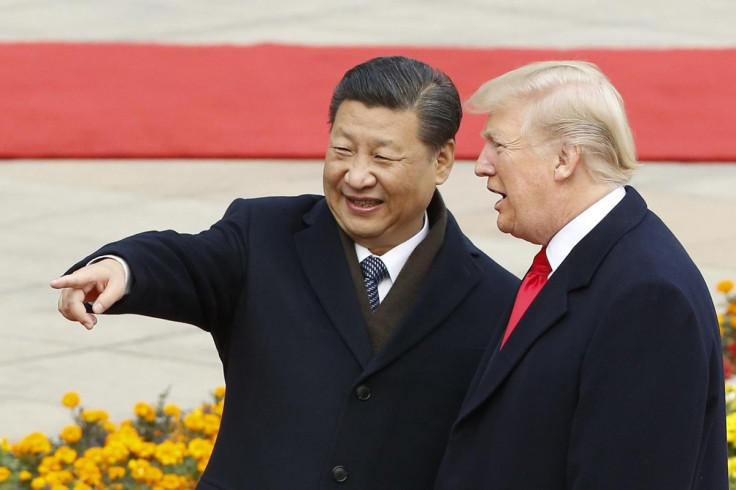
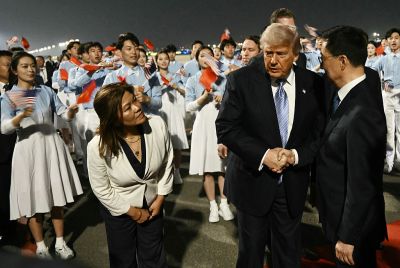
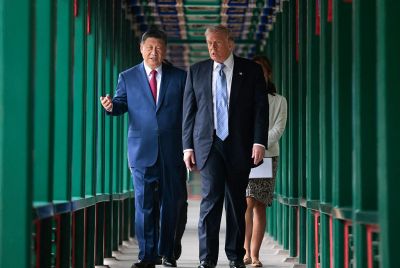
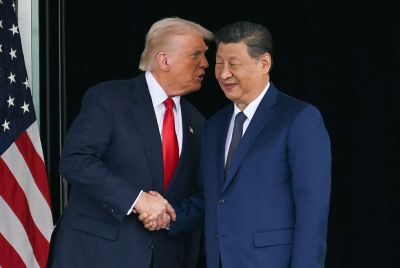
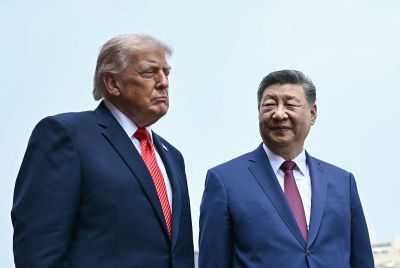
Chinese President Xi Jinping is expected to push President Donald Trump to halt U.S. arms sales to Taiwan when the two leaders meet in Washington this week, putting one of the most contentious issues in U.S.-China relations back at the center of their talks.
Beijing is expected to cite a 1982 joint communiqué in making its case, three people familiar with discussions ahead of the summit told Reuters. Xi arrives in Washington on Wednesday, with formal talks scheduled for Thursday.
Under the 1982 communiqué, the United States said it did not intend to pursue a long-term policy of arms sales to Taiwan and intended to gradually reduce those sales. China has repeatedly cited the agreement in its objections to U.S. weapons transfers to the island.
The agreement was accompanied by a memorandum from then-President Ronald Reagan that placed conditions on that position. Reagan wrote that Washington's willingness to reduce arms sales was "conditioned absolutely upon the continued commitment of China to the peaceful solution" of differences with Taiwan.
The Reagan administration also issued what became known as the "Six Assurances" to Taiwan in 1982. Among them, the United States said it had not agreed to set a date for ending arms sales to Taiwan and had not agreed to consult Beijing in advance about weapons sales to Taipei.
The distinction is central to the two governments' different readings of the 1982 arrangements. China has called on Washington to abide by the three joint communiqués between the countries, while U.S. policy also incorporates the Taiwan Relations Act and the Six Assurances.
The United States switched diplomatic recognition from Taipei to Beijing in 1979 but has maintained unofficial relations with Taiwan. Under the Taiwan Relations Act, Washington is required to make defense articles and services available to Taiwan in quantities necessary for the island to maintain sufficient self-defense capabilities.
China claims democratically governed Taiwan as part of its territory and has not ruled out using force to take control of the island. Taiwan's government rejects Beijing's sovereignty claims. Chinese military aircraft and ships now operate around Taiwan regularly, and Beijing has staged large-scale exercises around the island in recent years.
Taiwan conducted military exercises involving missiles and attack drones last week ahead of the Trump-Xi meeting. The exercises included the Taiwanese military's first joint combat drills using multiple types of attack drones, while anti-air, anti-ship and anti-landing missiles were also used.
The immediate dispute involves billions of dollars in U.S. weapons. The Trump administration approved an $11 billion arms package for Taiwan in December, the largest single package Washington has approved for the island.
A second package worth about $14 billion has remained on hold for months. Trump said after meeting Xi in Beijing in May that he had not decided whether the package would proceed and described the arms sales as a "very good negotiating chip."
China is also seeking an end to deliveries of weapons Taiwan has already ordered, people familiar with the discussions told Reuters. One source said Beijing is expected to argue that Taiwan, rather than China, is changing the status quo and causing instability in U.S.-China relations.
Taiwan has accumulated a large backlog of U.S. weapons awaiting delivery, including Patriot missile interceptors and High Mobility Artillery Rocket Systems. Some U.S. weapons supplies have also been affected by demands from the war with Iran.
Iran is also part of the discussions surrounding Xi's latest visit. China has offered to help pressure Tehran over the Middle East war in return for movement by Washington on Taiwan arms sales, people familiar with the talks told Reuters.
The White House has not announced a decision on the $14 billion package. An administration official told Reuters that Trump has said he will make a determination on the proposed sale in a "fairly short time."
Taiwan's Foreign Ministry said it was closely following developments surrounding high-level U.S.-China contacts and remained in "robust communication" with Washington.
Republican lawmakers have also urged Trump not to alter U.S. policy toward Taiwan. Sen. Pete Ricketts, chairman of the Senate Foreign Relations subcommittee on East Asia, said last week that Washington should continue supporting Taiwan and make clear that its position had not changed.
Rep. John Moolenaar, Republican chairman of the House Select Committee on China, wrote to Trump on Friday that Beijing's objections to U.S. arms sales and American security cooperation with allies in Asia should be rejected.
© Copyright IBTimes 2026. All rights reserved.
- Recommended For You