Burma: The Tragedy of the Rohingya People
ANALYSIS
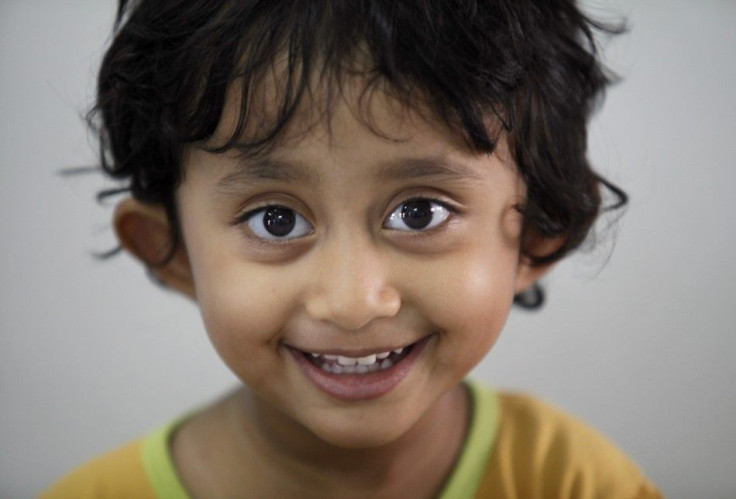
As Myanmar (or Burma) gradually opens up to Western nations after a half-century of isolation, observers are wondering how far the Burmese government will actually go into enacting democratic reforms.
Having elected a (nominally) civilian government last year, the new president of Burma, Thein Sein, has promised a series of liberalizing measures, including the legalization of trade unions, the release of (some) political prisoners, as well as “fair and free” elections. He has even opened up talks with pro-democracy activist and opposition figure, Aung San Suu Kyi.
However, given the still-heavy presence of military figures in the “civilian” government, there are doubts that Burma will reform at all.
In addition, Burma has one of the worst human rights records of any nation on earth. The military-led abuse and mistreatment of its ethnic minorities remains a sordid, black mark on the country’s psyche.
Among the victims of this state-sanctioned oppression are the Rohingya people, an ethnic Muslim group that has long suffered in Buddhist-dominated Burma.
About 2-million Ronhingya live in the northwestern parts of Burma, near the Bangladesh border.
Hundreds of thousands of Burmese Ronhingya are currently living in neighboring Bangladesh, where they are unwanted refugees. But lacking Burmese citizenship, they are essentially stateless and existing in a kind of limbo.
Late last month, Agence France Presse (AFP) reported that the Burmese government agreed to take back some refugees from Bangladesh – excluding Rohingya.
According to the United Nations, the Rohingya who live in Burma don’t have it much better – they are forbidden from owning property, marrying or even travelling without state permission. Many are subject to forced slave labor and extortion by authorities.
Mizzima, the India-based Burmese news agency reported a few years ago that Rohingya women in Burma are frequently subject to sexual abuse and rape by Burmese soldiers. Reportedly, Burma’s military continues to commit atrocities against the civilian Rohingya population.
As such, desperate Rohingya pour across the borders into Bangladesh every year – although they are Muslims like the overwhelming majority of Bangladeshis, the Rohingya are despised and rejected there as well. Bangladesh, already impoverished and overpopulated, simply cannot cope with the influx.
Mojibar Rahman, a Rohingya refugee living in a United Nations camps in Bangladesh, told AFP: We thought that after the election [of a civilian government in Burma], the situation would improve for Rohingya in Myanmar, but it hasn't… no one wants to go back.”
Indeed, Rohingyas are trapped in a hopeless Catch-22… unwanted in Bangladesh, rejected by Burma since they lack Burmese citizenship.
Some Rohingya refugees have made it as far as Malaysia I the east or the Arab countries towards the west. Many are also in Thailand. But wherever they are, Rohinya remain vulnerable.
Refugees International has reported that “in both Bangladesh and Malaysia, repressive government policies and lack of adequate international support force the Rohingya to struggle for survival in both countries. The inability of the Rohingya to access basic services in both Bangladesh and Malaysia is further compounding their vulnerability.”
An elder Rohingya refugee living in a camp in Kutupalong, Bangladesh, told BBC: We have nothing in Burma. We are disabled people, like slaves. We cannot work because our hands and feet are cut off. If we don't permission to travel we are sent to jail. We are really like slaves there.”
A younger Rohingya at the same camp lamented: If I stay in Bangladesh, what will I do? Even if I build a house here people will treat me as Burmese... this is a hated word. I have a ray of hope in my heart that one day there will be peace in Burma and my people will get back all their lives.
Panchali Saikia, a research officer at the Institute of Peace and Conflict Studies in India, recently wrote of the Ronhingya: “After providing shelter to the Rohingyas for nearly three decades, Bangladesh is now concerned about the annual increase in their numbers. Apart from being an economic burden, the Rohingyas’ involvement in insurgent activities along the Myanmar-Bangladesh border is feared by the government. Hence to reduce the influx, the government has declared that it will no more consider any asylum seeker as refugee.”
She further stated: “Anti-Rohingya communities in Bangladesh have also pressurized the government to repatriate the Rohingyas. Due to the denial of protection, assistance, and fear of repatriation, the Rohingyas are now escaping to Malaysia through the sea route. Malaysia is seen as the best destination because of the religion factor. Also, the Malaysian government’s permit to access the UN Refugee Agency (UNHCR) has attracted asylum seekers.”
Saikia added: “The plight of the Rohingyas and the growing concern over their influx is not only confined to Myanmar, Bangladesh and Thailand. Other regional powers like India, Indonesia and Malaysia must also engage themselves considering its security implications. The forcible push-backs are a major threat to the maritime as well as border security of these countries. Left with no other option, the Rohingyas are vulnerable to being recruited by sea pirates and involved in arms and drug smuggling.”
Now, as Burma appears to be opening up to western nations, it will be interesting to see how its human rights abuses – and the plight of the Rohingya – will be assessed and handled.
© Copyright IBTimes 2026. All rights reserved.
- MOST READ