China Sent Iran Shoulder-Fired Missiles by Land After Xi Denied It to Trump
Naval blockade cannot stop what travels by land: China's missiles just proved it
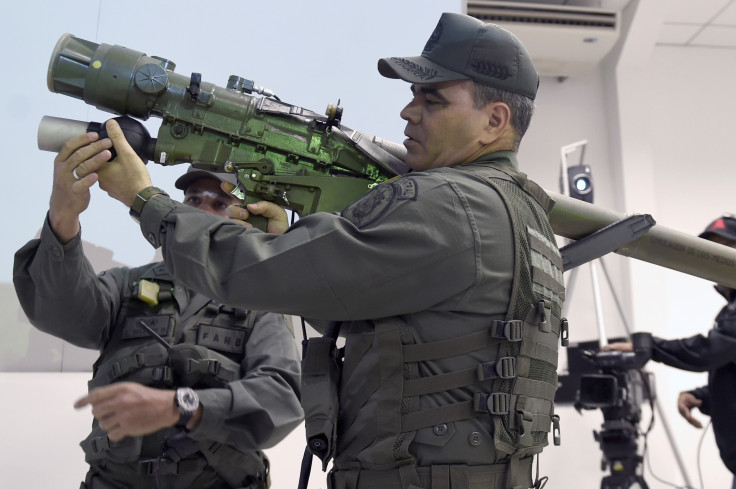
While Xi Jinping was personally assuring Donald Trump that China would not arm Iran under any circumstances — a pledge Trump posted to Truth Social around July 24 — a Hong Kong intermediary called Zhongqing Baoshang International Investment was finalizing a contract to deliver between 300 and 400 Chinese-made shoulder-fired surface-to-air missiles to Tehran, routed by air from Urumqi in western China to Pakistan and then overland into Iran, according to a Reuters investigation published July 29. The deal, valued at $60 million to $70 million, covers QW-12 and FN-16 man-portable air-defense systems — infrared-guided, shoulder-launched weapons specifically designed to force aircraft to higher altitudes or force them out of restricted airspace entirely. The first shipment was expected within weeks.
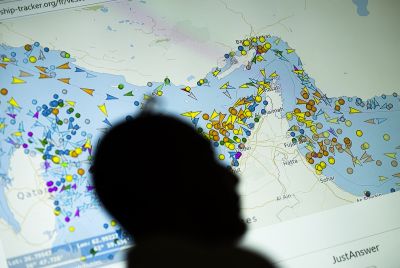
That delivery route — Urumqi to Pakistan to Iran, exploiting the land corridor the US naval blockade cannot touch — is now at the center of a new US-Israeli strategic debate: whether to attempt a comprehensive land blockade of all seven of Iran's sovereign land neighbors to close the gap the sea campaign has exposed.
The land blockade concept emerged during Trump's July 28 Oval Office meeting with Israeli Prime Minister Benjamin Netanyahu, according to The Daily Telegraph and the Washington Free Beacon, which cited Israeli officials and people familiar with the discussions. "What if you just blocked the land?" a senior Israeli official told the Free Beacon. "Suppose Iran can't bring anything in and cannot take anything out." The same meeting produced no publicly announced policy decision — but the emergence of the idea signals that after five months of the war that began on February 28, 2026, when US and Israeli forces launched Operation Epic Fury against Iran, both governments believe the naval campaign has reached the limits of what it can accomplish alone.
Xi Told Trump One Thing; Beijing Did Another
The Chinese MANPADS deal is not simply a logistics story. It is a direct contradiction of a personal commitment made at the highest diplomatic level.
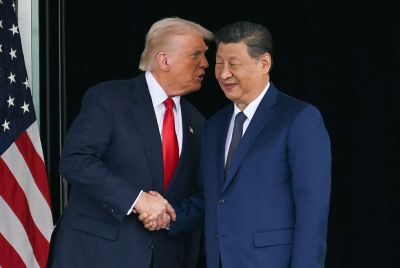
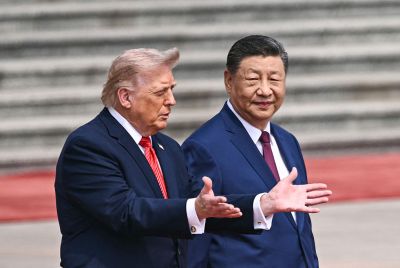
According to reporting by TFTC, which drew on the Reuters investigation published July 29, Xi Jinping told Trump at their Beijing summit meeting that China would not, "under any circumstances," give or sell weapons to the Islamic Republic of Iran — and that the statement included Chinese companies. Trump posted that assurance publicly to Truth Social. The MANPADS contract was reportedly already signed at the time — or signed shortly thereafter — through the Hong Kong entity Zhongqing Baoshang International Investment, which functions as an intermediary insulating the Chinese state from direct attribution.
China's Foreign Ministry called the Reuters report "completely groundless." Pakistan's military public relations office denied any involvement in facilitating the transfer, describing the speculation as "absolutely concocted and false," according to Pakistan's ISPR. Neither denial names a factual error in the Reuters investigation, which cited two Western intelligence sources and a senior Iranian official.
For the Trump administration, the revelation creates a specific policy problem: any land blockade of Iran requires sustained diplomatic cooperation from countries that are simultaneously dealing with Chinese economic relationships. A US demand that Pakistan close its border to Iranian arms imports — when China is actively routing those arms through Pakistan with apparent Pakistani facilitation — is structurally harder to enforce than a demand that Pakistan simply honor a US treaty request.
What Shoulder-Fired Missiles Do to an Air Campaign
Before examining the land blockade's diplomatic impossibilities, it is worth understanding exactly what the Chinese weapons are designed to do — and why their arrival through Pakistan is being treated as an immediate military concern.
The QW-12 and FN-16 are third-generation Chinese MANPADS: shoulder-fired, infrared-homing, fire-and-forget systems that an individual soldier can carry and operate, according to Army Recognition's technical analysis. They do not emit radar signals, which means they cannot trigger a modern aircraft's radar-warning receiver before launch. An aircraft approaching a target protected by MANPADS receives no electronic alert — it may receive a missile approach warning from an optical sensor if equipped, but at low altitudes and short notice.
The QW series has an effective range of approximately 5 to 6 kilometers (3.1 to 3.7 miles) and an engagement altitude ceiling of roughly 4 kilometers (13,100 feet). Below that altitude band, the weapons pose a genuine threat to helicopters, propeller aircraft, and slower-moving jets making low-altitude bomb runs. Modern combat aircraft equipped with directed infrared countermeasure systems and flare dispensers have significantly improved lethality against MANPADS — but even with countermeasures, the tactical calculus changes.
With 300 to 400 launchers, Iran could establish between 50 and 100 dispersed firing positions — assigned to airfields, missile bases, nuclear facilities, command centers, refineries, and logistics corridors. This does not prevent US or Israeli aircraft from operating over Iran. It raises the minimum safe attack altitude, forces reliance on stand-off munitions released from greater distance, and reduces precision in close-support scenarios. Over a prolonged campaign, it increases ordnance expenditure per target and the cost per sortie. For an air campaign already straining US munitions stockpiles — the Center for Strategic and International Studies warned in May 2026 that restoring prewar Patriot and THAAD interceptor inventory levels would take three or more years from today — that marginal degradation compounds an existing supply-chain problem.
The weapons' historical precedent is instructive. When the US supplied Stinger MANPADS to Afghan mujahideen fighting Soviet forces in the 1980s, the missiles did not end the Soviet air campaign — but they forced Soviet helicopter crews to fly higher, abandon certain tactics, and absorb materially higher losses per sortie. Iran is attempting to use a Chinese-supplied equivalent against the US and Israeli aircraft now conducting strikes on its territory.
Why a Land Blockade Is Both Logical and Extremely Difficult
The naval blockade of Iranian ports, reimposed July 14 after the collapse of the June 17 Versailles Memorandum of Understanding, has imposed significant economic pressure on Iran. The Department of Defense estimated the campaign was costing Iran $500 million per day in oil revenue, according to Wikipedia's summary of the 2026 naval blockade. US Central Command reported intercepting 85 vessels and seizing three ships. The Foundation for Defense of Democracies estimated combined daily economic damage at approximately $435 million.
But the MANPADS deal illustrates precisely what a naval blockade cannot do: it cannot stop goods that never touch the water.
Iran shares land borders with seven sovereign nations — Iraq, Turkey, Azerbaijan, Armenia, Turkmenistan, Afghanistan, and Pakistan — across approximately 5,440 kilometers (3,380 miles) of frontier. Each of those neighbors has its own economic dependencies, diplomatic alignments, and domestic political calculations that make joining a US-led blockade of Iran complicated at best and economically catastrophic at worst.
A comprehensive land blockade of Iran is not comparable to the Strait of Hormuz in one critical structural respect: the strait is 34 kilometers (21 miles) wide at its narrowest, a chokepoint that US naval power can plausibly dominate. Iran's land perimeter is a 5,440-kilometer (3,380-mile) frontier crossing seven distinct political entities. Enforcing a blockade requires not just persuading seven governments — it requires sustained customs enforcement by each of them against informal trade, smuggling networks, and cross-border communities with centuries of commercial ties.
Iraq shares Iran's longest land border at approximately 1,599 kilometers (994 miles). Baghdad depends on Iran for electricity and natural gas imports to fuel its generators, and Iraq's Shia-dominated political system maintains deep institutional ties to Tehran. The IMF projected Iraq's GDP would decline by approximately 7 percent in 2026 due to Hormuz disruption. Asking Baghdad to compound that damage by closing its land border with Iran would require a political commitment the Iraqi government has shown no sign of being willing to make.
Turkey adopted new export controls on military and dual-use goods destined for Iran in April 2026 under US pressure, but Middle East Forum analysts were blunt about what that means in practice: Ankara's history as a hub for sanctions evasion — the Halkbank case, the repeated appearance of Turkish actors in OFAC designations — makes the new controls likely to function as a legal facade rather than genuine enforcement. Turkey shares a 534-kilometer (332-mile) border with Iran and was among Iran's top non-oil trading partners before the war.
Pakistan has been the most significant active participant in Iran's overland resupply strategy. On April 25, the Pakistani Commerce Ministry formally issued the "Transit of Goods through Territory of Pakistan Order 2026" under SRO 691(I)/2026, creating a legal framework for Iranian-bound cargo to transit Pakistani ports and land corridors. More than 3,000 Iran-bound containers had accumulated at Karachi following the US naval blockade; the Transit Order was framed as humanitarian crisis management. It is now also functioning as the legal corridor through which Chinese arms are traveling to Iran.
Afghanistan, governed by the Taliban, deepened trade ties with Iran substantially since the war began, with Afghan-Iranian commerce reaching $1.626 billion over a six-month period in 2025. The Taliban government has incentives to maintain Iranian trade ties even as it navigates its own tension with Tehran, and Afghanistan's informal trade networks — cash-based, fragmented, and monitored unevenly — represent exactly the kind of porous border environment that defeats formal sanctions enforcement.
Turkmenistan, Armenia, and Azerbaijan each carry their own complications. Turkmenistan maintains discreet commercial ties with Iran. Armenia has historically depended on Iranian transit routes. Azerbaijan, which has deepened its partnership with Israel, is the most plausible participant in a US-aligned land pressure campaign — but it shares a long border with Iran and faces the prospect of Iranian retaliation against a country that cannot defend itself without outside support.
How Would It Even Work?
Former US National Security Advisor Robert Harward, speaking to MS NOW on July 31, captured the enforcement challenge plainly: "Without [neighbor] cooperation, the U.S. would face having to use military force," noting that anyone attempting to move goods through designated zones without authorization would need to be treated as a potential target. He added that economic and financial pressure, "if you tie them all together and synchronize them, you've got the best of all worlds, a whole of government effort" — while acknowledging that whether economic collapse would topple the Islamic Republic's leadership remains unclear.
The Center for Strategic and International Studies identified a specific policy window in June 2026 that has been narrowing ever since: engaging third countries with direct land or sea routes to Iran "before new transshipment networks take root." Pakistan's formal Transit Order came in April. By July, the MANPADS deal was already moving. The window CSIS warned about appears to be closing.
A Middle East Eye analysis in May offered a sobering corrective to the most optimistic version of the land-blockade argument: South Asia analyst Mostafa Modabber told the publication that "land routes cannot match the scale, speed or profitability of maritime trade." The land blockade, if achieved, would be an additional economic stressor on an already damaged Iranian economy — not the kill switch that the naval campaign has similarly failed to be.
What the Seven-Nation Problem Actually Requires
The secondary sanctions tool already exists and is already being applied. Treasury has sanctioned over 100 vessels connected to Iran's shadow fleet since February 2026 as part of its maximum economic pressure campaign. Any Pakistani logistics firm that facilitates Chinese weapons transfers to Iran faces secondary sanctions exposure under Executive Order 13224 — a designation that cuts off access to US dollar-clearing networks and effectively ends international banking relationships.
The Diplomatic Insight's legal analysis of Pakistan's Transit Order is instructive here: secondary sanctions are not self-executing. They require a specific administrative determination by OFAC. As of the analysis's publication in April 2026, no such determination had been made against Pakistan or any Pakistani entity. The arms deal, now documented by Reuters, creates a specific factual basis for exactly that kind of OFAC action — but acting on it against Pakistan would mean sanctioning a country that is simultaneously serving as the US's primary diplomatic mediator between Washington and Tehran.
That is the core contradiction in the land blockade concept. The countries Washington most needs to close their borders to Iran are, in most cases, precisely the countries Washington least wants to alienate in the diplomatic effort to end the war.
Other Options Still on the Table
The land blockade emerged from the same July 28 Trump-Netanyahu conversation that reportedly included discussion of a large-scale strike on Iran's energy infrastructure, further bombing of Iran's missile capabilities, targeting the underground nuclear facility known as Pickaxe Mountain, and seizing Kharg Island to control Iran's primary oil export terminal. CBS News reported that the US and Israel were preparing for a possible large-scale attack on Iran's energy infrastructure in the coming days.
Negotiations continue through Omani mediators. Iran has so far rejected proposals for a formal truce and continues to treat control of the Strait of Hormuz as its primary remaining card. Inside Iran, economic conditions have deteriorated sharply: the rial has collapsed, unemployment is elevated, and basic goods shortages are widespread. Whether that pressure translates into concessions or into more dangerous escalation remains genuinely unknown.
For now, the land blockade remains a proposal rather than a policy — subject to the same structural constraint that has shaped every option the US and Israel have weighed since February 28: Iran's seven sovereign neighbors do not want to be weapons in a war they did not start. Neither does China, which is apparently quite willing to supply weapons of its own.
Frequently Asked Questions
What are the QW-12 and FN-16 missiles, and how do they change the US air campaign against Iran?
The QW-12 and FN-16 are Chinese third-generation man-portable air-defense systems (MANPADS) — shoulder-fired, infrared-guided, fire-and-forget missiles that an individual soldier can carry and operate. They have an effective engagement range of approximately 5 to 6 kilometers (3.1 to 3.7 miles) and a ceiling of roughly 4 kilometers (13,100 feet). Because they use passive infrared guidance rather than radar, they emit no signals detectable by radar-warning systems before launch. Distributed across up to 100 firing positions around Iranian infrastructure — airfields, nuclear sites, missile bases — they force US and Israeli aircraft to operate at higher altitudes and use longer-range stand-off munitions, reducing precision and increasing per-sortie costs. They do not end US air operations, but they materially degrade their effectiveness over time.
Why couldn't the US naval blockade stop these Chinese missiles from reaching Iran?
The US naval blockade specifically targets vessels entering or leaving Iranian ports. The Chinese MANPADS deal was structured to bypass this entirely: weapons were air-freighted from Urumqi in western China to Pakistan, then moved overland into Iran through Pakistani territory. Pakistan formally created a legal framework for this kind of transit in April 2026 with its "Transit of Goods through Territory of Pakistan Order 2026." No ships entered Iranian waters. The blockade has no jurisdiction over land and air cargo that never transits Iranian maritime approaches.
Could the US apply secondary sanctions to Pakistan for facilitating Chinese arms transfers to Iran?
Technically, yes. US secondary sanctions under Executive Order 13224 can target any entity — regardless of nationality — that facilitates Iran's access to weapons or economic resources. The Reuters investigation establishing that Pakistani territory was used to route Chinese MANPADS to Iran creates a specific factual basis for OFAC designations against the Pakistani logistics companies involved. However, Pakistan is simultaneously serving as the US government's primary diplomatic intermediary between Washington and Tehran — sanctioning Pakistan's logistics sector would risk damaging the one remaining diplomatic channel Washington has. This is precisely the dilemma the land blockade proposal fails to resolve: the countries most capable of closing Iran's land routes are the countries Washington least wants to antagonize.
If a land blockade requires cooperation from seven nations, which are the most and least likely to participate?
Azerbaijan is the most plausible participant — it has deepened its partnership with Israel and has less direct economic dependency on Iran than the other six. Turkey adopted new dual-use export controls in April 2026 but has a documented history as a sanctions evasion hub and faces its own secondary sanctions exposure from CAATSA. Turkmenistan maintains commercial ties with Iran. Armenia depends on Iranian transit routes. Pakistan has formally legalized overland Iran trade corridors. Iraq depends on Iran for electricity and natural gas and faces IMF projections of a 7 percent GDP contraction in 2026. Afghanistan's Taliban government manages a heavily cash-based, informally traded economy with Iran that is essentially impossible to enforce against from outside. Analysts across multiple institutions have described enforcing a comprehensive land blockade as "extremely difficult" without US military coercion of sovereign nations — which carries its own legal and diplomatic costs.
Originally published on Tech Times
- Recommended For You