Elon Musk Says Money Won’t Exist by 2036, Then He Launched a Payments App.

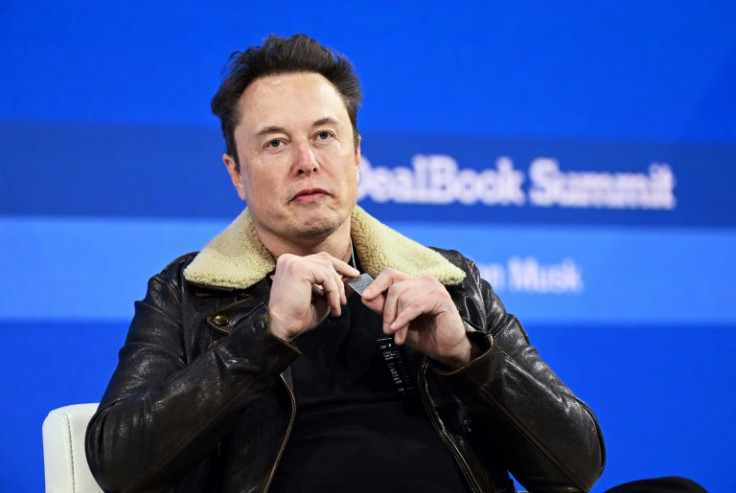
Elon Musk sat down with The Economist at his Texas Gigafactory in late July and made a claim that lands like a wrecking ball on Bitcoin's entire investment thesis.
"Money won't matter in 2036." — Elon Musk, CEO, Tesla and xAI
His logic: AI and robots will produce more goods and services than anyone could possibly consume, so currency stops being useful.
He predicts artificial superintelligence surpasses all of humanity combined by 2031, an "age of amazing abundance" by 2036, and crucially, deflation rather than inflation, because machine output keeps climbing while the money supply stays flat.
That last word is the problem. Bitcoin's whole institutional story is a bet on the opposite.
Why This Guts Bitcoin's Core Argument
Since 2020, the dominant case for Bitcoin has been debasement. Fiat keeps printing, deficits keep growing, and a fixed 21 million supply rewards anyone who holds through the storm. Larry Fink built BlackRock's pitch on exactly that, and no one has bet harder on it than Michael Saylor.
Corporate adoption of Bitcoin is "necessary" and "inevitable" for BTC to succeed as a global monetary network. — Michael Saylor, executive chairman, Strategy
If Musk is right and the cost of bread, energy, housing, and healthcare all crater toward zero, the inflation-hedge argument for Bitcoin evaporates along with the inflation itself. Strategy's entire debasement-anchored playbook, funded by dollar-denominated dividends, assumes humans keep earning, saving, and allocating capital for decades. Musk is arguing that machine may not survive the 2030s.
The Irony Musk Couldn't Avoid
Here's where it gets absurd. Days after declaring money obsolete, on July 27, Musk launched X Money, a digital wallet with peer-to-peer transfers and a metal Visa debit card, and posted "This is money" on his own platform. He did it the same week his fortune was cratering, referring to himself as a "former trillionaire" after Tesla stock fell 14.5% on July 23, its worst day in over a year.
The man says money won't matter, then builds a payments app and mourns his own net worth. Not everyone bought the thesis, either. Michael Burry, the investor who called 2008, flatly labeled the claim false, and one caveat cut deepest:
Money won't matter in 2036 "only if" politics allows the abundance to actually be shared. — Vinod Khosla, founder, Khosla Ventures

The more interesting question is whether Bitcoin survives its own argument going obsolete. There's a real case that it does. Even in a world of infinite goods, governance, identity, and cross-border coordination don't solve themselves.
A neutral, censorship-resistant settlement layer stays useful for machine-to-machine payments and AI-agent transactions, which is precisely the future Musk describes. If a handful of AI systems end up controlling most productive capacity, scarcity doesn't vanish. It just relocates from goods to access and power, and a value the state can't seize matters more, not less.
Bitcoin Price Today
On July 31, Bitcoin trades around $64,000 after the Fed held rates steady at Wednesday's meeting, a decision analysts broadly read as hawkish given several voices had pushed for a hike. It's still stuck below its 50-day average near $66,300 and roughly 49% under its $126,198 October 2025 record, with escalating Iran tensions keeping a lid on risk appetite.
So here's the debate: if Musk's post-money future actually arrives, is Bitcoin a relic of the world it's replacing, or the one neutral rail that outlives money itself?
© Copyright IBTimes 2026. All rights reserved.
- Recommended For You