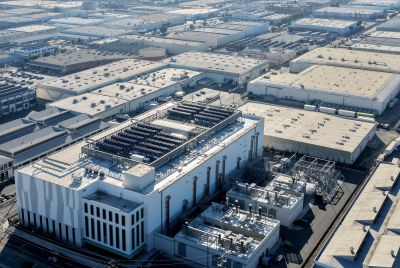
The Last Cheap Watt: Where Bitcoin Mining Goes When Data Centers Take the Grid

For most of its history, Bitcoin mining followed a simple map: find the cheapest electricity, connect the machines, and let the Bitcoin network decide the rest. The rule worked because miners were unusually mobile. A facility could move where power was underused, stranded, seasonal, or politically available.
That rule is now under pressure. The competitor for the same socket is no longer only another cryptocurrency mining operation. It is AI infrastructure, and the same substations that once attracted mining sites are being reviewed for data centers with contracted customers, higher uptime requirements, and different pricing logic.
This is not a case against mining. It is an analysis of repricing. The last cheap watt still exists in parts of the world, but it is no longer a durable moat. It is a lease with a counterparty.
The Rule That Held for Twenty Years
The old geography of mining was built around spare power. China dominated when cheap industrial capacity and regional hydropower made the economics work. After the 2021 ban, Bitcoin miners moved into North America, Latin America, Central Asia, and Africa. The logic stayed the same: cheap electricity, available capacity, tolerable regulation, and enough network connection to operate.
That pattern created concentration. Hashrate Index reported in its Global Hashrate Heatmap for Q2 2026 that the top three countries held about 65.6 percent of global hashrate, a reminder that total network hashrate is still clustered despite the industry's global image.
The concentration figure is not the story by itself. It is the setup. Mining has always been global, but it has never been evenly distributed. The location of mining operations follows energy markets, policy, tax treatment, machine imports, and local tolerance for noise, heat, and power draw.
For years, that was enough. A miner did not need the best country. It needed the right substation, tariff, cooling profile, and uptime window. The process of turning electricity into block rewards was brutal but legible. If the watt was cheap enough, the site had a reason to exist.
What Changed
The new pressure comes from the fact that AI infrastructure is entering many of the same energy markets. CoinShares reported in Q1 2026 that more than $70 billion in AI and HPC contracts had been announced across the listed mining sector. That number matters because it shows how quickly the market began valuing power access as compute infrastructure, not only as mining capacity.
Mining has a ceiling on what it can pay. Hashprice, which measures expected mining revenue per unit of compute, was about 31.10 USD per PH/s per day on 11 July 2026, according to Hashrate Index. That figure moves with Bitcoin price, transaction fees, network difficulty, and the share of hashpower online. It can shift materially within weeks.
AI infrastructure is priced differently. A data center under contract can support fixed obligations to a customer. A miner is exposed to market conditions every day. That is the difference between a load capped by hashprice and a load backed by service-level agreements.
There is another asymmetry. Mining is often interruptible. In some markets, grid operators value miners because they can curtail load when the grid is stressed, especially during summer months or periods of high electricity demand. AI data centers do not behave the same way. A site under a customer SLA cannot simply shut down because the grid needs flexibility.
That does not mean every mining site can become an AI site. Most cannot. High-performance computing needs liquid cooling, redundancy, high uptime, fiber, staffing, and contracted demand. A warehouse built for Bitcoin ASICs is not automatically a data center. The pivot belongs to a minority of operators with the right land, power contracts, capital, and engineering base.
That nuance is important. The industry is not moving from mining to AI as one block. A fraction of listed operators can reposition. Most cryptocurrency miners still have to compete inside mining economics.
What Repricing Looks Like on the Ground
Paraguay shows one version of the repricing. The country has cheap renewable energy from Itaipu-linked hydropower, which made it attractive for cryptocurrency mining. But the current squeeze is not a simple story of AI outbidding miners. It is a utility and policy story.
The Paraguay Post reported in May 2026 that legal mining operators fell from 71 at the start of 2025 to 41 in 2026. Hashrate Index reported in 2026 that industrial electricity moved from about 0.03 USD per kWh to roughly 0.037 to 0.050 USD per kWh, while medium-tension rates doubled. The Paraguay Post also reported in May 2026 that every current Paraguayan mining contract expires on 31 December 2027, a date ANDE has described as non-negotiable.
That is the cliff. It does not say mining disappears. It says access is being renegotiated by the party that controls the socket. Paraguay first imposed tariffs aimed at Bitcoin miners in 2022, so the current situation is a continuation of policy rather than a new event.
The optional image is even clearer. The Paraguay Post reported in May 2026 that ANDE requires a guarantee deposit of about 4.5 million USD from a 40 MW operator before connection. That is not a market signal from a hyperscaler. It is a utility changing the entry terms.
The United States shows the same event through a different institution. Cheap power there often came partly through incentives, including tax breaks, local development packages, and access to underused industrial regions. Several states are now reconsidering crypto-mining tax breaks and introducing legislation to limit mining subsidies. In the US, the counterparty may be a legislature rather than a state utility.
These two sites of pressure are not identical, but they rhyme. In Paraguay, the counterparty is ANDE. In the United States, it may be a state government. Neither is a neutral spot price, and both can be revised.
That is why the current story should be read as repricing, not exit. Capacity is not simply fleeing cheap-power markets. It is being repriced inside them. Operators are learning which cheap-power markets were real industrial advantages and which were temporary arbitrage.
What Cheap Power Is Worth Now
Cheap power used to be a durable moat. Now it looks more like a contract with a renewal date, a regulator, and a competing use case.
That changes how mining economics are read. Bitcoin mining profitability 2026 is not only a question of ASIC price, hashprice, or pool selection. It is a question of power tenure. A site may have low electricity costs today and still face a weak position if the utility, legislature, or hyperscaler can reprice the next contract.
The point is not that AI data centers always pay more for electricity in every country or every corridor. The point is that they can support a different kind of power contract. A miner pays from variable block rewards. A data center may pay from contracted compute demand. The same megawatt has different value depending on who is using it and what obligation sits behind it.
This also complicates the sustainability debate. Mining critics often focus on energy consumption, total electricity consumption, emissions, and the industry's footprint. Mining defenders point to curtailment, stranded energy, demand response, and sites powered by renewable energy rather than fossil fuels. Both arguments can miss the operational point: grids are no longer evaluating only whether a load consumes energy. They are evaluating what that load does for reliability, industrial development, and environmental sustainability.
A mining site that consumes flexible power may still be useful to a grid. A data center may create jobs and long-term contracts but use more energy with less curtailment flexibility. The policy question is becoming more specific: which load fits the grid's future?
Where the Margin Moves
If a cheap location is no longer a durable advantage, the remaining levers become narrower. Fleet efficiency matters more. Newer ASIC generation can produce more hashpower per watt, and sub-10 J/TH efficient hardware changes the cost curve for operators that can finance a fleet refresh.
But that lever has limits. Efficiency is bought with capital. Older machines do not disappear because better hardware exists. A miner with aging equipment, shorter power tenure, and rising grid charges cannot solve the problem only by pointing to a new generation of ASICs.
Payout structure also matters. Mining is the computational process of verifying transactions and helping protect the blockchain through specialized hardware and Proof-of-Work. A mining pool combines the computing power of many participants so smaller operators can receive more frequent rewards based on contribution to total hash rate, rather than waiting for a solo block. Pools charge commissions to sustain operations and payout infrastructure.
*EMCD Mining Pool is relevant here as an operational tool rather than a profitability forecast. Its offering includes integration with services such as Wallet, Coinhold, P2P, and Exchange customized rates for high-hashrate operators, merged mining support, round-the-clock monitoring, and live expert assistance. Together, these features may reduce administrative friction and improve payout transparency. They do not, however, change the underlying economics of a mining site once electricity becomes materially more expensive.
That is the honest limit. Pool structure, merged mining, and payout design can matter at the margin. Fleet efficiency can matter more. But neither one creates the old world where a cheap watt was enough by itself.
Mining has become a capital-intensive infrastructure business. The winners are more likely to be operators with durable power contracts, efficient fleets, strong site engineering, and the ability to manage curtailment, compliance, and counterparties. Home mining and small-site experiments still exist, but the center of gravity has moved away from the house and toward industrial operations.
The Open Question
The last cheap watt is not gone. It is contested.
Some watts will still go to mining because mining can be interruptible, geographically flexible, and compatible with certain stranded or underused energy profiles. Some will go to AI data centers because contracted compute can support a higher reservation price. Some will remain limited by transmission, climate, permitting, or local politics.
The real question is no longer where cryptocurrency miners can find cheap electricity. It is where cheap electricity remains politically, contractually, and physically available for mining after every other buyer has made a claim on the same grid connection.
That is the new map. Not the cheapest watt. The last defensible one.
FAQ
Which countries hold the most Bitcoin mining capacity?
Hashrate Index reported in its Global Hashrate Heatmap for Q2 2026 that the top three countries held about 65.6 percent of global hashrate. The exact country ranking should be checked against the latest heatmap before publication.
Do AI data centers pay more for electricity than Bitcoin miners?
Not in every site or market. The difference is contract structure. Mining is capped by hashprice and market conditions. AI data centers may be backed by longer-term customer contracts and higher uptime commitments, so the same power connection can be valued differently.
Why is Bitcoin mining being repriced in cheap-power markets?
Cheap power is no longer only a mining input. It is also an industrial resource for AI, data centers, manufacturing, and grid planning. Utilities and legislatures are revising tariffs, deposits, incentives, and access rules as demand rises.
What happens to Paraguay mining contracts in 2027?
The Paraguay Post reported in May 2026 that every current Paraguayan crypto-mining contract expires on 31 December 2027, and ANDE has described the date as non-negotiable. That makes 2027 a contract-renewal cliff, not an automatic exit date.
*Disclaimer: This material is for informational purposes only and should not be considered financial, investment, legal, or tax advice. We are not financial advisors and do not encourage readers to buy, sell, or use any specific asset, product, or service. All prices, costs, and profitability estimates are approximate and may change depending on market conditions, electricity rates, network difficulty, equipment performance, fees, and other factors. EMCD does not guarantee the accuracy of these estimates or any specific financial outcome.
© Copyright IBTimes 2026. All rights reserved.
- Recommended For You