Electricity is Emerging as the Next Constraint on America’s AI Race
The speed of AI development is increasingly colliding with the slower timetable of the energy system.
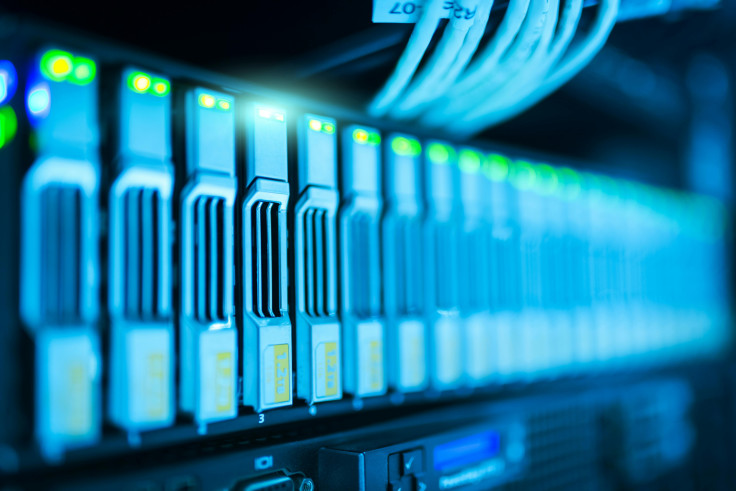
The artificial intelligence boom was supposed to be a race for chips, but it is Increasingly becoming a race for electricity.
The United States is building data centers at a pace that is exposing a less glamorous but potentially more consequential constraint: the power grid's ability to generate, transmit, and deliver electricity quickly enough to support AI workloads.
The International Energy Agency estimates that data centers consumed about 415 terawatt-hours of electricity globally in 2024, or roughly 1.5% of global electricity use. Its base case projects that consumption will more than double to about 945 TWh by 2030. Electricity demand from AI-focused accelerated servers is expected to grow about 30% annually, making AI the biggest driver of the increase.
The pressure is particularly acute in the United States. The IEA expects U.S. data-center electricity consumption to increase by about 240 TWh between 2024 and 2030, a 130% rise. By the end of the decade, data centers could account for nearly half of U.S. electricity-demand growth.
That does not mean America is running out of electricity, but that the speed of AI development is increasingly colliding with the slower timetable of the energy system.
"The bottleneck clearly is electricity," said Hari Vasudevan, founder and CEO of KYRO AI, a Texas-based, AI-powered platform that helps utilities manage critical infrastructure. He told International Business Times that power availability has become the leading constraint on data-center development.
That assessment comes with an important qualification: electricity is not replacing semiconductors as the only critical bottleneck. Instead, power is becoming one of several physical constraints that can determine how quickly AI infrastructure can actually be deployed.
AI creates a different kind of electricity load
A conventional industrial facility can often be planned around a relatively predictable electricity profile. AI data centers are different because computing demand can move rapidly as workloads fluctuate.
"The biggest difference between data centers and others who use power is the fluctuation in terms of how much power they use at any given point in time," Vasudevan said. "It oscillates pretty rapidly."
That matters for utilities. A grid operator is not only planning for how much electricity a data center will consume over a year, but also for the speed at which its demand can rise and fall.
The IEA notes that AI-focused facilities are highly concentrated geographically, with nearly half of U.S. data-center capacity located in five regional clusters. It estimates that around 20% of planned data-center projects globally could face delays if grid constraints are not addressed. Transmission projects can take four to eight years in advanced economies, while wait times for transformers and cables have doubled over the past three years.
That timing mismatch is becoming central to the AI race: a data center can be operational in roughly two to three years, according to the IEA, while the electricity infrastructure required to serve it can take much longer.
Texas as a warning sign
Texas has attracted extensive data-center development, but the surge in proposed electricity demand has prompted regulators to question how much of that demand represents projects that will actually be built.
Reuters reported this month that U.S. data-center electricity requests have exceeded 700 gigawatts, more than ten times estimated current U.S. data-center consumption. Texas has paused new data-center grid connections and launched an audit aimed at separating credible projects from speculative requests, a phenomenon increasingly described as "ghost demand."
The issue is more than bureaucratic.
If utilities build generation and transmission capacity for projects that do not materialize, consumers can potentially be left paying for excess infrastructure. If utilities underbuild and genuine projects arrive, the result could instead be years of connection delays.
Vasudevan argues utilities should demand stronger financial commitments from developers before treating proposed loads as firm demand.
"The data centers clearly are not a perennial commitment," he said, pointing to what he describes as contractual commitments from major technology companies that may not extend indefinitely. "A utility, when they're actually planning a project, they have to look at it for a very long period of time."
His proposed answer is to shift more financial responsibility toward data-center developers while allowing those facilities to maintain grid connections and use onsite generation during periods of peak stress.
The concept is increasingly relevant as regulators debate who should bear the cost of the AI infrastructure buildout. The U.S. House is now preparing to consider bipartisan legislation intended to prevent data-center expansion from pushing higher electricity costs onto ordinary households.
Who will power the AI boom?
There is no obvious single winner in the race to provide 24/7 electricity.
The IEA expects renewables and natural gas to supply the largest portions of additional data-center electricity demand through 2035, while nuclear and geothermal also grow. Roughly half of the increase in data-center demand in its outlook is met by renewables, supported by storage and the broader grid. Natural gas supplies a major share of the remaining increase, particularly in the United States. Nuclear contributes a similar amount of additional generation globally, with small modular reactors entering the picture around 2030.
Solar and wind offer relatively short deployment times, but their variability makes storage, transmission or dispatchable backup important for customers that cannot tolerate interruptions.
Natural gas can provide dispatchable generation, but it also faces equipment and fuel-infrastructure constraints. The IEA says turbine deliveries for new gas-fired power plants can now involve lead times of several years, potentially pushing projects beyond 2030.
Nuclear has another advantage: high-capacity-factor, around-the-clock generation.
That is one reason technology companies are increasingly looking at nuclear agreements. Microsoft and Constellation, for example, have pursued plans tied to bringing the Three Mile Island Unit 1 facility back into operation to supply power to Microsoft's data-center operations.
Matt Miles, senior vice president of external affairs at fusion company Type One Energy, argues that the long-term answer will require a portfolio of technologies.
"There is no single solution," Miles told International Business Times. "Meeting that demand will require a portfolio approach that includes renewables, storage, grid investments, advanced fission, and ultimately fusion."
He argues fusion is particularly suited to the long-term requirements of AI because it could provide firm, dispatchable, carbon-free generation independent of weather conditions.
But Miles also emphasized a critical limitation: "Fusion is not the answer to the next three years of AI demand growth."
That distinction matters. Fusion remains a future technology rather than an immediate solution to today's grid constraints.
There is, however, movement on the regulatory front. The Nuclear Regulatory Commission says the 2024 ADVANCE Act established a framework for regulating fusion machines under the federal byproduct-material regime rather than the regulatory framework used for conventional nuclear fission.
Tennessee took another step on Aug. 31, issuing Type One Energy the nation's first state fusion-specific byproduct-material license for its planned Project Infinity at the Tennessee Valley Authority's Bull Run site. Type One says the project is targeting full startup in 2034.
For AI, however, the timing remains the central issue.
The bill could reach consumers
The cost question is becoming harder to ignore.
Large AI facilities require not only electricity generation but also substations, transmission, transformers and other infrastructure. Where those costs land can determine whether the AI boom creates a localized economic benefit or becomes a source of political backlash.
Reuters has reported rising concern that data-center growth can increase capacity and infrastructure costs for other electricity customers. That debate is now reaching Congress, where lawmakers are considering legislation designed to protect households from costs associated with large new data-center loads.
The concern is not unique to the United States. In Europe, energy availability is increasingly becoming part of AI investment decisions as well. Reuters reported this week that Finland is facing a political debate over the impact of Google's planned €13 billion AI infrastructure investment, including a proposed long-term purchase of electricity from the country's Loviisa nuclear plant.
Energy is therefore becoming more than an operating expense. It is becoming a location strategy.
The geography of AI may be written by the grid
For years, technology hubs were built around talent, research institutions, customers and venture capital.
AI adds another requirement: reliable power.
The IEA explicitly points to location as part of the solution, recommending that new data centers be developed in areas with greater power and grid availability. It also notes that half of data centers under development in the United States are already concentrated in existing clusters, potentially increasing local bottlenecks.
The trend is global. South Korea's government estimates that AI-driven expansion by chipmakers and data-center developers could add 25 to 30 GW to national electricity demand, prompting renewed debate over nuclear expansion.
The United States faces the same strategic question on a larger scale: should the next AI data center be built where the talent is, where the land is cheap, or where the electricity can actually be delivered?
But the industry's power challenge may not be entirely a question of supply. Cesar DOnofrio, Co-Founder and CEO of Making Sense, a software development company helping mid-market companies and private equity-backed businesses turn technology into real business value, stated that the demand side deserves more scrutiny.
"Everyone's treating this as a supply question: Can we build generation fast enough? I'd look at the demand side," DOnofrio said. "The bottleneck I'd watch over the next five years is that too much AI demand has no owner."
DOnofrio argues that companies should be asking a more fundamental question about their AI spending: whether individual workloads are producing measurable business value.
"Ask a company which of its AI workloads changed a business outcome last quarter and you'll get silence," he said. "I've watched teams run large general-purpose models on tasks a small, focused model would do better and cheaper."
His argument shifts the debate from simply building more power infrastructure to examining how efficiently that electricity is being used.
"That's not a model problem, it's an accountability problem, and every one of those decisions eventually shows up as electricity someone has to generate," DOnofrio said. "Infrastructure takes years. Shutting down a model nobody asked for takes a decision."
The distinction could become increasingly important as electricity becomes a constrained resource. Companies that can measure the commercial value of their AI workloads—and match computing resources to actual demand—may ultimately have an advantage over companies that simply have the largest infrastructure budgets.
"If power becomes a constrained resource, the companies that keep growing won't be the ones with the biggest budgets," DOnofrio said. "They'll be the ones that knew what they were running, and why."
Miles believes regulation will be a crucial part of the answer.
"The biggest regulatory challenge is increasing predictability," he said. "Investors and developers can work within rigorous regulatory frameworks, but long timelines and uncertainty make it difficult to deploy new generation at the pace demand growth now requires."
That may be the defining infrastructure challenge of the AI era.
The next bottleneck will not necessarily be the absence of a revolutionary chip. It may be a transformer waiting for delivery, a transmission line waiting for approval, a power plant waiting for construction or a utility asking whether an enormous load request is actually real.
AI may be digital at its core.
But its next phase will be determined by some very physical questions: Who has the power, who can connect it, who pays for it, and who can get it there first.
© Copyright IBTimes 2026. All rights reserved.
- Recommended For You