Most Americans Say They Wouldn’t Vote For A Democratic Socialist. Democrats Feel Differently
Three out of four Democratic voters said they would be willing to support a democratic socialist for the White House.

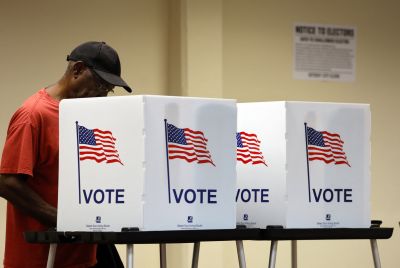
A majority of Americans say they would not support a democratic socialist for president even as the movement continues to gain momentum within the Democratic Party, according to a new poll.
A Washington Post-Ipsos survey found that 55% of Americans would not consider voting for a democratic socialist for president, while 39% said they would be open to supporting such a candidate. Another 6% said they had no opinion.
Among Democrats, however, attitudes are markedly different. Three out of four Democratic voters said they would be willing to support a democratic socialist for the White House, showing the movement's growing influence within the party as progressive candidates continue to score victories in heavily Democratic districts.
The findings come as the Democratic Party debates how to broaden its appeal after recent election setbacks. At the same time, organizations such as the Democratic Socialists of America, or DSA, have expanded rapidly by attracting voters frustrated with economic inequality and the rising cost of living.
The DSA recently announced it has surpassed 120,000 dues-paying members across 220 local chapters nationwide. The organization supports policies including Medicare for All, higher taxes on wealthy Americans, stronger labor protections, universal rent control, free prekindergarten programs and replacing the Electoral College with a national popular vote for president.
On July 4, 2026, Democratic Socialists of America passed 120,000 members, making us the largest socialist organization in United States history and surpassing the Socialist Party of America under Eugene Debs, which reached its peak dues-paying membership in 1912.
— DSA (@DemSocialists) July 5, 2026
Join us:… pic.twitter.com/XUFr8eDTyg
Despite the movement's growing visibility, the poll suggests many Americans remain uncertain about what democratic socialism actually represents. When respondents were asked to describe the ideology, no single definition received more than 13% support.
Democrats were more likely to associate democratic socialism with economic equality, expanded social programs and helping ordinary people. Republicans frequently linked it to communism, Marxism and increased government control, while independents expressed a broader mix of views.
That uncertainty also appeared in responses comparing democratic socialism to communism. Thirty percent of respondents said the two were similar, while 32% said they were different. Another 36% said they were unsure.
Public opinion toward leaders who identify as democratic socialists also remained relatively muted. Only 15% of Americans said they like political leaders who embrace the label, compared with 36% who dislike them. Nearly half of respondents said they neither liked nor disliked democratic socialist politicians.
Among Democrats, about one-third expressed favorable views toward democratic socialist candidates, while just 10% viewed them negatively. Republicans were far more skeptical, with roughly seven in 10 saying they dislike democratic socialists.
The poll also found independents remain a significant hurdle for any democratic socialist seeking national office. Fifty-four percent of self-identified independents said they would rule out voting for such a candidate in a presidential election.
Generational differences were among the strongest predictors of support. Americans younger than 30 were the most receptive, with 46% saying they would consider backing a democratic socialist for president. Support declined steadily with age, dropping to 36% among people ages 50 to 64 and 33% among those older than 64.
Education levels also played a major role. More than half, or 51%, of Americans with postgraduate degrees said they would consider voting for a democratic socialist. That compares with 44% of respondents holding bachelor's degrees, 39% with some college education, and 32% of those without college experience.
Income, however, did not produce a clear political pattern. Americans earning more than $100,000 annually were somewhat more willing than lower-income respondents to consider supporting a democratic socialist presidential candidate.
At the same time, higher-income Americans were also more likely to express outright dislike of democratic socialists, while lower-income respondents more frequently said they had no opinion.
The movement's electoral gains have been fueled in part by grassroots organizing. The DSA has expanded its year-round activism beyond election campaigns through immigration rights workshops, abortion clinic defense efforts and community initiatives.
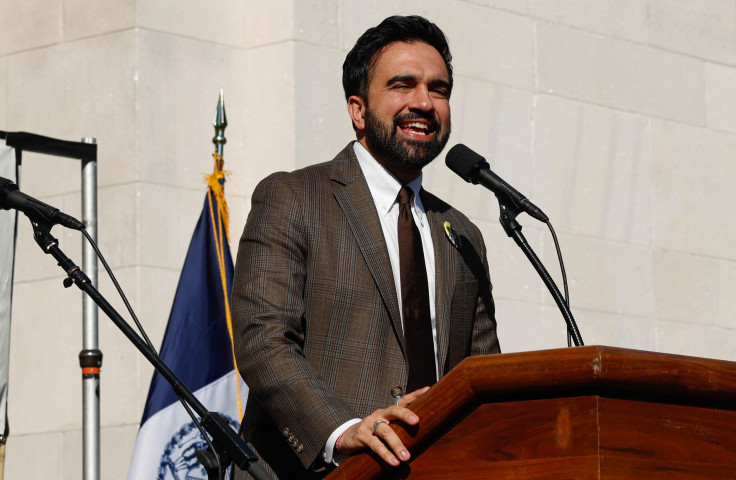
That organizing helped propel the rise of New York Mayor Zohran Mamdani and several progressive candidates in congressional and state legislative primaries in New York, Philadelphia and Denver.
© Copyright IBTimes 2026. All rights reserved.
- Recommended For You