

Oil Prices And Yields Climbed Again On Wednesday. Stocks Dropped.
President Donald Trump said that elevated gas prices won't come down until after the midterms.

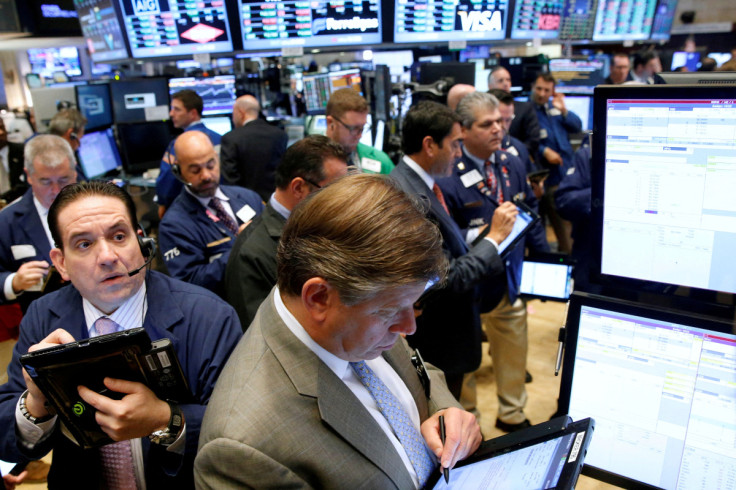
Stocks fell again on Wednesday as oil prices and bond yields kept climbing, creating uncertainty among investors about the direction of global markets.
The S&P 500 fell 0.48%, while the Dow Jones Industrial Average did so 0.77% and the tech-heavy Nasdaq Composite 0.64%.
Oil prices topped $100 as well as the U.S. and Iran kept trading strikes in the Strait of Hormuz. Brent crude, the international benchmark, climbed 3.39% and clocked in at $101.24 per barrel at 3:51 p.m. ET, while West Texas Intermediate, the U.S. benchmark, gained 3.89% and stood at $96.65 at the same time.
President Donald Trump said that elevated gas prices won't come down until after the midterms. Speaking to press before heading to Dallas for the midterm Republican convention, Trump said he believes Iran will capitulate before the end of the year.
"I think the war's going to end immediately after the election because they can't hold out any longer," Trump said. "Right after the election, oil prices are going to be tumbling downward," he added.
Gas prices remain high in the U.S., with AAA's national average standing at $4.22 on Wednesday. Oil prices are also, elevated, with Brent crude topping $100 on Wednesday as Washington and Tehran forces kept trading strikes.
The U.S. Central Command (Centcom) said the latest escalation involved its forces destroying five Iranian tankers in retaliation for an attempted attack against a warship.
Iran, in turn, had claimed that its revolutionary guard had struck two U.S. vessels, along with eight oil tankers in the Gulf. Forces added that the vessels had sought to transit the Strait of Hormuz through areas it designated as "forbidden and unsafe."
Elsewhere, Treasury yields climbed even though Treasury Secretary Scott Bessent said the department will buy back $6 billion of longer-dated government debt, triple the usual amount.
The yield on the 10-year Treasury note, the benchmark rate, hit the highest since November 2023. The 2-year and 30-year yields were also trading higher.
CNBC noted that the move could be a result of some in the markets believing buybacks would be bigger.
Bessent had announced last month that the Treasury would double the amount of buybacks to at least $4 billion. Yields initially decreased, but rose back quickly amid renewed concerns about the effectiveness of the operations.
© Copyright IBTimes 2026. All rights reserved.