Primary Health Care Should Not Depend on Insurance

Insurance coverage is often treated as the gateway to health care in the United States. Yet coverage alone does not guarantee that a patient can obtain the care a physician recommends. In 2024, an estimated 27.1 million people, or 8 percent of the U.S. population, did not have health insurance at any point during the year, according to the U.S. Census Bureau. The burden was considerably greater among people living in poverty.
The question of access becomes more complicated when health care extends beyond a primary care appointment. The Centers for Disease Control and Prevention identifies housing, transportation, and access to nutritious food as factors that influence health outcomes, while noting that inadequate transportation can also limit consistent access to health care. These factors can determine whether patients are able to attend appointments, obtain medications, maintain treatment plans, and manage chronic conditions over time.
Specialty care presents another significant fault line. A patient may successfully access a community health center, receive preventive services and undergo routine testing, then encounter a very different system when referred to a cardiologist, endocrinologist, psychiatrist or other specialist. For people with limited financial resources, the referral itself can become the beginning of a new access problem.
Transportation barriers can limit access to health care, particularly for people who lack access to a vehicle. Research has found that rural residents report longer travel times to see physicians, particularly specialists, while transportation barriers can contribute to missed appointments and disrupted continuity of care.
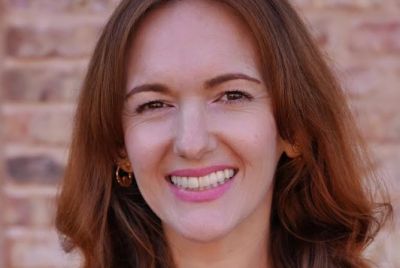
For Melissa Miranda, RN and CEO of Neighborhood Health Centers of the Lehigh Valley, those structural barriers demonstrate why primary care must be understood as part of a larger continuum. "For uninsured and underinsured patients, the challenge frequently begins when primary care must transition into specialty care," she says. "A referral alone does not create access. The patient still has to reach the specialist, navigate the system, and overcome whatever financial or logistical barriers stand between the two."
Miranda says location can be as consequential as insurance status when patients need specialty care. "In many communities, geographic proximity to specialty care is a more consequential barrier than insurance status alone," she notes. "A patient may live only a few miles from a major medical hub and still have no practical means of getting there. Access must be measured by whether a patient can realistically reach and use the care that has been recommended."
Behavioral health has added another dimension to the challenge. Miranda says five of her organization's 10 most common diagnoses are now behavioral health related, encompassing needs from anxiety and depression to serious mental illness. She views that shift as part of a broader transformation in the needs presented to community health centers in more recent years.
"The growth in behavioral health needs among our patients has fundamentally changed the demands placed on community health care," Miranda says. "We are seeing needs that range from anxiety and depression to serious mental illness, while the availability of behavioral health providers to serve uninsured and underinsured populations remains deeply constrained."
The barriers extend beyond the medical system itself. Miranda points to housing affordability, food insecurity, and transportation as interconnected pressures affecting the people her organization serves, commonly referred to as health-related social needs. "Health care cannot be separated from the conditions in which people live," she says. "Housing instability, food insecurity, low health literacy, and inadequate transportation directly affect a patient's ability to manage chronic illness and follow a treatment plan. These are health issues because they determine whether care can actually succeed."
This philosophy shapes the organization's approach to care management and case management. Care management, usually led by nurses, focuses on helping a patient understand their health concerns and works with the patient to reach a healthier state (i.e., teaching a newly diagnosed diabetic how to manage their nutrition needs). Case management, often led by care navigators and community health workers, usually assist with short-term, specific problem-solving and resource coordination tasks. Case managers help patients identify and apply for services for which they may qualify. They focus more directly on helping patients with chronic conditions navigate the health system and obtain necessary services. Care management and case management work hand in hand. For many individuals, the concerns addressed by case management are what stop the patient.
"We cannot place a referral in a patient's hands and assume the process is complete," Miranda says. "Effective care requires understanding whether that patient can obtain the appointment, reach the provider, complete the diagnostic work and understand what happens next. Navigation is therefore an essential component of access."
That philosophy also explains the organization's use of community health workers and care navigators. They help patients arrange transportation, understand specialist instructions, communicate information back to primary care providers and navigate applications for public or community services. Food boxes available through community partnerships further extend the organization's reach beyond conventional clinical encounters.
"A community health worker or care navigator can bridge the distance between a clinical recommendation and a patient's ability to act on it," Miranda says. "That may mean helping someone secure transportation, understand a specialist's instructions, complete an application or communicate information back to the primary care team."
For Miranda, the defining characteristic of the federally qualified health center model in which she works is its accountability to the community. Federal requirements stipulate that patient-majority governing boards must include more than 50 percent current health center patients, embedding community representation and stewardship into the structure of these organizations.
"A community health center exists because the community identifies a need and is organized around addressing it," Miranda says. "Our responsibility is therefore broader than delivering individual services. We are accountable to the health, stability, and long-term capacity of the community itself."
Miranda emphasizes that community health centers do not simply receive federal funding that covers every uninsured or underinsured patient or operating loss. Their financial models combine patient revenue, reimbursement, federal support, philanthropy, and other resources. For centers serving unusually high proportions of uninsured and underinsured patients, maintaining that balance has become increasingly difficult.
The larger lesson, Miranda argues, is that access must be defined by what patients can actually accomplish after leaving the examination room.
"When we improve the health and stability of an entire community, the benefits extend well beyond the individual patient," she says. "A healthier community is more resilient, more economically productive and better positioned to support its own members."
Miranda sees primary care as the point from which a broader system of support should begin. Insurance can help finance care, but meaningful access depends on whether people can reach that care, understand it, continue it and address the circumstances that threaten their health.
As she says, "Access to health care is meaningful only when people have a practical path to use it. Our responsibility is to build that path, remove the barriers along it and ensure that the community has the opportunity to become healthier together."
© Copyright IBTimes 2026. All rights reserved.
- Recommended For You