Ryan Keihn on Why Useful Drone Data Begins With Understanding the Business Task
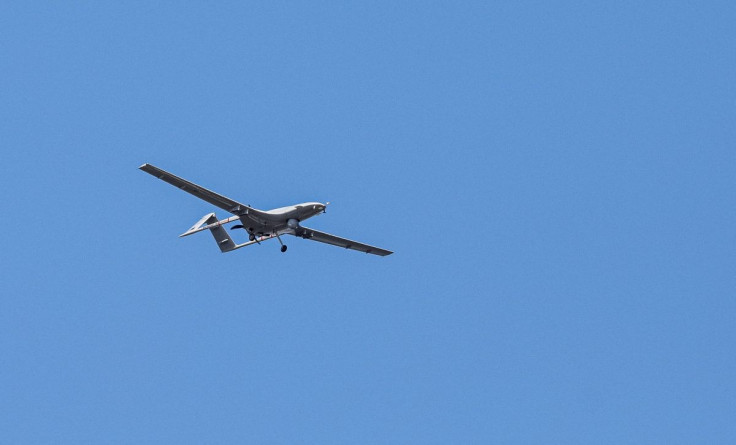
A drone flight can produce detailed views of a building, but the business purpose extends beyond the images themselves. For an organization considering aerial inspections or property mapping, useful questions include what information is needed, who will review it, and how it might support a decision. Those considerations provide a starting point for evaluating whether the technology fits the work.
Ryan Keihn, founder and CEO of Collective Thought, approaches drone services through that broader process. His work, according to the supplied background, combines data capture, mapping, and 3D modeling with consulting on drone programs. He believes organizations considering these tools should give attention to planning, processing, training, and the information ultimately delivered to users.
"Flying is about 20% of the job, typically," Keihn notes, offering an estimate from his own experience. He places much of the remaining effort in selecting software, processing captured material, and preparing results that clients can access and understand. In his view, deciding how the information will be used should help shape the project before capture begins.
That emphasis reflects difficulties he encountered earlier in his career, when collecting imagery and making it accessible required separate tools. Keihn explains that remote property review became more practical when users could navigate between images of a building's interior and exterior. He sees that experience as a reminder to consider the person receiving the information alongside the team collecting it.
More realistic digital environments are another area of interest. Keihn is exploring Gaussian splatting, a technique for representing captured scenes in three dimensions. The researchers behind 3D Gaussian Splatting demonstrated high-quality visual rendering with real-time viewing. Keihn's interest centers on whether that visual approach could make captured spaces easier for clients to interpret and discuss.
For his own workflow, Keihn treats measurement as a separate requirement. He explains that using these representations for construction-related measurements would depend on achieving the scale and tolerances required for the particular task. His aim is to explore more accessible visual information while establishing whether the results are suitable for the intended application. He presents that work as ongoing development.
His attention to practical working conditions also has a personal foundation. According to Keihn, he spent six years in a steel mill, where difficult shifts and a serious burn injury contributed to his desire for a different career. With a background in photography, he began pursuing drone work in 2016, learning to fly, rebuild equipment, and edit video before joining a startup.
That transition informs his interest in reducing some inspection work in hazardous settings. "You don't have to send people on roofs as much," Keihn observes. He also acknowledges the continuing role of physical maintenance. "You may always have to send boots on the ground to fix things, but at least you can find it and see it."
Across assignments involving wind turbines, oil-field equipment, utilities, and roofs, Keihn explains that the purpose of capture has varied with the asset and the client's needs. In roof assessments, for instance, he has used thermal imagery to identify temperature differences between the ambient air temperature and the water temperature that may warrant closer investigation. He sees such information as a way to help direct follow-up work.
Preparation matters just as much to his consulting approach. Keihn outlines a process involving operating procedures, pilot training, equipment care, and data processing. He believes teams benefit from understanding capture requirements before leaving a site, particularly when missing information could require another visit. For organizations establishing a program, he considers those responsibilities part of the initial planning.
Keihn emphasizes assessing whether drone technology serves a practical purpose within an organization's operations. In his view, a consultation should help clarify the task, the information needed, and whether drones would offer a useful way to obtain it. That assessment may indicate that an existing process is better suited to the organization's needs.
Looking ahead, Keihn sees potential for improvements in capture and processing to make digital information more accessible. He also emphasizes keeping knowledge of equipment and software current. For business leaders, his perspective places the operational question first. A proposed program should have a clear purpose, an understood process, and an output the intended users can work with. Those considerations, he believes, offer a grounded basis for deciding where drones may be useful.
© Copyright IBTimes 2026. All rights reserved.
- Recommended For You