Skirting Hormuz Is A Logistical Nightmare. Time To Pursue Such A Passage Has Arrived.
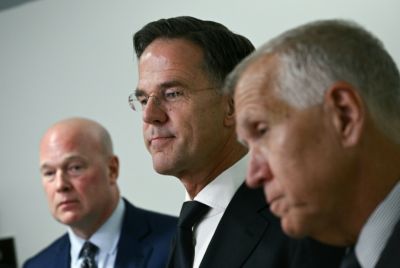
US Secretary of State Marco Rubio envisages energy flows less reliant on the Strait of Hormuz.


US Secretary of State Marco Rubio sees a new realignment of energy flows that would be less reliant on the Strait of Hormuz.
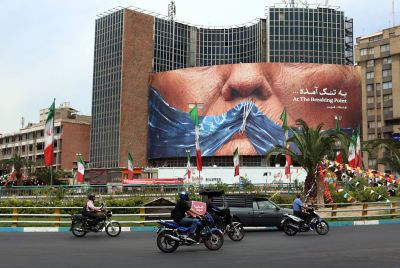
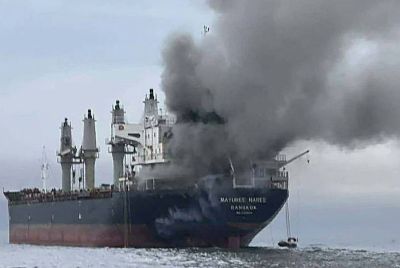
The waterway has been a flashpoint in the Middle East conflict, with Tehran declaring it closed, affecting energy traffic and leading to oil prices rising as high as $120 a barrel at one point of time.
The chokepoint's significance for international energy markets is that it carried a fifth of all energy cargoes before the US-Israeli strikes led to the Middle East conflict with Iran late in February.
Iran still controls the Strait while the US has enforced a naval blockade of the Strait. Washington insists that shipping traffic through the Strait should be unhindered and free of cost, while Iran wants its writ to decide the passage of commercial ships. The deadlock continues.
'You're going to see more and more energy diversifying outside of the Straits of Hormuz, because from a geographic standpoint Iran will always be on the straits, whether they're governed by this regime or a future government," Rubio said in a Fox News interview aired on Saturday.
According to him two permanent features that are going to emerge, include "the realignment in how energy flows, less reliant on the Straits of Hormuz."
The second scenario envisaged by Rubio is that countries in the region will not, in such a scenario, consider Iran a threat.
"Countries in the region that are no longer – now understand that Iran is no longer a theoretical threat. As long as this clerical regime remains in place, they are a real threat and a direct threat to their – not just to their economic interests but their security interests," Rubio said in the My View with Lara Trump program.
Rubio's comments have sparked a discussion on its feasibility. Roughly 20 million barrels of oil per day passed through the 24-mile Hormuz Strait during peace time. That accounts for 20% of global petroleum liquids consumption.
The Hormuz also served as the transit point for a fifth of the world's liquefied natural gas (LNG) trade.
Experts have cited logistical nightmares and security threats that make such a scenario a daunting task to achieve.
Rubio's statements should be seen as a long-term strategic vision rather than an immediately executable plan, Al Jazeera quoted economic researcher Ahmed Abu Qamar as saying.
Saudi Arabia has restored the East-West oil pipeline to full capacity after the Middle East conflict spurred attacks that curtailed output.
The United Arab Emirates operates the Abu Dhabi Crude Oil Pipeline, which transports up to 1.8 million barrels per day to Fujairah Port on the Gulf of Oman.
Even relying on alternative pipelines like these won't be sufficient to curb reliance on Hormuz as these have only a combined maximum capacity of about nine million barrels per day.
Qamar said it would take decades and billions in investments to reduce reliance on Hormuz.
There are key alternatives being cited including pipelines and land corridors but replacing Hormuz's capacity in the near term is physically improbable.
Moreover, navigating around the longer sea routes via the Cape will increase costs and consume much more time for cargo deliveries.
But still, officials in the Middle East are toying with the idea. Seven major pipeline projects are under construction, in the planning stage or being discussed as possibilities, the Associated Press reported last month. Additional supplies from Saudi Arabia to the Red Sea would also be targeted by Iran-backed Houthi rebels in Yemen, some experts said.
The state-backed oil company of Abu Dhabi is accelerating construction of a $3 billion, 200-mile pipeline to Fujairah. The pipeline, which would run parallel to an existing one, would boost oil output to Fujairah by more than 1.2 million barrels a day, according to the AP report.
The pipeline's construction is likely to be completed by mid-2027.
© Copyright IBTimes 2026. All rights reserved.
- Recommended For You