A Top Goldman Sachs Executive Says Investors Should Stay Invested. These Are Three Reasons Why.
Ashok Varadhan said he remains constructive on an investment outlook that contemplates unchanged rates, low oil prices and a resilient economy.


A top Goldman Sachs executive says investors facing stubborn inflation, higher oil prices and uncertainty over the Federal Reserve's next move should resist the temptation to pull back from markets.
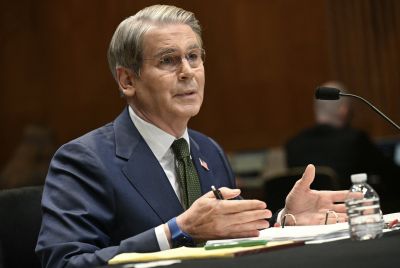
Ashok Varadhan, co-head of global banking and markets at Goldman Sachs, said he remains constructive on the investment outlook despite a series of risks hanging over the U.S. economy.
His case rests on the Federal Reserve keeping interest rates unchanged through the rest of 2026, oil prices falling significantly from current levels, and the economy remaining resilient as artificial intelligence begins delivering productivity gains.
"Stay invested would be my advice," Varadhan said during an episode of Goldman's "The Markets" podcast last week. His outlook comes as the S&P 500 has climbed back to a record high, extending its gain for 2026 to more than 13%.
The first reason behind Varadhan's optimism is his expectation that the Federal Reserve will avoid raising interest rates this year. "I don't think we will see hikes in the latter part of this year," he said. "I think rates are going to stay on hold."
That forecast is more optimistic than recent market pricing, which has continued to reflect the possibility that persistent inflation could force policymakers to resume tightening. Those expectations shifted following Friday's weaker-than-expected jobs report.
By Monday, traders were pricing roughly 50% odds of a September rate increase and 63% odds of a move by October, according to CME Group's FedWatch gauge. Varadhan believes some of the inflationary forces that have complicated the Fed's job could begin fading.
That includes the impact of tariffs, while easing geopolitical tensions around the Strait of Hormuz could help reduce energy-related price pressures. Artificial intelligence could eventually play a role as well.
The massive infrastructure spending required to develop AI capacity can contribute to inflation in the short term, but Varadhan expects productivity gains from the technology to ultimately become a disinflationary force.
Energy prices represent the second piece of Varadhan's investment thesis. West Texas Intermediate crude futures climbed back above $80 per barrel Monday amid growing doubts that the U.S. and Iran could reach an agreement to increase shipping traffic through the Strait of Hormuz.
Varadhan, however, does not expect those elevated prices to last. "I think energy is going to go back down," he said. "I think oil settles back down well below $70 a barrel, maybe even lower once we get towards the latter part of the year."
A substantial decline in crude prices could provide relief for consumers and businesses while also easing inflationary pressures, potentially giving the Fed more room to keep borrowing costs steady.
The third reason to remain invested, according to Varadhan, is the underlying strength of the economy. Despite repeated external shocks, nominal economic growth has remained resilient. If some of those pressures ease, Varadhan believes growth can continue while AI investments increasingly translate into productivity improvements.
That economic resilience is also supporting his outlook for credit markets. Heavy debt issuance means investors should demand additional compensation for taking risk, he said, but economic strength has helped keep credit spreads from widening sharply. "If you think the exogenous shocks are going away and you still have the resilience of the economy," Varadhan said, expectations for realized defaults can remain "fairly low."
© Copyright IBTimes 2026. All rights reserved.
- Recommended For You