Diesel Prices Have Hit Record Highs. The Trump Admin Is Considering An Export Ban.
"We're examining whether it's feasible in terms of the overall refining capacity and whether a full or partial ban would work," Bessent said.


Treasury Secretary Scott Bessent said the Trump administration is considering a diesel ban as prices reach historical records as a result of the different conflicts across the world.
"We're examining whether it's feasible in terms of the overall refining capacity and whether a full or partial ban would work," Bessent told reporters on Tuesday.
President Donald Trump also addressed the matter while meeting with Ukrainian counterpart Volodymyr Zelenskyy, saying a decision will be made "fast one way or another." "I've said let's not send out the diesel. We make a lot of diesel," Trump added.
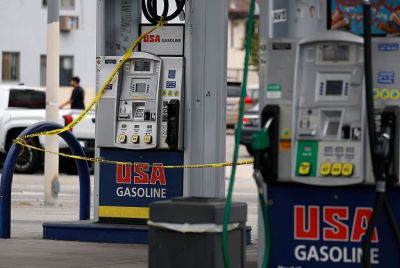
Diesel prices in the U.S. remain at historical records, with AAA showing them at more than $6.5 per gallon on Tuesday. That compares with an average of $3.68 last year.
A recent report claimed that the global market has fewer ways to absorb another disruption. An analysis from S&P Global Energy cited by the outlet found that refineries worldwide processed 7.5 million fewer barrels of crude per day in July than during the same period in 2025. The International Energy Agency also reported a steep decline in global refinery processing in its August oil market report.
The combined impact is substantial. Diesel exports from Russia, the Middle East and Asia were 1.3 million barrels per day lower in July than a year earlier, according to the IEA. That volume is equivalent to about 20% of global seaborne diesel trade. "Diesel is the tightest market right now," Amrita Sen, founder of market intelligence firm Energy Aspects, told Bloomberg TV.
Higher diesel prices can spread rapidly through the economy because the fuel powers trucks, construction equipment, agricultural machinery and other heavy-duty vehicles. Fuel represents roughly 20% to 25% of trucking companies' operating expenses, according to the American Trucking Associations.
Rising diesel costs can therefore increase the expense of moving everything from groceries to manufactured goods. American refineries have helped supply the increasingly tight international market by exporting more diesel, but there may be little room to increase production further.
S&P estimates U.S. refineries are already operating at about 96% of capacity. That leaves the market particularly exposed as the peak of Atlantic hurricane season approaches and refineries prepare for traditional fall maintenance. Any significant outage could further reduce available supplies at a time when inventories have a limited cushion.
Winter could create an additional challenge. Diesel and closely related refined products are also used for heating in many countries, meaning seasonal demand could collide with already constrained supplies.
© Copyright IBTimes 2026. All rights reserved.
- Recommended For You