

Why the AI Chip Boom Just Forced South Korea to Raise Interest Rates
South Korea mortgage rates climb as BOK signals further 25-basis-point hikes ahead
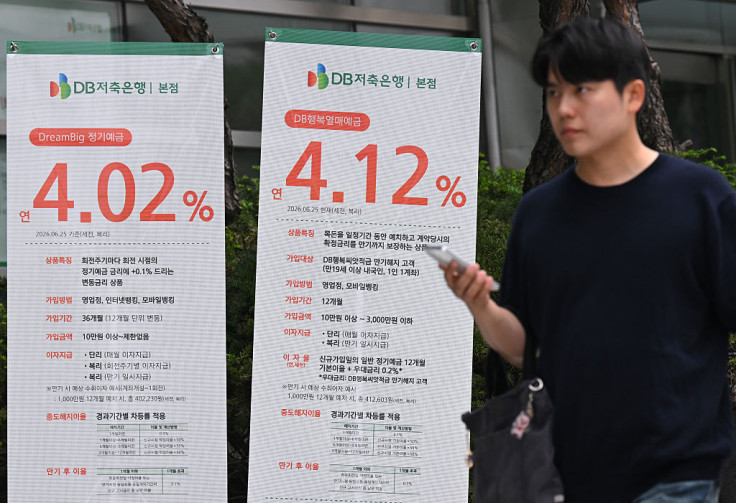
South Korea's central bank raised interest rates for the first time in three and a half years on Thursday, July 16 — and made clear the move was only the beginning. The Bank of Korea's Monetary Policy Board unanimously lifted the seven-day repurchase rate by 25 basis points to 2.75 percent, ending a 14-month pause and opening what Governor Shin Hyun-song explicitly called a tightening cycle. The decision carried an economic irony that distinguishes it from every prior BOK rate hike: the inflation forcing the bank's hand was not imported from a stagnant economy struggling to grow. It was generated, in significant part, by the most spectacular export boom South Korea has ever recorded — one built on the same high-bandwidth memory chips that now power virtually every large-scale artificial intelligence system on earth.
What the BOK Actually Decided, and Why It Matters
The vote was unanimous. That detail matters more than it might appear. At every one of the eight consecutive meetings before July 16, the board had held rates at 2.50 percent — itself the product of four cuts totaling 100 basis points between October 2024 and May 2025. A split vote would have suggested uncertainty about the direction of travel. A unanimous one did not. It signaled that all seven board members had reached the same conclusion: the 14-month easing cycle that began as a defense against weak growth had become a liability against the inflation it helped stoke, as Korea JoongAng Daily's reporting on the decision made clear.
The proximate trigger was straightforward. Consumer prices in South Korea rose 3.2 percent year-on-year in June 2026, following a 3.1 percent increase in May — two consecutive months above 3 percent and well above the bank's 2 percent target. The BOK's own projections hold that the inflationary pressure from higher oil prices will persist for at least a year, a consequence of the ongoing conflict involving the United States, Israel, and Iran that has kept global energy markets elevated since late February.
Two structural forces are compounding the oil pressure. The South Korean won has remained persistently weak, making imports across the board more expensive. Governor Shin pointed specifically to the nondeliverable forward market — an offshore derivatives market where the won trades as a cash-settled contract rather than a physical currency — as a key driver of exchange rate vulnerability. Because the won is not fully freely convertible, a large share of its price is effectively set offshore in this market by participants who may have little exposure to the domestic economy. A 24-hour won trading experiment launched in early July was designed to address this by creating an onshore alternative around the clock. Governor Shin told reporters the program has had "limited impact" so far.
How Chips Built the Boom — and Made It Inflationary
South Korea's inflation problem is inseparable from its growth story, and that growth story is inseparable from a single product category: high-bandwidth memory chips.
HBM is the memory architecture that solves the central engineering problem of modern artificial intelligence at scale. Traditional DRAM chips communicate with processors over a narrow channel; as AI models grew larger, those channels became the limiting factor — not the GPUs themselves, but the speed at which data could be delivered to them. HBM addresses this by stacking multiple DRAM dies vertically, connecting them through thousands of microscopic copper pillars called through-silicon vias, and placing the resulting stack directly on an interposer adjacent to the processor it serves. The current-generation HBM4E product from SK Hynix uses 12 layers and delivers roughly four terabytes per second of bandwidth per stack — approximately 3.5 times the performance of its predecessor, as TechTimes reported when SK Hynix shipped HBM4E samples to customers.
SK Hynix and Samsung Electronics together supply the vast majority of the world's HBM. Micron Technology, a US firm, is the third significant producer. There is no viable alternative in production at the scale the AI buildout demands. Every AI accelerator chip from Nvidia, AMD, and others that ships today carries HBM produced almost entirely in South Korean fabrication facilities, as documented in the Wikipedia entry on High Bandwidth Memory market share.
That architecture created a market dynamic with no recent historical parallel. In June 2026, South Korea's monthly exports crossed $100 billion for the first time in the country's history — reaching $102.25 billion, a 70.9 percent year-on-year increase and the fastest growth rate since October 1978, according to South Korea's record June export data from the Ministry of Trade, Industry and Resources. Semiconductor exports alone reached $44.82 billion, a 199.5 percent year-on-year surge, as global AI infrastructure investment drove memory demand beyond any level the industry has previously supplied. South Korea became only the fourth country in history to exceed $100 billion in monthly exports, joining Germany, China, and the United States.
That level of export income flows into the domestic economy through a mechanism Governor Shin named directly: improving terms of trade. When chip export prices rise faster than oil and commodity import prices, the purchasing power of every dollar Korea earns abroad increases. Gross domestic income in the first quarter grew substantially faster than real GDP, which itself expanded 3.8 percent year-on-year — the strongest annual growth rate since the fourth quarter of 2021. The Ministry of Economy and Finance, citing these dynamics, raised its full-year 2026 real GDP growth forecast from 2.0 to 3.0 percent on July 14 — the highest annual projection in five years. Nominal GDP, which reflects semiconductor export prices through the deflator, is expected to expand 12.3 percent — the fastest pace since 1996, the year before the Asian financial crisis.
Large performance bonuses paid by chip firms, including Samsung Electronics, have been flowing directly into the Seoul property market, stimulating real estate prices and amplifying demand-side inflation at exactly the moment energy costs were already pushing consumer prices above target. The BOK's rate decision was, at its structural core, a response to an economy running too hot — not because of fiscal stimulus or loose credit, but because of a technology cycle.
Borrowers Will Feel It First
The rate hike has an immediate cost that falls on South Korean households before it has any observable effect on the chip industry driving the inflation. A 25-basis-point increase in mortgage rates adds approximately 1.8 trillion won — roughly $1.3 billion — to the total annual interest burden carried by South Korean borrowers, according to Bank of Korea data submitted to lawmakers. The average individual borrower will see their annual interest payments rise by around 300,000 won, or about $217. On a new 300 million won mortgage repaid over 30 years, monthly payments climb by approximately 44,000 won.
The exposure is not evenly distributed. Floating-rate loans accounted for 75.4 percent of new household borrowing at the end of May 2026, up sharply from 45.4 percent in November 2025. Borrowers who shifted to variable-rate products during the easing cycle, expecting rates to stay low, will feel the first rate transmission quickly. Five-year fixed mortgage rates at major lenders have already climbed as much as 0.4 percentage points this month alone, reaching a range of 4.77 to 7.49 percent, according to Korea Times reporting citing Korea Investment and Securities and Hana Securities.
Markets are now pricing in at least one additional hike at the August 27 meeting. Korea Investment and Securities and Hana Securities both projected on July 17 that the next increase will arrive in August, with analysts projecting terminal rates in a tightening cycle reaching 3.25 to 3.50 percent — implying three to four additional hikes beyond the July move.
Korea's AI Chip Paradox: When Growth Builds Its Own Inflation Problem
Governor Shin offered a formulation that TechTimes readers should note carefully. If semiconductor prices remain elevated for a prolonged period, he said, the tightening cycle itself could last longer than expected. That statement inverts the usual logic of a rate hike. Normally, a central bank raises rates to slow an economy overheating from excess credit. Here, the mechanism is different: higher chip prices generate higher income, which generates higher demand, which generates higher prices for everything that income chases — property, services, energy. The chip boom is not a demand bubble created by borrowed money. It is a structural terms-of-trade improvement with inflationary side effects the BOK has no direct tool to address other than raising borrowing costs for everyone.
This creates a policy bind with no clean resolution. Samsung Electronics and SK Hynix are each committed to enormous capacity expansions — both domestically across semiconductor clusters in the Chungcheong and Jeolla provinces and through the government's separate chipmaking investment programs, as detailed in SK Hynix and Samsung's semiconductor cluster investment plans. Those investments require capital. The higher the policy rate, the more expensive that capital becomes. A tightening cycle aggressive enough to return inflation to the 2 percent target by meaningfully slowing domestic demand would, at some threshold, also raise the cost of financing the very fabs the country is relying on to maintain its AI memory dominance through 2027 and beyond. The BOK has to thread a needle that does not exist in any standard monetary policy textbook.
"If semiconductors become a key part of infrastructure building in the AI era, chip prices could become a highly meaningful indicator for the Korean economy's long-term growth trend," Shin said. "If gains in chip prices persist for a prolonged period, the tightening cycle could last longer than expected," according to Governor Shin's July 16 press conference statements.
Equity Markets Swung; Analysts Kept Their Targets
South Korean equities had a turbulent session on July 16. The KOSPI benchmark index tumbled more than 6 percent, as Samsung Electronics and SK Hynix tracked overnight losses in US chip stocks, with a sell-side sidecar triggered amid selling amplified by leveraged exchange-traded funds, as CNBC reported on the day's session. The session followed a separate 8.95 percent crash on July 13 after a bearish earnings note from Korea Investment and Securities projected SK Hynix's second-quarter operating profit at roughly 8 percent below consensus — the seventh circuit breaker event on the KOSPI in 2026.
Most market strategists declined to attribute July 16's selloff to the rate hike itself, which had been widely anticipated for months. The consensus view was that near-term fund flows into Korean equities would be driven more by AI investment cycle momentum and chip earnings than by a 25 basis point change in the policy rate. On the currency side, the hike is expected to narrow South Korea's rate gap with the US Federal Reserve — whose benchmark rate sits at 3.625 percent midpoint, meaning Korean rates at 2.75 percent still trail the Fed by about 90 basis points, per The Edge Consultancy's rate gap analysis. The narrowing gap is expected to provide modest support for the won by attracting yield-seeking capital inflows. The won had already moved back below the psychologically important 1,500-per-dollar level in recent weeks after trading above it for nearly two months, and Shin told parliament the previous week that there was "ample room for the won to strengthen" given a current account surplus now forecast to hit a record $290 billion for the full year.
How Will Other Sectors Feel It?
South Korea's retail cryptocurrency markets, where domestic participation rates are among the world's highest, could also absorb some friction from tighter policy. Historically, rising interest rates in Korea have tended to compress risk appetite among retail investors who have been among the world's most active cryptocurrency traders. Whether that dynamic materializes at current rate levels — versus only becoming meaningful with further hikes — remains to be tested. Crypto derivatives liquidations on July 13 showed that KOSPI volatility was already spilling into digital asset markets.
The BOK's own assessment is that economic resilience will hold through the tightening cycle. Its policy statement projected that "exports and investment will continue to post robust growth on the back of the semiconductor upcycle," and that private consumption would broaden its recovery. The bank is expected to revise its 2026 growth forecast upward from 2.6 percent — the May estimate — when it releases updated projections in August, with Governor Shin signaling that the current number is already "too low."
What it means for the broader emerging-market landscape is also notable. South Korea's move runs against the tide of central banks that had been drifting toward cuts through 2025 and into early 2026. The pattern reflects a broader reckoning: the assumption that inflation would converge toward target without active tightening has been upended by geopolitical shocks and structural demand shifts that did not appear in pre-2026 central bank forecasts. For Korea, the challenge is unusual in that the inflation originates partly from a genuine terms-of-trade improvement, not from fiscal excess or monetary error — and that reality limits how aggressively the BOK can respond without damaging the growth engine that creates the problem in the first place.
Frequently Asked Questions
Why did the Bank of Korea raise interest rates in July 2026?
Inflation was the primary driver. South Korea's consumer price index rose 3.2 percent year-on-year in June 2026 — the second consecutive month above 3 percent and well above the BOK's 2 percent target. The BOK identified two structural causes: elevated global oil prices stemming from the ongoing US-Israel-Iran conflict, and persistent won weakness partly driven by the offshore nondeliverable forward market. With economic growth also running well above trend — driven by record semiconductor exports — the board had the room to act and unanimous agreement to do so.
What is high-bandwidth memory and why is it driving South Korea's economy?
High-bandwidth memory is the chip architecture that feeds data to AI processors fast enough to make large-scale AI inference viable. Instead of a narrow communication channel to the processor, HBM stacks multiple memory dies vertically and places them physically adjacent to the GPU or AI chip on a silicon interposer using through-silicon via architecture, delivering several terabytes per second of bandwidth. SK Hynix and Samsung together supply most of the world's HBM, and demand from AI infrastructure providers has outstripped anything the industry has produced before. South Korea's semiconductor exports rose nearly 200 percent year-on-year in June 2026, pushing the country's monthly export total above $100 billion for the first time in its history. That revenue is translating into GDP growth, household income, and the inflationary demand pressure the BOK is now trying to slow.
When is the Bank of Korea's next rate decision, and will rates rise again?
The BOK's next scheduled meeting is August 27, 2026. Markets and multiple sell-side analysts are pricing in a high probability of another 25-basis-point hike at that meeting, though Governor Shin explicitly declined to pre-commit: every upcoming meeting is "live," he said, and decisions will depend on July inflation data, second-quarter growth figures, and financial stability indicators. A terminal rate of 3.25 to 3.50 percent — implying three to four more hikes beyond the July move — is the current market consensus.
Could BOK rate hikes undermine South Korea's semiconductor investment boom?
This is the central policy risk that the July 16 decision opened. Samsung Electronics and SK Hynix are committed to multi-year capacity expansions requiring sustained capital investment — new fabrication plants, advanced packaging facilities, and EUV lithography equipment purchases, as detailed in the semiconductor cluster investment plans. A tightening cycle modest enough to cool consumer price inflation without materially raising the cost of semiconductor industry capital will thread the needle. But if the BOK is forced by persistent inflation to hike beyond market expectations — into the 3.25-3.50 percent range and potentially beyond — the financing cost for those expansions will rise at exactly the moment the industry needs to maintain investment levels to capture the 2027 AI memory cycle. Governor Shin acknowledged this directly: if semiconductor prices remain elevated for long enough, the tightening cycle will have to match their persistence. That sentence is the one to watch.
Originally published on Tech Times