

Why China Just Offered 5,000 AI Training Opportunities to Developing Nations
Xi Jinping pledged 5,000 AI training slots for developing nations and criticized U.S. chip export restrictions at Shanghai's AI summit, hours after Google released Gemini 3.5 Pro.
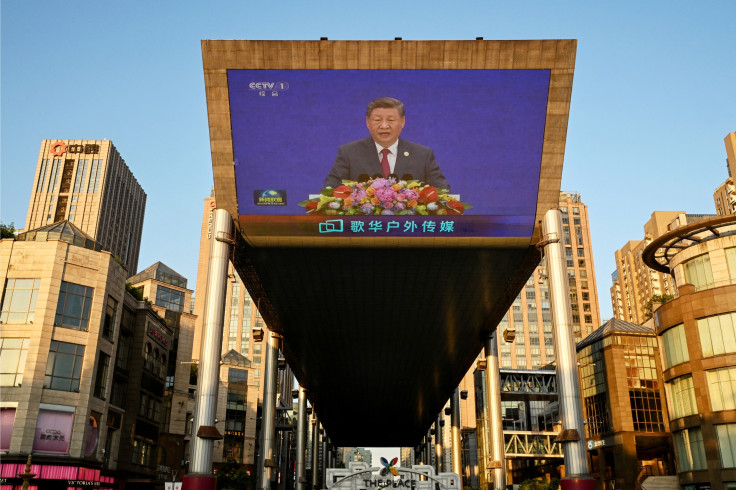
Chinese President Xi Jinping pledged 5,000 AI training opportunities for developing nations and took a pointed jab at U.S. chip export restrictions during his keynote at Shanghai's World AI Conference, hours after Google released Gemini 3.5 Pro in a scheduling coincidence that put the two countries' competing AI visions on display within hours of each other.
WHAT HAPPENED
Google DeepMind confirmed the release of Gemini 3.5 Pro on Friday, bringing a 2-million-token context window that lets developers feed entire books, codebases or research papers into a single request, along with a "Deep Think" reasoning mode available on the $250-per-month Ultra tier. The company said the release includes meaningful gains in coding and long-horizon reasoning over the prior 3.0 generation, though it has not announced a free tier for the new model. The launch had faced repeated delays after being first teased at Google I/O in May.
The same day, Xi attended the opening ceremony of the 2026 World Artificial Intelligence Conference in Shanghai and delivered a keynote speech, marking the first time China's leader has appeared at the country's flagship AI event since it was established in 2018. Xi positioned China as a partner to the developing world, announcing that Beijing will provide 5,000 AI training and seminar opportunities to developing countries and pursue AI cooperation with regional blocs including the Association of Southeast Asian Nations, the League of Arab States and the African Union. "AI development should not be a solo performance by a single country, but a symphony of international cooperation," Xi said. He separately warned against what he called the "overstretching" of national security concerns, a reference to U.S.-led restrictions that have limited China's access to advanced chips and AI technology. The conference, themed "AI Partnership for a Brighter Future," runs through July 20 alongside a High-Level Meeting on Global AI Governance.

The overlap arrives amid heightened friction between the two countries' AI sectors: Beijing has moved to restrict overseas access to its most advanced domestic models, while Washington has repeatedly accused Chinese AI firms of replicating American systems. Google separately limited Meta's access to Gemini in recent days over capacity constraints, and OpenAI has proposed giving the U.S. government a roughly $42.6 billion equity stake modeled loosely on the Alaska Permanent Fund, discussions that reportedly included President Trump, Commerce Secretary Howard Lutnick and Treasury Secretary Scott Bessent.
WHY IT MATTERS
Xi's direct critique of U.S. export controls, paired with China's concrete offer of training resources to developing nations, marks a more assertive diplomatic pitch than Beijing's past AI summit appearances, which had been handled by lower-level officials rather than the president himself. The timing of Google's release alongside Xi's remarks functions as an unplanned but potent symbol of the AI race's geopolitical stakes, with one of Silicon Valley's most-anticipated launches of the year landing hours before China's head of state used his country's premier AI stage to pitch an alternative governance model built around openness and shared infrastructure with the Global South. For the industry, the day illustrates how compute access, model capability and international governance frameworks are becoming inseparable from broader U.S.-China strategic competition.
WHAT'S NEXT
The World AI Conference continues through July 20, with additional policy announcements expected from Chinese officials on data security and algorithmic governance standards, along with further detail on the scope and eligibility of the 5,000 training slots pledged to developing nations. Gemini 3.5 Pro's enterprise rollout will be watched closely for early performance benchmarks against competing frontier models, while OpenAI's proposed U.S. government equity stake remains under discussion with no confirmed timeline for a decision.
Originally published on HNGN