Michael Burry Added Shorts as the Nasdaq-100 Hit a Record High. Here’s Why.
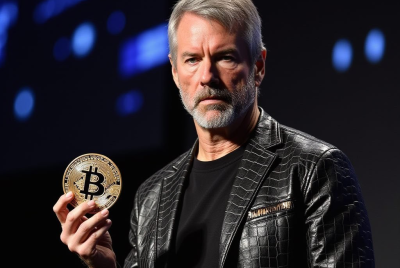
The investor made famous by his bet against the U.S. housing market before the 2007-2009 financial crisis said this week that he has increased short positions in numerous companies.


Famous investor Michael Burry is doubling down on his bearish bets against some of the biggest beneficiaries of the artificial intelligence boom, arguing that today's historic memory-chip shortage could eventually give way to the familiar problem of too much supply for the semiconductor industry.
The investor made famous by his bet against the U.S. housing market before the 2007-2009 financial crisis said this week that he has increased short positions in Micron Technology, cloud computing company Nebius Group, Palantir Technologies and the iShares Semiconductor ETF, known by its ticker SOXX.
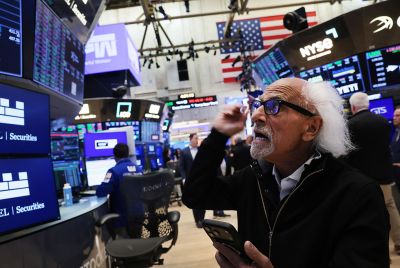
Burry's move comes as technology stocks retreat from record territory. The Nasdaq-100 climbed nearly 1% Tuesday to close at an all-time high of 30,732. The broader Nasdaq also reached a record intraday level Tuesday as major technology stocks helped drive the market higher. However, shares dropped on Wednesday and Thursday.
Burry believes investors may be extrapolating today's extraordinary demand for memory chips too far into the future. "Over the next two years this shortage will blow off as production catches up, and memory will have a down cycle again," he wrote on Substack.
AI infrastructure spending has generated enormous demand for memory, contributing to shortages and higher prices for manufacturers. Burry's argument is that the same high prices encouraging investors to pile into chip stocks are also creating incentives for manufacturers to expand capacity.
China is an important part of that calculation. Burry pointed to comments from Acer CEO Jason Chen questioning whether the current shortage can persist as Chinese production continues expanding.
Chen has argued that shortages are increasingly concentrated in certain high-end components and that growing Chinese capacity could eventually put downward pressure on memory prices.
There is already evidence of that capacity coming online. Chinese DRAM manufacturer CXMT said this month that its fifth-generation memory-chip platform had entered mass production, a development that could strengthen China's position in a global DRAM market dominated by Samsung Electronics, SK Hynix and Micron.
For Micron, the risk in Burry's scenario is straightforward. The company is benefiting from strong pricing power and soaring profitability while simultaneously investing heavily in additional manufacturing capacity. If industry supply catches up with demand, memory prices and margins could eventually retreat.
He described the Nasdaq-100 as "historically overvalued and historically top heavy," suggesting that unusually high valuations and concentration among AI-linked companies could amplify the impact of a semiconductor downturn.
There are signs that the AI trade has already become less uniform. BTIG technical analyst Jonathan Krinsky recently noted that while the Nasdaq-100 had been roughly flat since mid-August, the percentage of its components trading above their 200-day moving averages had fallen from 77% to 56%.
Burry, however, is not betting against everything. He said he has increased long positions in QXO, Build-A-Bear Workshop, Sprouts Farmers Market, Birkenstock, and MercadoLibre after substantial declines in their shares, describing the prices as attractive and saying the holdings are now "full positions."
© Copyright IBTimes 2026. All rights reserved.
- Recommended For You