By | April 22 2012 12:27 PM

1 of 14
Apple iPhone 5 "PRO" Concept - Design by Jinyoung Choi
Photo: Courtesy

Apple iPhone 5 "PRO" Concept - Design by Jinyoung Choi

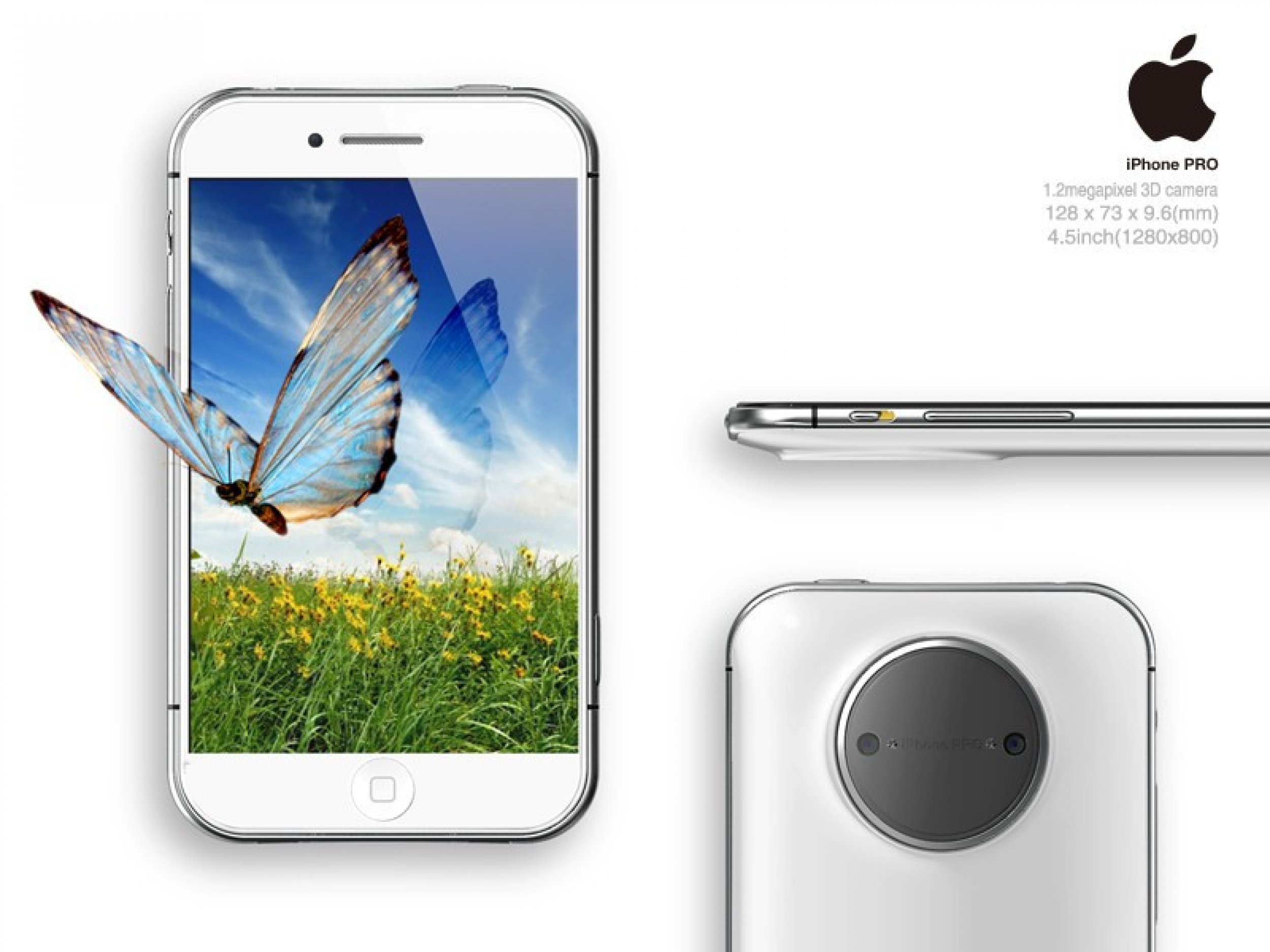
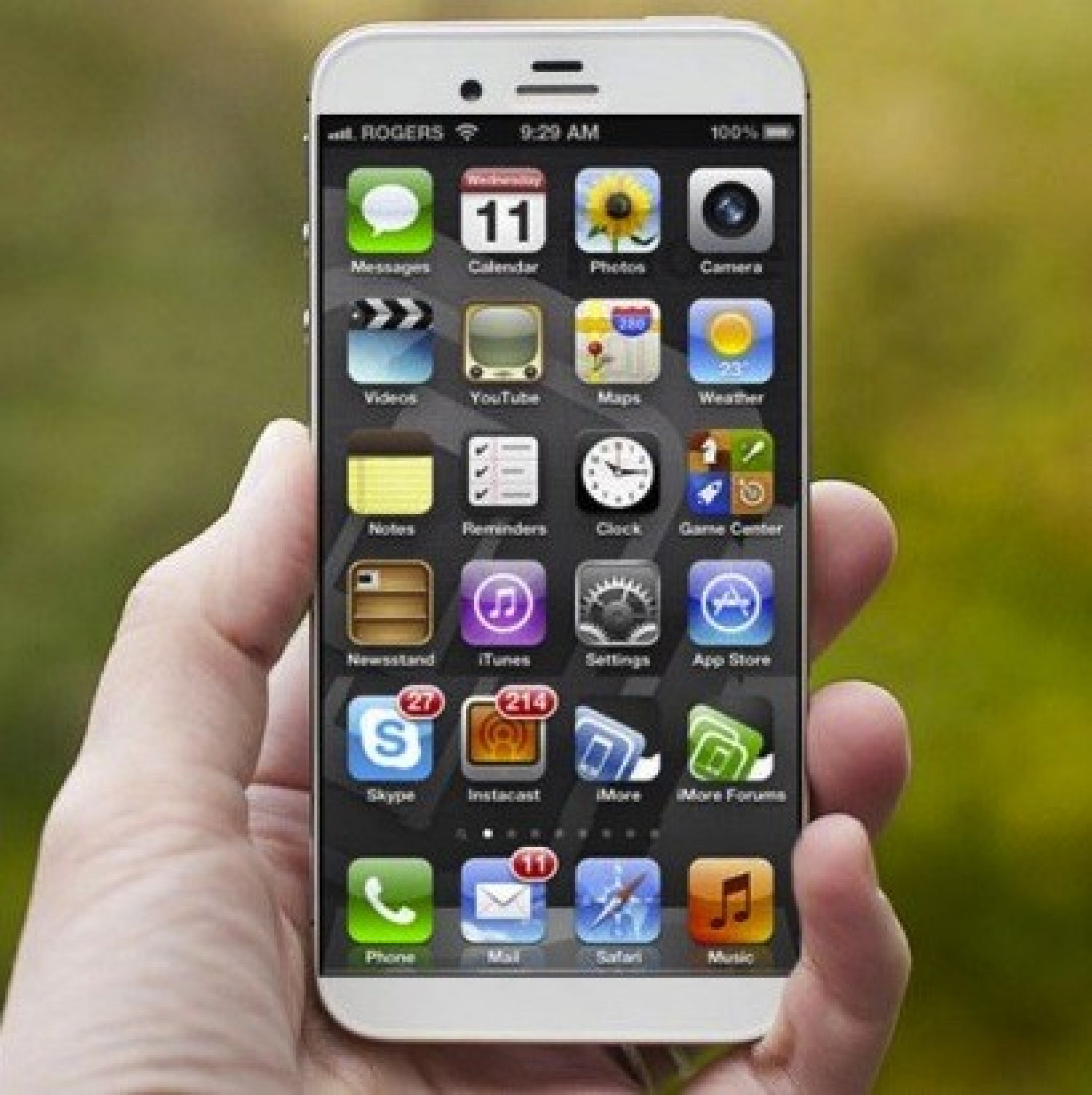
Jinyoung Choi's concept design for the iPhone 5, called the "iPhone PRO," features a 1.2-megapixel 3D camera, a DSLR len mount, a removable hard disk, and a built-in projector. Here, you can see what the 3D images would look like on the 4.5-inch Retina Display.
Apple iPhone 5 "PRO" Concept - Design by Jinyoung Choi
Photo: Courtesy

Apple iPhone 5 "PRO" Concept - Design by Jinyoung Choi

Jinyoung Choi's concept design for the Apple iPhone 5, called the "iPhone PRO," features a 1.2-megapixel 3D camera, a DSLR len mount, a removable hard disk, and a built-in projector. Here you can see what a DSLR lens would look like when it's attached to the iPhone.
Apple iPhone 5 "PRO" Concept - Design by Jinyoung Choi
Photo: Courtesy

Apple iPhone 5 "PRO" Concept - Design by Jinyoung Choi

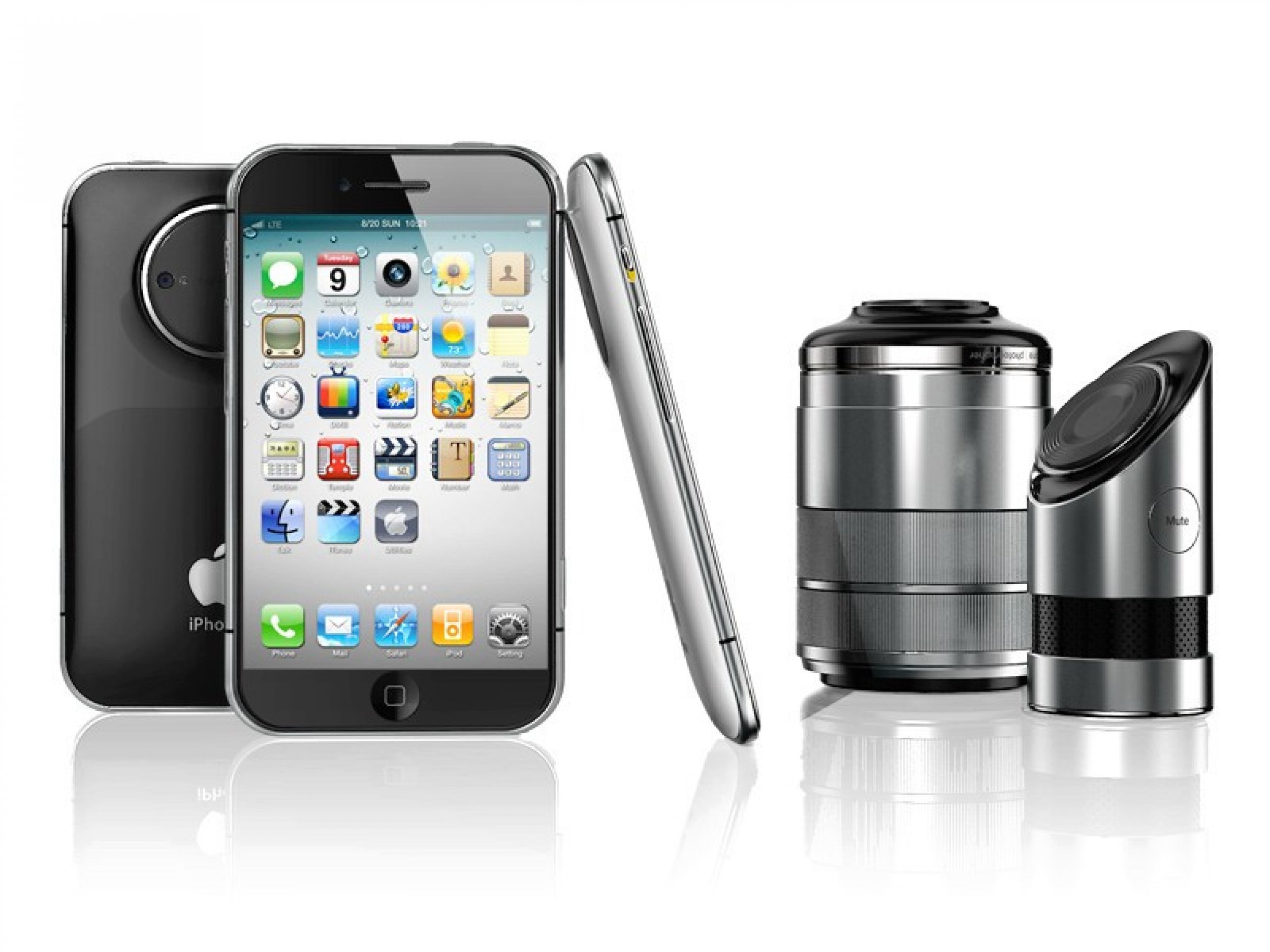
Jinyoung Choi's concept design for the Apple iPhone 5, called the "iPhone PRO," features a 1.2-megapixel 3D camera, a DSLR len mount, a removable hard disk, and a built-in projector. Here you can see what the projector accessory looks like when it sits next to the 4.5-inch iPhone PRO.
Apple iPhone 5 "PRO" Concept - Design by Jinyoung Choi
Photo: Courtesy

Apple iPhone 5 "PRO" Concept - Design by Jinyoung Choi

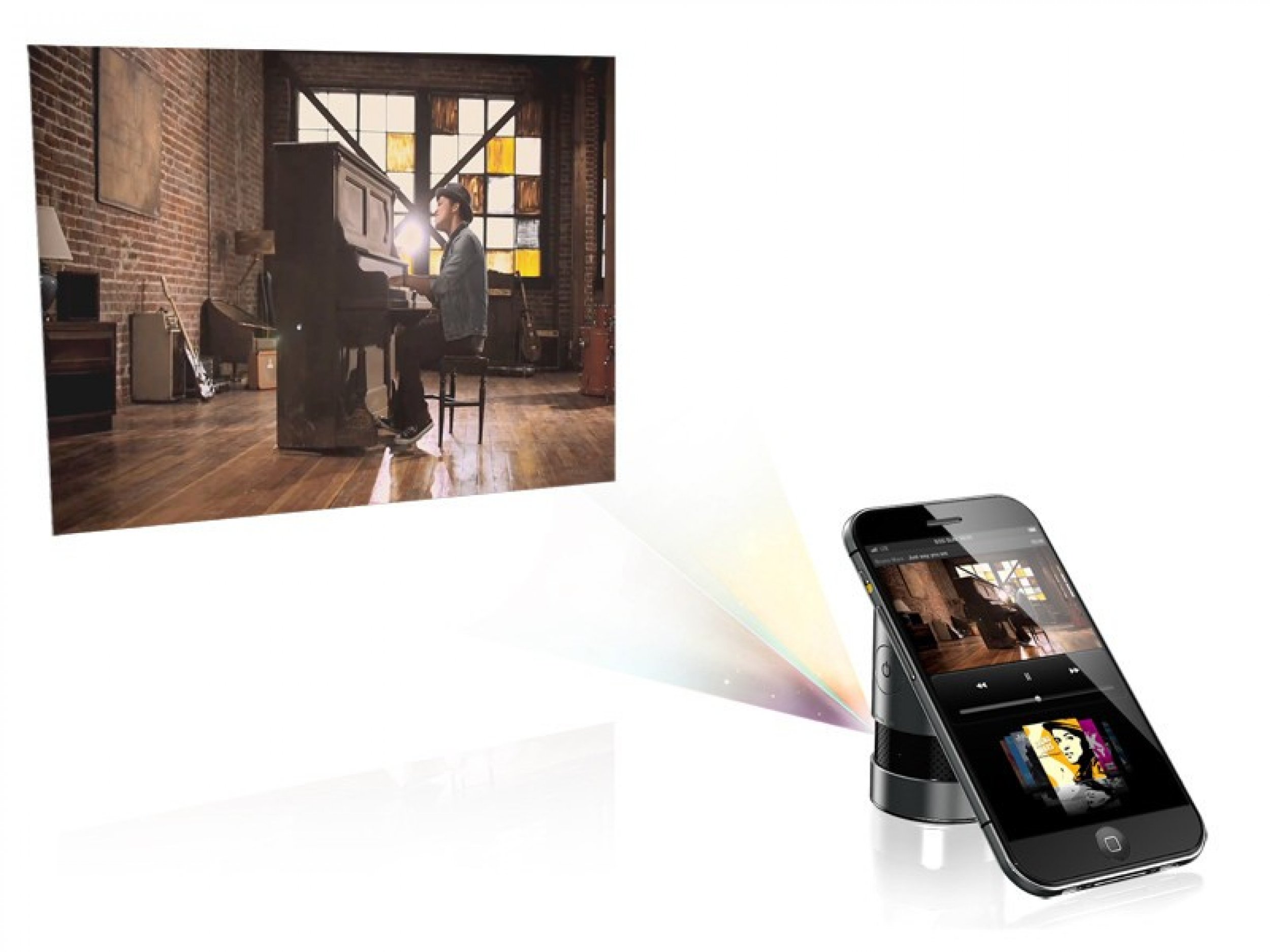
Jinyoung Choi's concept design for the Apple iPhone 5, called the "iPhone PRO," features a 1.2-megapixel 3D camera, a DSLR len mount, a removable hard disk, and a built-in projector. Here you can see the iPhone PRO being used with the projector accessory. When it's attached, the iPhone PRO can project any image on its 4.5-inch screen onto any surface.
Apple iPhone 5 Concept - Design by NAK STudio
Photo: Courtesy

Apple iPhone 5 Concept - Design by NAK STudio

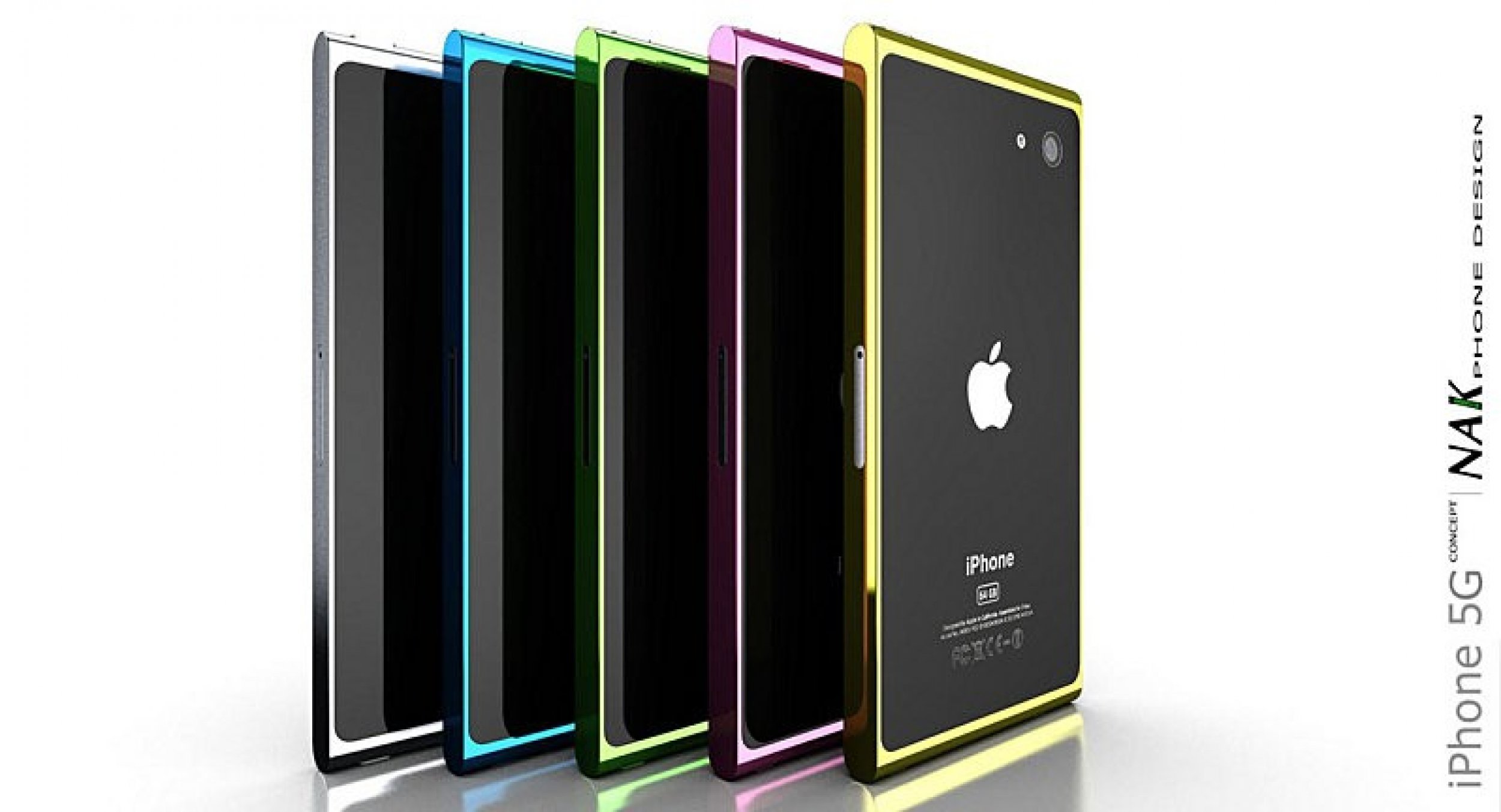
NAK Studio created a batch of candy-colored iPhone 5 designs, which would make the phone sleek but personal in the same way consumers can choose different colored iPods from Apple.
Apple iPhone 5 Concept - Design by Aatma Studio
Photo: Courtesy

Apple iPhone 5 Concept - Design by Aatma Studio

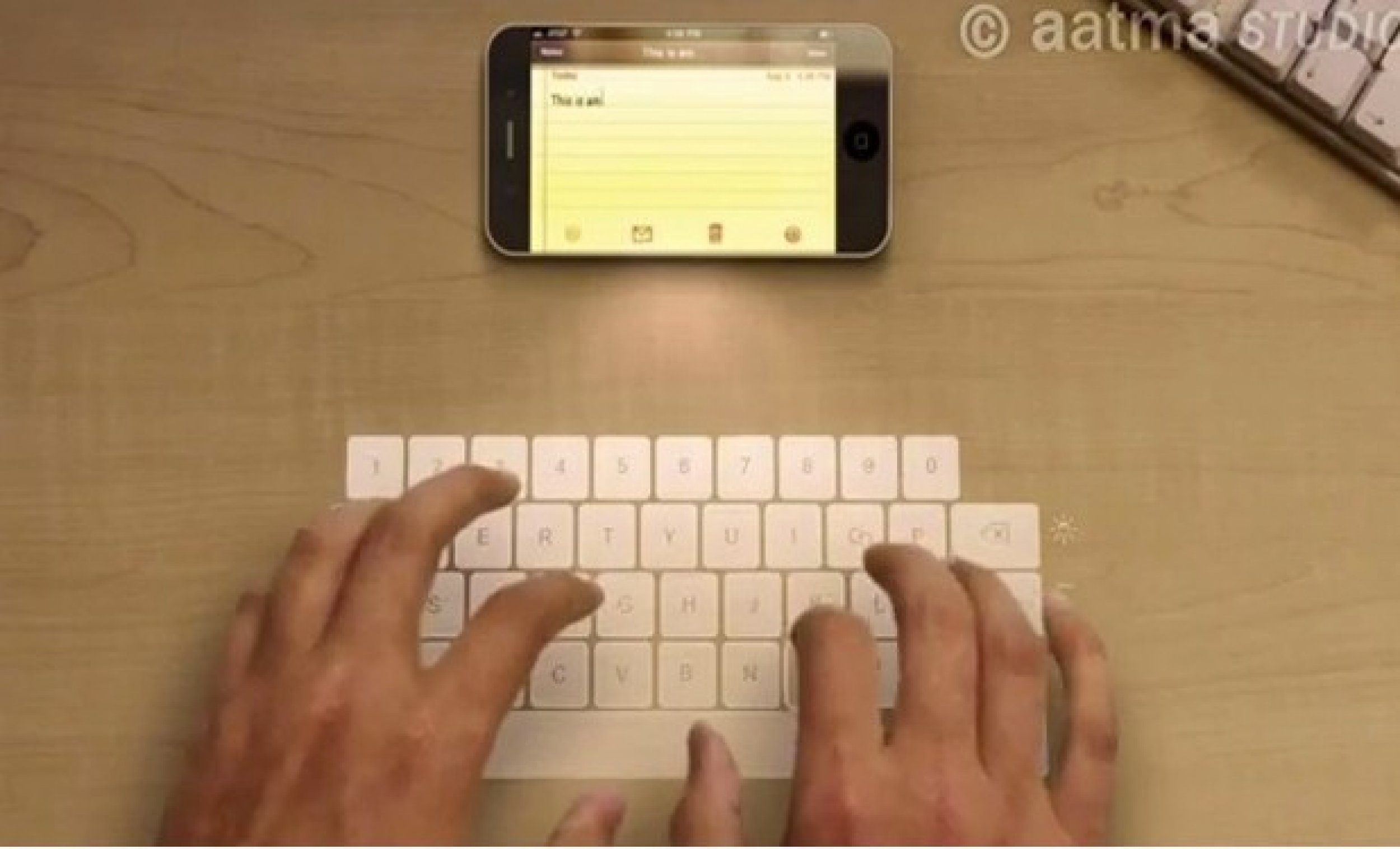
Aatma Studio's iPhone 5 isn't so much about the look of the phone, but what it can do. Here, a concept shows a light projector built into the iPhone 5 that projects a virtual keyboard onto a surface. The keyboard can be expanded or shrunk using the pinch gestures to make typing into the iPhone seamless and easy.
Apple iPhone 5 "4-Inch" Concept - Design By Spencer Caldwell
Photo: Courtesy

Apple iPhone 5 "4-Inch" Concept - Design By Spencer Caldwell

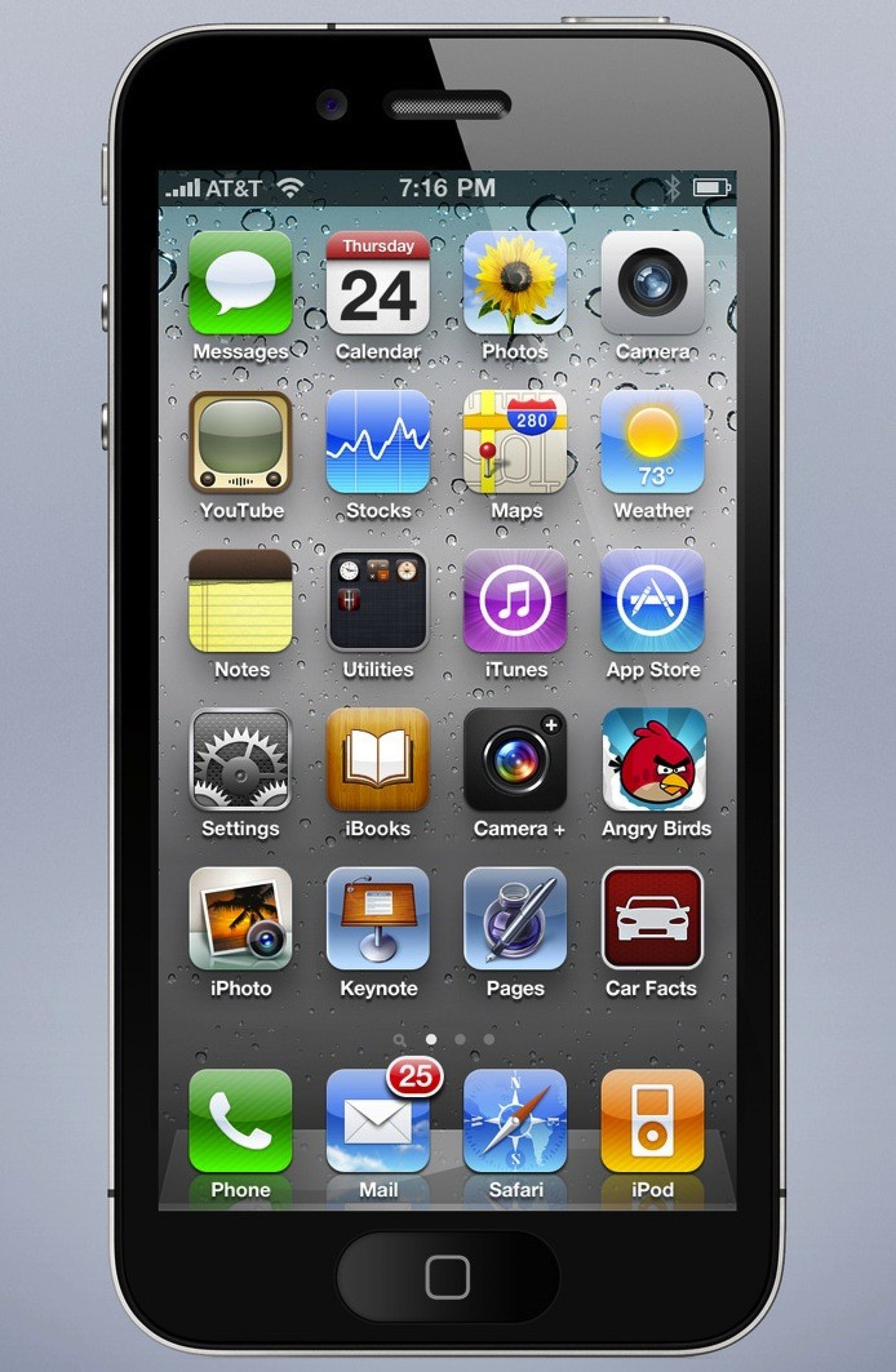
Here is a concept of what a 4-inch iPhone would look like, created by 9to5Mac user Spencer Caldwell. A 4-inch iPhone 5 would feature the same width, but would stretch the phone's length to 3.99 inches to achieve a 9:5 aspect ratio. As a result, the phone would achieve 20 percent more pixels than in the current iPhone 4S.
Apple iPhone 5 Concept - "Tallboy" Design
Photo: Courtesy

Apple iPhone 5 Concept - "Tallboy" Design

This Apple iPhone 5 concept design is an enhanced version of the 4-inch screen concept by Spencer Caldwell. The screen accommodates five rows of apps instead of four, but the width and depth don't appear to be changed. The glass, however, is more "edge-to-edge" than current models.
Currency Pair Overview Dollar Strengthens On Very Light Volumes
Photo: Courtesy

Currency Pair Overview Dollar Strengthens On Very Light Volumes

Overall, the Asian session saw the majors losing a few pips compared to the greenback. However, the moves came on very light volume and are likely to be retested somewhere later. The European calendar is packed with releases coming from the U.K., with some likely to move the entire currency market during the European trading hours. 

The Euro (Eur/Usd) managed to close higher for the first time in the last six days of trading. The euro gained 25 pips on Tuesday, after most of the day the pair traded in a 100-pip range. However, the moment was short lived because the euro continued to decline during the Asian trading hours. 

The Pound (Gbp/Usd) traded between the 20 and the 100-day simple moving averages on Tuesday, but eventually the pair managed to break slightly above the resistance area. As it was the case with the other majors, most of the gains came during the U.S. open. In tonight’s Asian session, the pound traded side-ways above the 20-day moving average. 

The Aussie (Aud/Usd) gained 110 pips on Tuesday, retracing almost half of the declines seen during the Monday trading session. Most of the gains came during the U.S. open, after the aussie moved side-ways during the overnight trading hours. In tonight’s Asian session, the aussie bounced off the 20-day moving average and fell 35 pips. 

The Australian consumer price index came in at 0.1 percent for the March quarter 2009, which is below what economists had forecasted, but higher than the 0.3% drop in the December quarter 2008. The CPI rose 2.5% through the year to March quarter 2009, compared to an annual rise of 3.7% to December quarter 2008

The Cad (Usd/Cad) struggled to break above the 1.2420 resistance line during the overnight session. The pair broke the swing point only during the interest rate decision, when the BoC voted to reduce the interest rate by 25 basis points. However, the market quickly retraced the move, causing the cad to fall 150 pips in a very short time-span. In the Asian session, the cad gained 30 pips on almost no volume at all. 

The Swissy (Usd/Chf) traded in a small, volatile range on Tuesday. During the overnight session, the swissy remained in a 30-pip range. However, the U.S. open helped the pair break lower, but at the end of the session, the swissy was again trading near the resistance line. During tonight’s Asian session, the swissy extended the range seen on Tuesday. 

The Yen (Usd/Yen) picked up 80 pips during the Tuesday trading session, helped by the positive U.S. markets. Also on Tuesday, the pair re-tested the 200-day moving average during the late U.S. session, but the move was rejected due to the market’s light momentum at that time. The resistance area will most likely be tested again, during Wednesday’s trading. 

Beware of rising interest rates and falling U.S. dollar: Gross
Photo: Reuters

Beware of rising interest rates and falling U.S. dollar: Gross

Bill Gross of PIMCO, manager of the world's largest bond fund, said on Bloomberg TV that investors should consider bonds denominated in non-dollar currencies that will hold their values like the Canadian dollar, Mexican peso, and the Brazilian real.

He also favors floating-rate bonds and playing credit spreads (i.e., the difference in the yields of bonds with the same maturity but with different credit quality) over investing in fixed-rate bonds.


Gross' recommendations stem from his concerns about rising interest rates and the decline of the U.S. dollar. These views are in turn shaped by his negative views of U.S. economic policy.


Gross took shots at President Obama's recent compromise with the Republicans as an example of misguided government policy. 


Obama's plan extended income tax cuts, put in place a payroll tax cut, and extended unemployment insurance benefits. Many prominent economists applauded the direction of this plan because it will boost the economy in the short-run, even though it will also increase the budget deficit.


Gross sees it in a different light. 


He thinks the short-term boost is just another misguided program of borrowing from the future in order to spend in the present. Framing it in the context of the jobs market, it's sending the unemployed to shopping malls and grocery stores instead of giving them jobs.


A better plan, according to Gross, would be investing in capital equipment and education in order to raise the long-term competitiveness of the U.S. economy; doing so will also create more jobs.


Obama's misguided policy is one reason Gross thinks the U.S. dollar will continue to devalue and interest rates (the borrowing cost of the U.S. government) will continue to rise.


The Federal Reserve's second round of quantitative easing (QE2) is another reason. 


Back in November, Gross called the program a Ponzi scheme and said it signaled the end of the 30-year trend of falling interest rates.


Email Hao Li at hao.li@ibtimes.com


Obama: the Grand Illusionist
Photo: Reuters

Obama: the Grand Illusionist

President Obama is smooth. He has an incomparable ability to say the correct thing and then doing the exact opposite. For instance, he says the United States cannot continue the boom bust cycle of economic activity and must repent from its proclivity to engender GDP growth off the back of building asset bubbles. He also contends that George W. Bush was disingenuously hiding the size of the true deficit by keeping certain items off budget. In those two statements he is completely correct.

However, he uses the magician’s tactic of deflection to sell his economic gimmickry. First Obama directs your attention towards his promise of removing Bush’s budget tricks and repudiating his fiscal irresponsibility, but then whips out his smoke and mirrors of trillion dollar deficits and accounting games.

Taking a closer look at how the President arrives at his rosy projection of cutting the deficit to “just” $530 billion by the end of 2013 you find he accomplishes it not by keeping expenditures off budget, like his processor, but by utilizing grossly unrealistic economic growth assumptions.

Mr. Obama assumes the contraction in GDP for 2009 will be only 1.2%. That’s a big improvement from the -6.34% annual rate drop of last quarter and far better than the non-partisan Congressional Budget Office’s (CBO) prediction of -2.2% growth for 2009. Then from there things get truly surreal. The Obama administration predicts GDP growth for 2010 will rebound to 3.2% and then increase by more than 4% for each of the next three years!

How realistic you ask is a 4% growth rate in GDP for the years 2011-2013? Well, let’s look at the past 11 years for some guidance. Starting from the beginning of 1998 thru Q4 of 2008, the average quarterly GDP growth rate was 2.17%. And the average yearly growth rate was just 2.7%. What’s truly amazing about the growth rate over the last 11 years (which was well below trend growth of 3%) is that it encompassed two of the biggest manias in the history of the United States—the equity bubble of the late 90’s and real estate bubble in the middle of this decade. You see, once you know the trick it’s easy. If you want to make deficits appear smaller, just pretend growth will be higher than what should be responsibly expected. Then simply bury your growth expectations in the fine print.

Perhaps part of Obama’s magical act of producing well above trend GDP growth will be to conjure up another asset bubble that equals or rivals that of the previous two. But the sad truth is that whether you use Obama’s overly optimistic projections or that of the CBO’s, deficits as a percentage of GDP will eclipse 100% of total output by 2019 (a record outside the years just after the end of WWll). But during the post war era we controlled the entire world’s manufacturing base and were not facing that wave of entitlement spending which looms straight ahead. Which means the consequences of such an onerous debt will be far dire than what was experienced 65 years ago.

When the veil of illusion is dropped the truth behind what this administration will produce is revealed. Record debt, lack luster growth and robust inflation will be the products of runaway spending and increased government intrusion into the free market. Barack Obama wants you to believe he is a fiscal conservative and that he is providing honesty and transparency in the government. The Administration’s trick is to make opacity appear as transparency and mendacity to appear as truth. But their performance is best viewed through gold (not rose) colored glasses.

DuPont earnings fall; cuts '09 outlook
Photo: Reuters

DuPont earnings fall; cuts '09 outlook

Chemical maker DuPont reported a 59 percent fall in quarterly earnings, cut its full year 2009 earnings forecast due to weak demand, and said it will undertake additional cost cutting measures.

First-quarter net income fell to $488.0 million, or 54 cents a share, compared with $1.19 billion, or $1.31 a share, last year. Sales fell 20 percent to $6.87 billion.

Analysts, on average, forecast earnings of 52 cents a share, before items, on revenue of $7.44 billion, according to Reuters Estimates.

For full-year 2009, the company expects earnings to be between $1.70 to $2.10 a share, down from its earlier forecast of earnings to be in the range of $2.00 to $2.50 a share.

The revision anticipates that weak demand across key markets will continue throughout 2009, the company said in a statement.

Analysts, on average, were expecting full-year 2009 earnings to be $1.88 a share.

DuPont shares, which rose 13 percent in the last three months, closed at $26.74 Monday on the New York Stock Exchange. In the last 52 weeks, the stock has traded in the range of $16.06 to $52.34.

(Reporting by Hezron Selvi; Editing by Derek Caney)

Dollar Uncertain in Choppy Dealing Tuesday Morning
Photo: Reuters

Dollar Uncertain in Choppy Dealing Tuesday Morning

The dollar was little changed in choppy dealing versus most other majors Tuesday morning in New York as traders tried to get a handle on another mixed bag of corporate earnings results. With little first-tier economic data to consider, attention will likely turn to Wall Street to see whether stocks extend their big losses from the previous session.

Fear that the recent bear market rally has petered out fueled increased risk aversion on Monday, driving the dollar higher against the euro but sharply lower against its Japanese counterpart.

Treasury Secretary Tim Geithner is expected on Capitol Hill for a hearing on oversight of the government's $700 billion bailout program at 10 a.m. ET.

There are no key economic reports due to released on Tuesday. Reports due later in the week include the Commerce Department's durable goods orders report and industry data on existing homes sales.

The dollar consolidated its recent gains versus the euro Tuesday morning, holding near yesterday's monthly high of 1.2887. Approaching mid-morning, the dollar was trading at 1.2950.

The Center for European Economic Research, or ZEW, said in a report that its economic sentiment index for Germany rose to 13 in April from minus 3.5 in March. Meanwhile, economists had expected the index to rise to 2. The indicator marked a positive reading for the first time since July 2007.

After coming under pressure in very early dealing versus the sterling, the dollar was able to find its footing and was down only slightly from yesterday's 3-week high of 1.4467. Nearing 8 am ET, the buck was trading at 1.4525.

A report from the Office for National Statistics said UK's annual inflation in March eased to 2.9% from 3.2% in February. The annual rate came in line with economists' expectations and reached the lowest since March 2008. The largest downward contribution to the change in the CPI annual rate came from housing and household services.

The dollar was stable versus the yen Tuesday morning after falling below a recent trading range yesterday. The buck fetched 98 yen in early dealing, an improvement from Monday's 3-week low of 97.64. With traders betting the dollar was overbought following a run to a 3-month high of 101.43 earlier this month, traders are turning to the yen as a value hedge play.

Commodity prices stabilized Tuesday morning after falling sharply Monday on renewed concerns about global demand. As such, the dollar leveled off against resource-linked currencies like the loonie. Approaching mid-morning, the dollar was near 1.2400, having snapped back from last week's 3-month low of 1.1982.

Later this morning, the Bank of Canada makes its latest interest rate decision. Economists expect the BoC to hold steady at 0.5 percent.

For comments and feedback: contact editorial@rttnews.com

Pricey Eats
Photo: Reuters

Pricey Eats

From all accounts it appears that the world is in the early stages of a major leg up in food prices. The major macroeconomic trend will likely drive economic policy and the investment outlook for years to come. Although mainstream pundits like to focus on cyclical drivers like the weather, the real force behind the move is secular. The U.S. is leading the world in a pandemic of monetary inflation that is helping to cause commodity prices, food in particular, to skyrocket across the globe.

The Federal Reserve's monetary excess is currently being magnified by China's misguided currency peg policy. As the United States debases its currency through excess printing, China must follow suit. In order to maintain a consistent relative valuation, China must adopt the monetary policy of the United States.

Just last week, China announced that in the 4th Quarter 2010 its foreign currency reserves leapt by $199 billion to $2.85 trillion. The increase was much larger than economists expected, and suggests that China is printing as much as $2 billion worth of RMB per day in order to buy dollars to maintain the peg. The big problem is that China, with a booming economy, is adopting a monetary policy of an economy that is contracting. This is the perfect recipe for inflation.

And it's not just China that is enforcing a currency peg. Many other countries intervene in the forex market when they feel their currency has risen too high against the greenback.

For example, the Chilean currency gained 17% in value against the USD in just 7 months during 2010. The surging currency underscored the country's status as an emerging markets success story. But that condition abruptly ended last week when Chile's central bank pledged to intervene in the local currency market by increasing foreign currency reserves by $12 billion in 2011. After the announcement, the currency predictably dropped against the dollar and caused a major sell-off in Chilean equities.

The specious idea behind this action is that foreign governments believe that by keeping their currencies cheap they can bolster exports and maintain a strong economy. But a rising currency does not necessarily restrain exports. If those countries currently committed to pegs were to reverse course, their problems with local inflation could diminish. And those lower prices could offset to a certain degree the decreasing purchasing power experienced by the importers of those countries' domestic goods.

However many countries fail to understand this basic economic concept and fail to see the forest for the trees. By stubbornly clinging to the belief that a rising currency is bad for the economy, world economic leaders are helping to unleash a wave of inflation.

Typically, food prices are more volatile than prices for finished goods. It is there that this new wave of inflation is first manifested. Unfortunately, this means that the poorer people around the world, who pay a higher percentage of their income for food, will bear the brunt of the pain. A quick look at some alarming movements in food prices should give you a sense of how bad things are getting:

  • Sugar was up 25% in 2010.
  • Corn and wheat were up 53% and 49% respectively in 2010.
  • Soybeans were up 28% in 2010.
  • In December, the U.N.'s Food Price Index, which covers dairy products, meat, sugar, cereals and oilseeds, jumped an alarming 4.2% from the previous month. In so doing the Index passed the previous peak set in June 2008.
  • India's food price inflation rose to a one-year high of more than 18% according to data released in early January. Rising food and energy prices in India have convinced many analysts that the Indian central bank will raise rates later this month.
  • In China, food prices rose 11.7% from January to November 2010. In response, several cities have implemented direct controls to limit food price increases and the central government has vowed to eliminate speculation in the country's commodities markets.

Of course, global currency depreciation has also caused other commodity prices to rise. Food production is extremely energy intensive, and $90 per barrel oil has helped push food prices to new all-time highs.

The surging cost of fertilizer, driven in large part by U.S. ethanol policy, is also adding another driver to rising food costs. According to the EPA, ethanol sales in the United States are expected to rise to 13.9 billion gallons in 2011 from 12.95 billion gallons in 2010. The agency is requiring that renewable sources account for at least 8 percent of motor fuels sold in 2011. Congress is requiring that U.S. annual ethanol production increase to 36 billion gallons by 2022. With nearly 40 percent of the U.S. corn crop currently diverted to ethanol, the demand for fertilizer is likely to increase substantially.

Prices are already on the move. Mosaic, one of the country's largest fertilizer corporations, sold diammonium phosphate for $461 a metric ton in the fourth quarter, up 61 percent from a year earlier.

Admittedly, there are other non-inflationary factors that are boosting global food prices. For instance, poor weather conditions in major exporting countries across the globe have significantly curtailed harvests and expectations. And alongside bad weather in Australia, Europe, North America ,and Argentina, rising Asian demand is at the heart of the spike. China, for example, is expected to buy 60 percent of globally traded soybeans in 2011/12, which is double its percentage of four years ago.

But the genesis of soaring food costs lies at the feet of Ben Bernanke and his desire to re-ignite inflation domestically. However, countries like India and China have already started to reverse the inflationary effect of linking their currencies to the USD and are raising banks' reserve requirements and interest rates. Contrast those actions with those of our Fed chairman who has repeatedly stated that inflation in the U.S. is far too low. We can only hope Mr. Bernanke repents from his love affair with inflation before food riots land on U.S. soil.

In the meantime U.S. investors can help mitigate their exposure to rising food costs by perhaps looking to invest in those firms whose financial performance improves with rising food prices.

It appears Apple wants to make its next smartphone, presumably called the iPhone 5, significantly thinner and lighter than its older models. Sources from within Apple's foreign supply chains reportedly told Digitimes that the iPhone 5, expected to launch in the second or third quarter of 2012, will adopt in-cell touch panels manufactured by Sharp and Toshiba Mobile Display.

An improvement in yield rates of the in-cell touch panels at Sharp and TMD has persuaded Apple to choose to cooperate with Japan-based panel makers, the sources said.

By effectively removing a layer between the multi-touch screen and the LCD display, these in-cell panels far outperform current on-cell touch screens. AUO Optronics, based in Taiwan, explains the difference:

Compared to In-Cell technology, the conventional technologies have an additional sensing glass, which not only increases the overall thickness of the LCD, but also adds an extra lamination process step, translating to increased cost and relatively lower yield and reduced transmittance, the company said. Compared to the traditional resistive touch control, in-cell voltage sensing not only has the above advantages, but also is superior in that its sensitivity less subjective to environment changes, no calibration mechanism required, and capability of supporting multiple-point touch control.

AUO Optronics adds that the touch sensors are vastly improved in in-cell technologies, but they're still powerful enough to resist scratches on the touch panel, resulting in a longer product lifetime.

In contrast to the traditional resistive and digitizer touch controls, since a mere light touch can be picked up, the operation interface of In-cell charging sensing is more humanized, AUO said. In addition, charging sensing not only can support multiple point touch control, but further support pen writing at present to meet different requirements by the clients.

Digitimes said Sharp will build the in-cell panels at its 5.5G lines, while Toshiba Mobile Display would use its 6G lines for production. They also said Sharp and Toshiba Mobile Display will ramp up in-cell production during Q2 2012.

So in-cell technology helps create more precise glass, but Reed Sanders from Technorati points out another powerful benefit:

The current displays in the iPhone 4 and 4S involves a layer of sensing glass on the outside of an inner LCD screen. This capacitive touchscreen makes it thicker as it has two layers and an extra step in the assembly line. Moving to the single layer in-cell touch panel would remove a step in production as well, speeding up the manufacturing process. When you manufacture 30 million iPhone devices, saving two seconds becomes a large amount.

Apple currently relies on TPK Holdings and Wintek to build its glass-on-glass touchscreen panels for its current iPhone models, but the move toward Sharp and Toshiba Mobile Display has resulted in TPK Holdings saying it is working on touch on lens solutions that similarly use a single piece of glass. TPK alleges that its TOL technology is more suitable for high-end customized devices, and that the market is big enough for more than one kind of technology that makes thinner displays.

This move to make a thinner iPhone is bolstered by another recent report from Korean publication ETNews, which reported, citing industry sources, that Apple may make its next iPhone considerably thinner and lighter thanks to some recently licensed patents for liquid metal, which the company acquired in 2010 from Delaware-based Liquidmetal Technologies.

The next flagship phones of [Apple and Samsung] are expected to adopt unprecedented materials for their main bodies, that is, ceramic for the Galaxy S3 and liquid metal for iPhone 5, both being thin, light and highly resistant to external impacts, said ETNews' Kim In-Soon. The new phase of the rivalry is because neither one of them can get a decisive edge over the other solely with its OS and AP specifications, features or design.

Apple acquired the licensing rights to various patented amorphous metal alloys from Liquidmetal Technologies in August 2010, but ETNews claims Apple will create a liquid metal alloy of zirconium, titanium, nickel and copper to create an outer surface smooth like liquid.

If these rumors prove to be true, the iPhone 5 could be dramatically thinner than its predecessors. The iPhone 4S and iPhone 4 both measure .37 inches (9.3 mm) deep and weighs 4.9 ounces (140 grams), and while that isn't very thick or heavy for a smartphone, making these elements lighter makes room for more features, processors, and battery life.

Based on patent filings and reports, it looks like Apple plans to pack plenty of new features in to the iPhone 5. If Apple hopes to include NFC technology, LTE chipsets, advanced haptics, or even a 3D camera system, it needs much more room within the device without making it any bigger than it already is. The solution? Make the other elements smaller and lighter.

Apple had reportedly hoped to include some of these technologies in the iPhone 4S, but without liquid metal technologies or in-cell touch displays, the phone would have needed to be significantly thicker to accommodate a larger circuit board and a bigger battery. Now it looks like Apple has a few answers for how to pack more innovation into a smaller device.

Possible Features, Specs in the iPhone 5

Bigger screen. On March 21, Apple reportedly ordered 4.6-inch screens, to be featured in the company's next iPhone. The report came from a South Korean publication, the Maeli Business Newspaper, which quoted an unnamed industry source, according to Reuters. But just two days later, iMore's Ritchie said the iPhone 5 would keep the same 3.5-inch screen -- the same size as all previous generation iPhones -- but said it could get a little bigger than its predecessors, although not nearly as big as the 4.5-inch-plus Android smartphones..

So whom to believe, the Maeli Business Newspaper, or our old pal Ritchie? The truth seems to lie somewhere in the middle. In early January, as Apple was reportedly gearing up to begin production on the iPhone 5. A source from within China's Foxconn manufacturing plant told 9 to 5 Mac that various sample iPhone 5 prototypes were floating around the factory floor, but there were a number of common features among the phones, including a display that measured at least 4 inches, and a longer and wider form factor that did not match that of the iPhone 4 or 4S. The Foxconn sources believed the iPhone 5 would retain the rectangular shape of its predecessors, which, if true, would put to bed any rumors of a slimmer teardrop design

OLED Display. Apple is reportedly testing iPhone 5 prototypes with an A5X chip, which is the quad-core graphics processor used to power the Retina Display in the new iPad. But why would Apple need such a powerful chip for an iPhone? Given that the A5X chip is a graphics powerhouse, if Apple doesn't drastically change the physical size of the screen to 4.6 inches, it may be changing the display's overall quality.

On April 4, the Korea Times reported that Apple is interested in switching from LCD to OLED displays for its next round of iPhones and iPads. The reason behind the potential move would be Samsung, which recently launched its spinoff company called Samsung Display that aims to pivot away from LCD to focus more on OLED technology. Apple is by far Samsung's biggest customer: The Cupertino, Calif.-based company bought $7.8 billion worth of components from Samsung in 2011, ranging from memory chips to LCD panels, but the company will reportedly buy $11 billion worth of parts this year, which could mean Apple is buying more expensive display material.

Apple has plenty of money to afford OLED screens in an iPhone-sized display, and it would make sense for Apple to ask Samsung to help build its iPhone 5 displays. Samsung knows how to build big, beautiful screens for any size device: Just imagine what Samsung could do with Apple's Retina technology implemented into an OLED. Apple would effectively put distance between the iPhone and all other smartphone competitors for another five years, at the very least.

LTE Connectivity. It's already a foregone conclusion that Apple will implement radio bands for 4G LTE in the iPhone 5, given that Apple introduced the high-speed network on its new iPad, released on March 16, which was likely done as a practice run

LTE features significantly higher download and upload speeds compared to 3G technologies, but previous implementations of LTE in smartphones tended to ravage battery life, which was a major complaint from users. If Apple wanted LTE in the iPhone 4S at the time, it would have been forced to increase the phone's thickness to accommodate a larger circuit board and a bigger battery. Apple CEO Tim Cook, in a company earnings conference call in April 2011, said first-generation LTE chipsets force a lot of design compromises.

The iPhone 4 PCB [printed circuit board] is already incredibly small, not leaving any room for an extra chip to enable LTE without shrinking the size of the battery, said Anand Shimpi, a chip expert and CEO of Anandtech.

Fortunately, Qualcomm recently unveiled the fifth iteration of its new chip, which supports TD-SCDMA, TD-LTE, HSPA+, EV-DO, embedded GPS, and LTE on TDD and FDD networks worldwide. The chip works with Android and Windows 8 devices, but there's a great chance this will be the chip inside the iPhone 5.

The iWallet. Apple won a major patent on March 6 for a piece of technology called the iWallet, which is a digital system that gives users complete control over their subsidiary financial accounts on their iPhones, and also leverages Near-Field Communication technology to complete credit card transactions directly on the phone as well. The iWallet has many different features, including giving users the ability to see their entire credit card profiles, view statements and messages from their banks, and even set parental controls for their children, should they also want to use their iPhones as digital wallets. Outside of the iPhone, users can keep track of their payments and statements within the iTunes billing system, which keeps credit card information and records safe and secure. There's a possibility that iWallet could also work with other Apple utilities, which could allow users to buy things like movie tickets directly within the apps, but only time will tell with that one.

3D Photography. Some may say 3D technology is nothing new, or possibly even overdone; Apple would argue that's because nobody has done it right. Yet.

Apple says that while existing 3D cameras and video records can get three-dimensional information from objects, they're generally incapable of getting detailed enough information in relation to the shapes, surfaces and depth of the objects. Apple's solution involves a series of systems, tools and methods to capture a 3D image by using multiple sensors and cameras. One sensor would capture a polarizing image, while two other sensors would capture two different non-polarizing images, and Apple's system would combine the images into a composite.

Apple has another solution involving different specialized sensors for capturing the image's surface information, color imaging and luminance, and combining the data into another composite that has information about the depth and plurality of surfaces. Together, these systems and methods of capturing light and image information would create an incredible 3D image that can be seen without glasses. 

Advanced Haptics. In the days before Apple unveiled its new iPad in March, a rumor from left field said Apple would implement an advanced haptics system into the iPad, which would give users the sensation of texture when they touched an object on the screen. Android devices currently have a type of feedback when you press a button on a smartphone, so it's possible Apple will one-up its most fierce rival with unrivaled touch technology.

A touchscreen that created the sensation of textures would be an incredible piece of technology, but we're hoping Apple completes the puzzle with one important piece of technology from Microsoft. In mid-March, Microsoft engineers unveiled a lag-free touch screen that responds to your finger's touch in less than one millisecond. Current Apple devices only have a minor lag with their touchscreens, but this minor adjustment would make users feel like they're really touching their work, drawing a picture, or handwriting a note. Apple has proven to us time and again that simplity is the key to an enjoyable experience, but speeding up the touchscreen would make the already-popular iPhone into the best touchscreen experience ever.

Multi-player gaming. The iPhone 5 might also be the first phone to feature a new piece of software for multi-player gaming. On March 15, the U.S. Patent and Trademark Office published a patent application from Apple that describes a system for multi-player gaming, which allows groups of people to play the same game together and even see it from different perspectives according to the devices' physical relation to one another. The system actually mimics that of the Find My Friends app, in which a user's device detects other nearby devices that it recognizes as friends, and invites them to all join a common application. The technology also determines the relative position of those devices, so some games -- like turn-based role-playing games or card games -- can be played in a specific order.

Crack-proof glass. Apple's patent for crack-resistant glass, granted on Nov. 15, uses the same alumino silicate glass solution used in the iPhone 4 and 4S, but chemically treats it with potassium and sodium ions to achieve greater compression thresholds on the surface and edges of the glass, making it less susceptible to cracks. 

Apple also included a handy feature that will appeal to everyone who's ever dropped their iPhone: The patent calls for a shock mount to be placed between the glass and the body of the device, which will instantly inflate if the device senses it's falling. If the iPhone's internal accelerometer senses it's falling, an actuator within the device sucks in the cover glass as it accelerates to the ground, protecting it from damage. 

What else would you like to see in the iPhone 5? Would you rather see the iPhone 5 released earlier, or later for the holidays? Let us know in the comments section below.