South Korea’s Kospi Is Back In A Bull Market. But Analysts Wonder If The Run Is Sustainable.
South Korean stocks have bounced more than 20% from their July low as investors rush back into Samsung and SK Hynix.

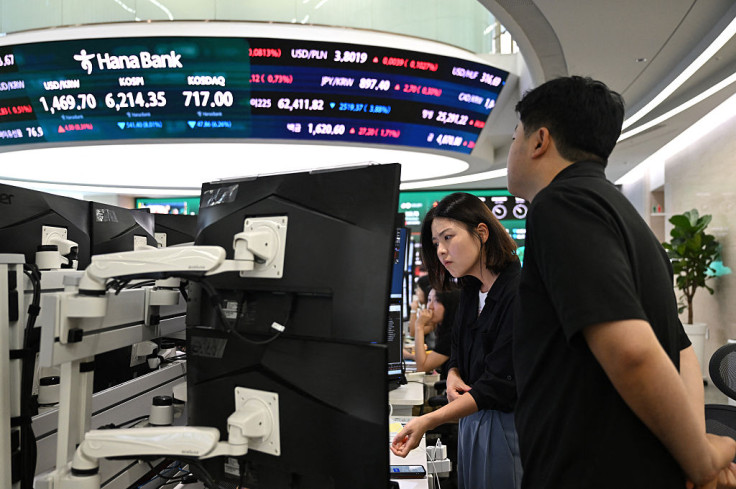
South Korea's stock market has pulled off a dramatic turnaround, surging back into bull-market territory just weeks after a punishing selloff rattled investors and raised questions about whether the country's AI-driven rally had gone too far.
The benchmark Kospi has climbed more than 20% from its July low, the commonly used definition of a bull market, as investors pile back into semiconductor heavyweights Samsung Electronics and SK Hynix.
The rebound has been remarkably fast. The Kospi closed 3.6% higher at 6,813.34 on Thursday, extending its rise from its July 30 closing low to nearly 22% in just 10 trading sessions, The Wall Street Journal noted. The index is now up about 62% this year, although it remains well below the extraordinary peak reached earlier in 2026.
At the heart of the comeback is the same trade that helped fuel both the market's earlier boom and its subsequent crash: artificial intelligence.
CNBC reported that investors have returned to Korea's semiconductor giants amid renewed confidence that spending on AI infrastructure will keep demand for memory chips strong. Strong earnings from U.S. technology companies and their continued commitment to expensive AI data-center projects have helped restore confidence in the sector.
Samsung and SK Hynix have been among the biggest beneficiaries. The scale of their influence, however, is a double-edged sword.
South Korea's equity market has become heavily dependent on the fortunes of its semiconductor champions, meaning a shift in expectations for global AI spending could quickly spill over into the Kospi. A slowdown in capital expenditure by major U.S. technology companies, weaker demand for AI services or renewed fears of tighter monetary policy could put the rally under pressure.
For now, there are signs that the fundamentals behind the rebound remain strong. But the extraordinary volatility of recent months is also a reminder of what can happen when enthusiasm becomes heavily leveraged.
Single-stock leveraged exchange-traded funds tied to Samsung and SK Hynix became increasingly popular with retail investors during the market's earlier surge. These products amplify daily movements in their underlying stocks, magnifying gains when markets rise but also accelerating losses during sharp declines.
The Financial Services Commission said volatility had become particularly extreme among memory-chip stocks. Between late May and July 10, annualized daily-return volatility reached 113% for SK Hynix and 96% for Samsung, according to official regulatory data.
With some of that leverage now unwound and tighter rules in place, analysts see the market as potentially standing on firmer ground than it did before the crash.
There is another factor supporting the longer-term case for Korean stocks: efforts to tackle the longstanding "Korea discount," the tendency for Korean companies to trade at lower valuations than comparable international businesses.
Corporate governance reforms and the government's Value-Up initiative have sought to improve shareholder returns and transparency. Starting this year, all Kospi-listed companies are subject to mandatory corporate governance disclosure requirements, expanding the rules from 541 companies to more than 800, according to South Korea's Financial Services Commission. That could give investors reasons to stay bullish on Korea beyond the AI trade.
© Copyright IBTimes 2026. All rights reserved.
- Recommended For You