U.S. Stocks Are Just Below Their Record High. Morgan Stanley Sees A Risk Of A 7% Drop.
Strong corporate earnings have supported Wall Street even as the 10-year Treasury yield has hovered near 5% and the Iran war has kept oil prices elevated.


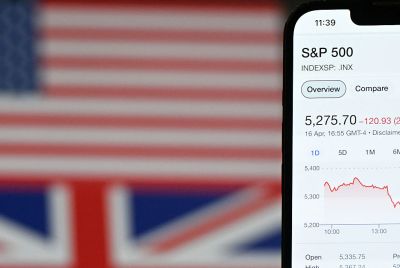
U.S. stocks remain close to record levels after a strong earnings season, but Morgan Stanley strategists have outlined a scenario that would take the S&P 500 down to 7,100 if higher energy prices and tighter financial conditions put additional pressure on valuations.
A team led by strategist Michael Wilson said the benchmark index could fall to the mentioned level under those conditions. S&P 500 valuations have declined over the past four months to their lowest level since March even as better-than-expected company results have helped the market withstand a sharp rise in bond yields, Bloomberg noted on Monday.
"Should the correction in valuation take a turn for the worse in the near term due to a further tightening of financial conditions and/or materially higher energy prices, we think the S&P 500 could trade as low as 7,100," Wilson wrote in a note.
The index reached its latest record in mid-August before losing ground as concerns about inflation returned and the 10-year Treasury yield moved toward 5%.
Stocks extended their gains Monday as technology shares rallied and some of the recent pressure from oil and bond yields eased.
Energy prices also eased Monday after weeks of sharp swings tied to the Middle East conflict. Brent crude fell more than 4% to below $100 a barrel, retreating further from the nearly $110 level reached last week and reducing some of the immediate inflation pressure facing financial markets.
The Iran conflict has driven sharp moves across energy markets as attacks on infrastructure and disruptions around major shipping routes affected crude and refined-fuel supplies. Those developments have also complicated the inflation picture in the U.S., where policymakers last week responded to persistent price pressures with the first interest-rate increase in three years.
The Fed raised its benchmark rate by a quarter percentage point Wednesday, taking the federal funds target range to 3.75% to 4%. It was the central bank's first increase since 2023 and marked a change from the rate-cutting cycle that preceded it.
The Federal Open Market Committee said inflation remained elevated while economic activity continued to expand at a solid pace. Domestic spending remained resilient, capital investment was robust and job gains had kept pace with growth in the workforce, the Federal Reserve said following the unanimous decision.
Changes in monetary policy have been reflected quickly in the bond market, where the 10-year Treasury yield moved toward 5% last week. That increase has become particularly important for equity investors because the S&P 500 entered the period with valuations still high by historical standards.
Strong corporate results have helped offset some of those pressures, with the second-quarter earnings season ranking among the strongest on record and supporting the S&P 500 even as interest rates and energy costs rose and government bonds became more volatile.
Wilson's 7,100 level is a downside scenario rather than Morgan Stanley's central target. His team has maintained a year-end S&P 500 target of 8,000, with the strategist citing the strength of corporate profits in explaining that outlook.
Other Wall Street firms have also emphasized company earnings in their recent market assessments. Strategists at JPMorgan Chase and Goldman Sachs have cited healthy profit growth, while Bank of America has pointed to elevated investor positioning as the pace of earnings growth moderates.
Wilson has maintained a preference for large-cap, higher-quality stocks and said momentum has been improving in services-oriented and asset-light industries. His latest note comes after he spent much of the year among the more bullish Wall Street strategists on U.S. equities.
Morgan Stanley's 8,000 year-end target remains unchanged, while the 7,100 level outlined by Wilson's team represents the firm's downside scenario if financial conditions tighten further or energy prices rise materially.
© Copyright IBTimes 2026. All rights reserved.
- Recommended For You