California’s Oldest Family-Owned Winery Files For Bankruptcy. A 168-Year Legacy Faces Its Biggest Test Yet
Six generations of family control are set to end as the historic California producer restructures amid a difficult period for the wine industry.

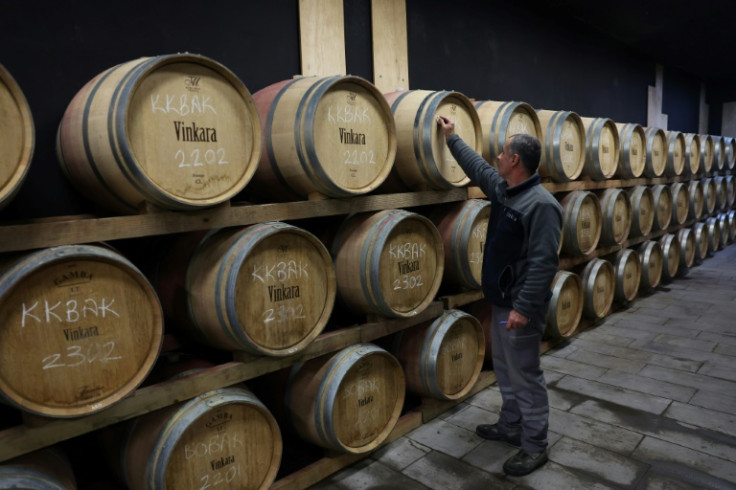
California's oldest continuously family-owned winery has filed for Chapter 11 bankruptcy protection, putting six generations of family control on course to end while the 168-year-old Sonoma Valley business searches for a new owner and works through its debt.
Vineburg LLC, which does business as Gundlach Bundschu Winery, filed for bankruptcy on Sept. 23 in the U.S. Bankruptcy Court for the Northern District of California. Court records show the company reported about $17.2 million in assets and $39.1 million in liabilities.
The winery has operated from Sonoma since 1858, when Jacob Gundlach purchased 400 acres and established Rhinefarm. The first vines were planted the following year, according to Gundlach Bundschu's own history, and the property remains at the center of the company's wine operations today.
The Chapter 11 filing followed years of cost reductions, restructuring, family capital contributions and talks with lenders, according to a declaration filed in bankruptcy court by CEO Jeff Bundschu. The company had also sought outside investment or asset sales before entering bankruptcy but was unable to reach an out-of-court agreement.
The winery plans to remain open while the restructuring moves forward. Bundschu told the Los Angeles Times that the family is looking for a new owner but intends to remain involved with the business.
"We're wide open," Bundschu said, stressing that visitors should not notice a difference in day-to-day operations.
Part of Gundlach Bundschu's financial strain traces back to a major expansion shortly before the COVID-19 pandemic.
The company acquired a roughly 60-acre winery and vineyard property in Glen Ellen in February 2020 as its business expanded and it sought additional space. The site later became associated with Abbot's Passage, a label founded by Katie Bundschu Tynan.
The acquisition left the company carrying additional debt just before the pandemic disrupted tasting-room traffic, hospitality and wine sales. Gundlach Bundschu later began cutting costs and restructuring operations as conditions across the wine market weakened.
Court-related reporting based on the company's filings shows operating expenses were reduced by more than 50% over roughly 18 months, amounting to around $7 million in savings, while staffing fell from about 120 workers to 63.
The family is now expected to give up majority ownership as part of a new investment arrangement, although it plans to retain a stake and remain connected to the winery.
Gundlach Bundschu's bankruptcy comes during a difficult period for California wineries and grape growers.
The Wine Institute, which represents California wineries, acknowledged what it called an underlying "demand crisis" in June while discussing pressures facing growers and producers. California remains the dominant U.S. wine-producing state, accounting for roughly 80% of domestic wine production.
Exports have also come under pressure. Research published this year by the University of California's Giannini Foundation of Agricultural Economics found that U.S. wine exports dropped by more than 30% in 2025 as trade tensions intensified. Exports to Canada, historically the largest foreign market for U.S. wine, declined 78% from the previous year, according to the study.
The Wine Institute separately said Canadian restrictions on U.S. wine cost the American industry about $357 million in lost sales during 2025.
Other California producers have also reduced operations. Gallo announced cuts affecting 93 workers across Napa and Sonoma County facilities earlier this year, including the shutdown of its Ranch Winery production facility in St. Helena. The company said the changes reflected market conditions, shifting consumer demand and available production capacity.
Constellation Brands has also been reshaping its wine and spirits business. Its latest annual filing shows restructuring measures that included reduced headcount and spending while the company narrowed its wine portfolio around higher-end brands.
Another Napa producer, Signorello Estate, filed its own Chapter 11 case on Aug. 27, although that proceeding was dismissed on Sept. 11, according to court records.
For Gundlach Bundschu, the bankruptcy process is aimed at preserving the winery as an operating business while changing its capital structure and ownership.
The company's central Rhinefarm property in Sonoma Valley remains its primary estate. Bundschu said the family expects to remain involved after a new owner comes in, even as the restructuring brings an end to its position as a business controlled entirely by the founding family.
© Copyright IBTimes 2026. All rights reserved.
- Recommended For You