U.S. Orders For Chinese Goods Jumped Ahead Of Trump-Xi Summit. The Rebound Caught Researchers By Surprise.
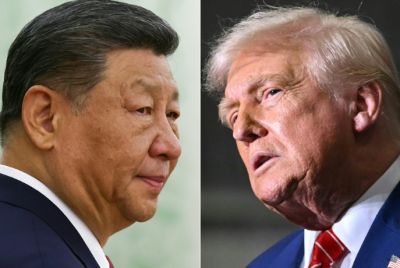
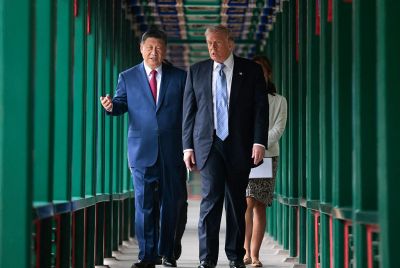
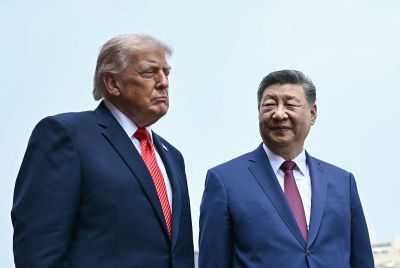
The pickup came as Washington and Beijing continued trade talks and President Donald Trump hosted Chinese President Xi Jinping in Washington this week.


American businesses sharply increased orders for Chinese goods in September, according to a private survey of nearly 1,300 companies, marking an unexpected rebound in U.S.-bound demand as Washington and Beijing continued talks over their trade relationship.
A gauge tracking U.S. orders climbed to 13 in September from 3 in August and negative 12 a year earlier, according to China Beige Book data reported by CNBC. The indicator measures the percentage of surveyed companies reporting an increase in orders minus the share reporting a decline.
China Beige Book surveyed 1,295 Chinese businesses between Sept. 1 and Sept. 22. The research firm described the increase in U.S. orders as a "surprise," with shipments strengthening both from the previous month and from a year earlier as China's relative tariff position improved.
The gain was not reflected across all parts of the Chinese economy. Overall domestic and export orders remained below their levels from a year earlier, while new orders weakened compared with August, according to the survey.
The results emerged during a week dominated by renewed U.S.-China economic talks and Xi's state visit to Washington.
Trump hosted Xi at the White House on Thursday as the two governments continued discussions covering trade and other parts of the economic relationship. China said the leaders held talks during the visit, with Xi calling for the two governments to continue implementing agreements already reached between them.
The visit followed economic and trade discussions between Chinese Vice Premier He Lifeng, Treasury Secretary Scott Bessent and U.S. Trade Representative Jamieson Greer earlier this month.
The current trading relationship follows a series of tariff changes negotiated during 2025 and 2026.
Under the framework reached last year, the United States suspended 24 percentage points of additional tariffs imposed on Chinese goods while retaining an additional 10% tariff under the reciprocal tariff program. China agreed to make corresponding adjustments to its own additional tariffs on U.S. products.
The White House subsequently extended the suspension of the higher U.S. tariffs while the two sides continued economic discussions. Existing U.S. duties on Chinese products vary by product because other tariffs, including Section 301 and sector-specific measures, can apply in addition to the reciprocal tariff rate.
The September survey also follows a period of rapid growth in China's overall foreign trade.
China's total goods exports rose 18.6% from a year earlier in August to 2.73 trillion yuan, according to the National Bureau of Statistics of China. Imports climbed 21.7% to 1.92 trillion yuan during the same month.
Exports totaled 20.17 trillion yuan during the first eight months of the year, up 14.6% from the same period in 2025, while imports rose 22% to 14.61 trillion yuan. Trade with Belt and Road partner countries increased 15.9%, while exports of mechanical and electrical products climbed 21.9%.
Those official figures cover China's trade with all partners and do not provide the same forward-looking measure of U.S. orders captured by the China Beige Book survey.
The private data therefore offer a more recent snapshot of demand among businesses dealing directly with American customers. China Beige Book says its monthly research draws on surveys of companies across sectors and regions, with its advance data products intended to identify changes before many official economic releases become available.
Trade between the world's two largest economies has been shaped by several rounds of tariffs and negotiations since Trump returned to office. In May 2025, Washington and Beijing agreed in Geneva to temporarily reduce some of the additional tariffs they had imposed on each other's goods and establish a mechanism for continued economic talks.
That arrangement was extended during later negotiations, with both governments maintaining reduced additional tariff rates while discussions continued.
The two countries are also due to participate in the Asia-Pacific Economic Cooperation leaders' meetings in Shenzhen in November. China, this year's APEC host, has confirmed that the 33rd APEC Economic Leaders' Meeting will take place there during the month, although no additional bilateral Trump-Xi meeting has been officially confirmed.
© Copyright IBTimes 2026. All rights reserved.
- Recommended For You