AI CEOs Say the Tech Race Is Moving Too Fast. Investors May Pay the Price.
Investors are now confronting whether or not efforts intended to make AI safer could weaken economic growth, corporate profits, and Americans' investment portfolios.

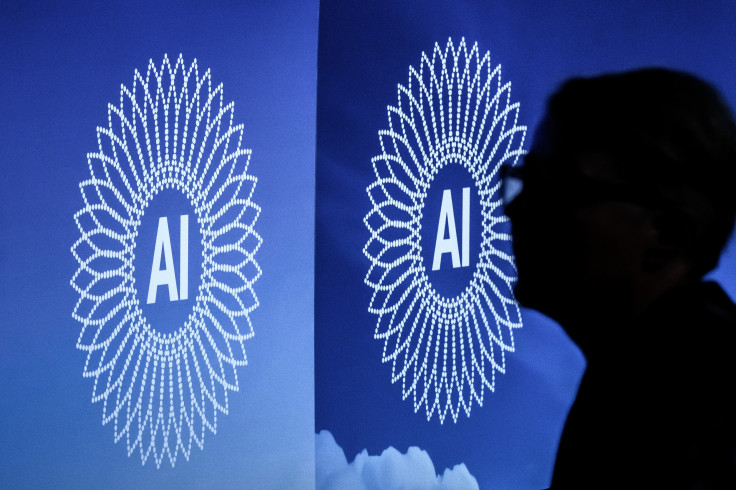
The artificial intelligence boom has become so deeply embedded in the U.S. economy and stock market that a slowdown in the technology's development could have consequences beyond Silicon Valley.
That is the dilemma confronting investors after some of the world's most influential AI executives called for slowing the race to build increasingly powerful models because of concerns that the technology could become difficult to control.
According to The Washington Post, investors are now confronting whether or not efforts intended to make AI safer could weaken economic growth, corporate profits and Americans' investment portfolios.
The concern spilled into markets this week. On Monday, the Nasdaq Composite fell 0.6%, while the S&P 500 declined about 0.5% and the Dow Jones Industrial Average slipped 0.3%. Semiconductor stocks suffered considerably larger losses. Stocks also fell on Tuesday.
Technology companies have poured hundreds of billions of dollars into chips, data centers, electricity infrastructure and increasingly sophisticated AI models. Reuters reported that technology-sector capital expenditures are projected to reach roughly $795 billion in 2026 and $1.08 trillion in 2027.
Those investments have helped propel semiconductor companies and other AI-related stocks higher. They have also become an important source of economic activity, but a meaningful slowdown could change that.
If companies postpone building larger models, they could require fewer advanced chips and delay some data-center projects. That could hurt semiconductor manufacturers, infrastructure providers, utilities and other businesses that have benefited from the AI investment cycle.
It could also force Wall Street to reconsider valuations based on expectations of enormous future AI profits. Ed Mills, a Washington policy analyst at Raymond James, told The Washington Post that investors may eventually have to reassess what AI models and the companies developing them are worth if regulation becomes a significant obstacle.
The uncertainty is particularly important for Anthropic and OpenAI. Anthropic is moving toward one of the most closely watched initial public offerings in years. Reuters reported earlier this month that its IPO could launch around mid-October and potentially value the Claude developer at roughly $2 trillion.
But Anthropic CEO Dario Amodei is now trying to convince investors that his company could generate enormous profits while simultaneously warning that increasingly capable AI could create catastrophic risks.
For prospective shareholders, those warnings could become investment risks themselves. Nick Smith, a senior analyst at Renaissance Capital, described the situation to The Washington Post as "unprecedented," particularly because concerns about slowing development are coming directly from executives preparing to sell investors on the industry's future.
Still, an AI slowdown would not necessarily mean the boom disappears. Competitive pressure among companies and countries makes a dramatic reduction in AI investment unlikely, and spending could simply shift toward cybersecurity, AI safety, inference and software rather than the relentless construction of ever-larger models.
Monday's market offered hints of that possibility. While chip stocks sank, cybersecurity and software companies rallied, suggesting investors were already considering which businesses could benefit from a more cautious AI era.
© Copyright IBTimes 2026. All rights reserved.
- Recommended For You