Fed’s ‘Hawkish Hold’ Leaves Wall Street Guessing. Stocks and Bonds Could Pay the Price
The Fed voted Wednesday to maintain its benchmark interest rate in a target range of 3.50% to 3.75%


The Federal Reserve's decision to leave interest rates unchanged offered little comfort to investors, instead raising fresh questions about where monetary policy is headed under new Chair Kevin Warsh.
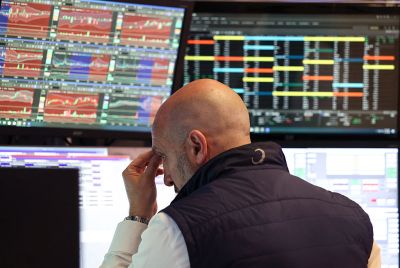
While policymakers kept benchmark interest rates steady, the central bank's tougher tone and lack of forward guidance left Wall Street facing greater uncertainty over the path of inflation, borrowing costs and financial markets.
The Fed voted Wednesday to maintain its benchmark interest rate in a target range of 3.50% to 3.75%, but the decision was anything but uneventful. Three of the 12 voting members dissented, prompting analysts to describe the outcome as a "hawkish hold," a pause that keeps the possibility of future rate hikes firmly on the table.
The decision marks another shift in how markets interpret Fed policy under Warsh, who has abandoned the detailed forward guidance that characterized the Jerome Powell era. Rather than signaling future policy moves, Warsh has emphasized that incoming economic data will determine the central bank's next steps.
That approach has left investors with fewer clues and more uncertainty. "Each meeting we're now building more uncertainty around it than the last," JP Powers, chief investment officer at RWA Wealth Partners, told Reuters.
"It looks like September now, maybe we're building to that crescendo, but we'll have to see how the data shakes out now over the interim," Powers said. The lack of clarity has made every inflation report, employment release and economic indicator increasingly important for financial markets.
Before Wednesday's meeting, traders assigned roughly a 36% probability that the Fed would raise rates immediately, making it the most uncertain Fed decision since December 2018, according to Deutsche Bank.
Although policymakers ultimately stood pat, investors interpreted the accompanying message as far from dovish. Warsh reiterated during his post-meeting press conference that the Fed "will not hesitate to act" if inflation fails to continue moving toward its 2% target.
U.S. consumer inflation slowed to 3.5% in June but remains well above that goal, while renewed tensions involving Iran have fueled concerns that higher energy prices could reignite inflationary pressures.
The Fed chair's comments also sparked debate over whether the central bank has a clear roadmap for bringing inflation back under control. Calvin Tse, head of U.S. strategy and economics at BNP Paribas, argued that the market's reaction reflected growing skepticism.
"If he is tough on inflation as he says, why has he not already acted?" Tse told Reuters.
Financial markets reacted quickly to the announcement. Futures briefly priced in a 77% chance of a September rate increase before easing to around 57% later in the day, according to CME's FedWatch Tool.
Markets are now pricing roughly 35 basis points of additional tightening through the end of 2026. Stocks came under pressure following the decision, while shorter-term Treasury yields declined as traders unwound bets that had anticipated a July rate increase.
Analysts say a hawkish pause can weigh on equities because it suggests interest rates may remain elevated longer than investors had hoped. Higher borrowing costs typically reduce corporate earnings potential while making lower-risk investments such as Treasury bills and money market funds more attractive.
Bond markets face their own challenges. Even without an immediate rate hike, expectations that borrowing costs could rise later have continued pushing Treasury yields higher. The benchmark 10-year Treasury yield climbed nearly 27 basis points during July, marking its largest monthly increase since March.
© Copyright IBTimes 2026. All rights reserved.
- Recommended For You