The Iran War Is Helping Send Energy Prices and Interest Rates Up. America’s Debt Problem Just Got More Expensive.
The yield on the benchmark 10-year U.S. Treasury note topped 5% on Monday, about a full percentage point higher than at the end of February and close to levels not seen since 2007.

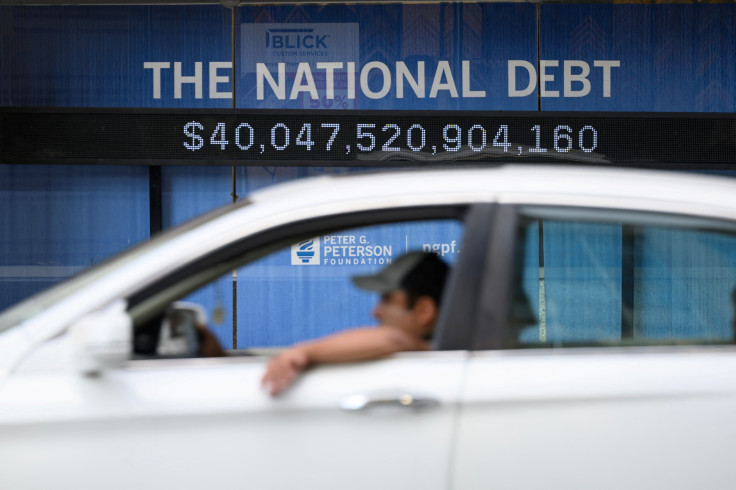
Americans are beginning to feel the consequences of decades of government borrowing at an especially difficult moment. An energy shock from the Iran war is helping push inflation higher just as the country's enormous debt load is making high interest rates increasingly painful.
The result is a squeeze that extends from Washington's budget to mortgages, businesses and household finances. The yield on the benchmark 10-year U.S. Treasury note topped 5% on Monday, about a full percentage point higher than at the end of February and close to levels not seen since 2007.
The average rate on a 30-year fixed mortgage reached 7.08% Friday, according to Mortgage News Daily data cited by Axios, its highest level in more than a year. Consumer prices rose 0.4% in August from July and 3.4% from a year earlier, according to the Bureau of Labor Statistics. Gasoline prices jumped 3.9% during the month and accounted for more than one-third of the overall monthly CPI increase. Energy prices were up 16.3% from a year earlier.
The Iran war has intensified that pressure by driving energy costs sharply higher. Gasoline has reached a national average of $4.29 a gallon, and diesel has climbed above $6. The renewed inflationary pressure is also strengthening expectations that the Federal Reserve will raise its target interest rate at its upcoming meeting. According to the CME Group's FedWatch tool, chances of a rate hike have now topped 90%.
But the Federal Reserve controls short-term rates, not the longer-term borrowing costs that are increasingly causing concern. Global bond markets set those rates, where investors are confronting persistent inflation, massive government borrowing, and enormous demand for capital to finance the artificial intelligence infrastructure boom.
The federal government is spending roughly $2 trillion more annually than it collects in revenue, while federal debt held by the public is already around the equivalent of a full year's U.S. economic output.
Interest expenses alone are running at approximately $1 trillion annually and are projected to approach $2 trillion over the next decade. Sustained higher rates could make that bill even larger. That creates a potentially punishing cycle.
As existing government debt matures, Washington must refinance portions of it at today's higher rates. More federal revenue then goes toward servicing the debt rather than other priorities. Treasury Secretary Scott Bessent has attempted to calm turbulent bond markets, but the interventions have so far failed to meaningfully reduce borrowing costs, Axios reported.
Meanwhile, President Donald Trump has proposed sending $5,000 payments to U.S. adult citizens if Republicans win the midterm elections, a proposal that would require congressional approval. Axios estimated that payments to roughly 260 million adult citizens could cost about $1.3 trillion before potential eligibility restrictions or administrative costs.
The proposal comes as financial markets are already paying increasingly close attention to the government's fiscal trajectory. Higher Treasury yields can translate into more expensive mortgages, loans and business financing.
At the same time, higher gasoline, diesel and other energy costs are eating into disposable income. The larger concern is that neither pressure appears easy to eliminate quickly, but the energy shock may eventually fade if geopolitical conditions improve.
© Copyright IBTimes 2026. All rights reserved.
- Recommended For You