Trump’s ‘Rocket Fuel’ For Growth Remains Elusive. Republicans Face Uneasy November
The US administration's own policies including tariffs, Iran war and data center push may play spoilsport.


The Fed's decision to keep interest rates unchanged has once again brought the spotlight back on November midterms, as the prospect of higher borrowing costs loom, posing uneasiness for the tense Republican camp.
The Trump administration's own policies have helped drive an increase as the tariffs regime unleashed last year spurred rates, the Associated Press reported.
Despite the President's vilification of high rates as an affront to the size and strength of the US economy and public statements pressurizing the Federal Reserve to slash its benchmark rates, it has not come down.
The Fed voted Wednesday to maintain its benchmark interest rate in a target range of 3.50% to 3.75%. While policymakers kept benchmark interest rates steady, the central bank's tougher tone and lack of forward guidance left Wall Street facing greater uncertainty over the path of inflation, borrowing costs and financial markets.
Three of the 12 voting members dissented, prompting analysts to describe the outcome as a "hawkish hold," a pause that keeps the possibility of future rate hikes firmly on the table. That is clearly not a validation of Trump's own prod to the Federal Reserve to slash its benchmark rates, claiming it would be "Rocket Fuel!" for growth and make housing more affordable.
Trump has also solidly backed the construction of data centers for artificial intelligence (AI), but the bonds financing those projects appear to have helped push up interest rates. The protracted war on Iran, which shows no sign of ending , has fueled rising oil prices after the June ceasefire collapsed.
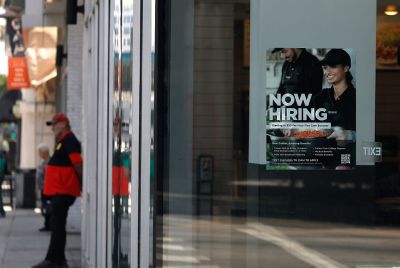
Trump's Republican backers had sensed that showing progress on affordability to voters ahead of the midterms would be vital for electoral success. The Trump administration touts low unemployment rate and solid consumer spending to paint a healthy picture of the economy, but these do not have yielded much connection among voters.
The Trump administration's economic messaging has struggled as voters are swayed more by whether their incomes are outpacing inflation, a research released in June by Georgetown University's Juan Felipe Riaño and the University of California, Berkeley's Francesco Trebbi, revealed.
Trump-led and Republicans had promised lower interest rates in the 2024 elections and said prices could fall outright if their policies were in place.
That has not happened. In the last 12 months, inflation has nearly kept pace with hourly wage gains, but this itself would not throw up a clear picture of the issue as the cost of servicing debt is not included in the consumer price index.
Republicans are in a similar predicament to what the Democrats faced in 2024. "If prices and borrowing costs keep outrunning wages into the fall, the same logic points at Republicans now," Riaño, the Georgetown University economist, told the AP.
Housing affordability is another issue that has the potential to sway angry voters against the administration.
Probably sensing this, the Trump administration had directed mortgage firms Freddie Mac and Fannie Mae to buy at least $200 billion in home loans. The aim was to bring down mortgage rates.
Republicans had hoped to campaign on falling rates and Trump signing a bipartisan bill to increase home construction as they face the midterms. They hoped to defend their House and Senate majorities highlighting the bill according to a lawmaker. Though mortgage rates briefly fell below 6% in February, sparking expectations of a rebound in home sales, it rose this week to the highest level in a year.
Trump also refused to latch on to the bill, terming it a "big yawn." He allowed it to become law without his signature.
The markets also do not expect interest rates to drop before the midterms.
Kevin Warsh, the Trump administration's pick who is heading the Fed, has indicated he is content to let the financial markets do more to set the rates, rather than the central bank.
Though the Fed has held its benchmark rate steady, the markets on their own have chosen to charge a premium for holding US government debt.
"Market participants are learning to play the ball, not the referee — and market prices will continue to respond in the direction and magnitude they see fit," Warsh said. "This is, in my view, a change for the better — and we are just getting started."
That is not music to an administration seeking lower interest rates.
At the next Fed meeting on rates in mid-September, expectations are high for a vote to raise rates in order to reduce inflationary pressures, according to CME FedWatch.
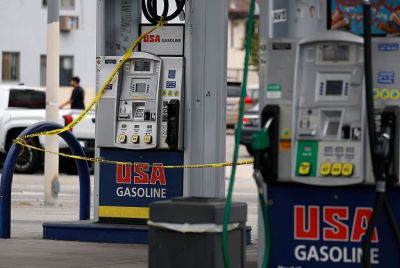
The Iran war has also made borrowing money more expensive. This means fewer families can afford mortgages or auto loans. Warsh himself has said inflation continues to run hot but has not offered clear guidance on how to fix the problem.
That is more of an electoral problem for the Republicans and the voters, than Trump, Warsh, or Treasury Secretary, Scott Bessent. The White House has repeatedly maintained the end of the Iran war would ultimately reduce energy costs and allow the Fed to reduce rates. The only issue is that there is no end in the horizon.
© Copyright IBTimes 2026. All rights reserved.
- Recommended For You