Many Decisions Make Investors Lose Money. But Ray Dalio Says Staying Idle Is Also a Bad Choice
Dalio said cash "has the lowest return, guaranteed almost to have the worst return over the longer period of time."

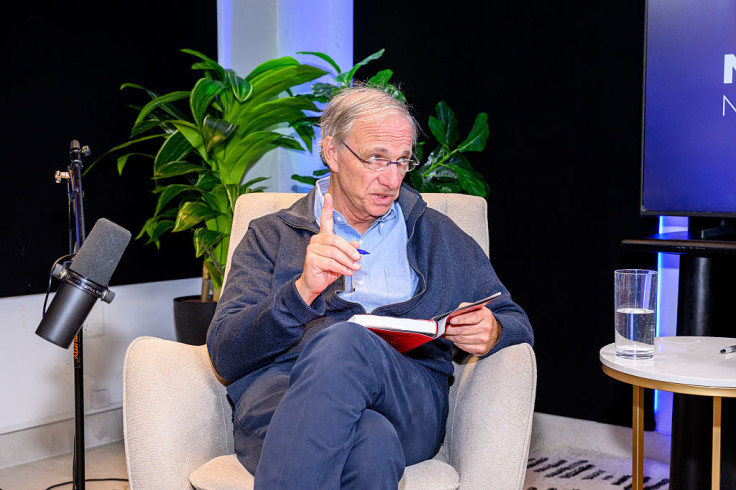
Billionaire investor Ray Dalio said holding cash is the "worst" long-term investment, including options that yield low interest.
Speaking in The Diary of a CEO podcast, Dalio said people think cash is "the safest," but it's actually the "worst investment over a long period of time because inflation will eat it away."
He went on to say that he was not only talking about physical bills, but cash "in whatever form," including money market funds, as it " has the lowest return, guaranteed almost to have the worst return over the longer period of time."
Elsewhere, he said that even if returns match inflation, people have to pay taxes on them. "Even though you really didn't gain relative to inflation, you still have to pay the taxes on whatever you've earned. Anyway, over the long term, it's a lousy return," Dalio said.
CNBC noted that last year Dalio made the case for gold, saying "people don't have, typically, an adequate amount of gold in their portfolio," as it is a "very effective diversifier" when "bad times come.
Another report noted that young wealthy investors are shifting more of their money into alternative assets such as gold, cryptocurrency, private equity, real estate and fine art.
According to Bank of America's latest Study of Wealthy Americans, investors between the ages of 21 and 43 with at least $3 million in investable assets allocate just 25% of their portfolios to stocks. By comparison, wealthy investors aged 44 and older keep 55% of their assets in equities.
The findings point to a significant generational divide in investment strategy. Rather than relying primarily on publicly traded stocks and bonds, younger millionaires are increasingly seeking diversification through alternative investments that they believe offer stronger long-term growth potential or protection against market uncertainty. The survey found that 93% of wealthy younger investors plan to increase their exposure to alternative investments over the next several years.
One of the biggest beneficiaries of that trend is gold. 45% of affluent investors aged 21 to 43 already own physical gold, while another 45% say they are interested in adding it to their portfolios. The precious metal has traditionally been viewed as a hedge against inflation, currency weakness and geopolitical turmoil, attracting investors during periods of economic uncertainty.
Real estate also continues to rank among the most attractive investments for younger wealthy Americans. The Bank of America survey found that 31% of respondents in the younger age group identified property as offering the greatest opportunities for future growth.
Cryptocurrency remains one of the most notable areas where younger and older wealthy investors differ. The survey found that affluent millennials and Generation Z investors allocate an average of 15% of their portfolios to digital assets, compared with just 2% among older investors.
© Copyright IBTimes 2026. All rights reserved.
- Recommended For You