U.S. Trade Court Strikes Down Trump’s Global 10% Tariffs
The ruling marks another legal setback for President Donald Trump's tariff agenda following an earlier Supreme Court decision against his broader trade measures.


The U.S. Court of International Trade ruled that President Donald Trump's latest round of global 10% tariffs is unlawful, handing the administration another legal defeat in its effort to maintain broad import duties amid escalating trade tensions and wider economic disruptions linked to conflicts overseas.
In a 2-1 decision, the three-judge panel sided with 24 states and several small businesses that challenged the tariffs imposed earlier this year. The judges ruled that the administration improperly used Section 122 of the Trade Act of 1974 to justify the duties after the Supreme Court struck down Trump's earlier "Liberation Day" tariffs tied to emergency powers legislation, according to CBS News.
"The challenged Tariff Orders exceed the authority granted to the President by Section 122," the court wrote in its ruling, according to Politico.
The tariffs were introduced in February after the Supreme Court ruled 6-3 that the International Emergency Economic Powers Act, or IEEPA, did not give the president unilateral authority to impose sweeping tariffs on imports. That earlier decision forced the White House to pivot to Section 122, which allows temporary tariffs for up to 150 days to address "large and serious" balance-of-payments deficits, according to BBC News.
In its 53-page ruling Thursday, the trade court said the administration failed to show that such a balance-of-payments crisis existed. Instead, the judges said the White House focused primarily on trade deficits and current account deficits, which are different economic measures.
"The President's assertion of authority is contrary to law," the majority opinion stated, according to Politico.
The panel also said the tariffs had caused "economic harm" to the plaintiffs, according to NPR. The court ordered the administration to stop collecting the tariffs from the state of Washington and the two businesses involved in the lawsuit, while also directing the government to issue refunds with interest for tariffs already paid by those plaintiffs.
"Defendants do not explain why they should be permitted to continue the unlawful collection of Section 122 duties from Importer Plaintiffs for the duration of the imposition of such duties," the judges wrote, according to CBS News.
The court stopped short of issuing a nationwide injunction blocking the tariffs entirely, meaning the ruling currently applies only to the plaintiffs involved in the case. Legal experts told NPR that additional lawsuits challenging the tariffs are expected.
The tariffs became a flashpoint in global trade relations as the U.S. and its allies continued dealing with supply chain disruptions tied to the wars in Ukraine and Gaza, instability in Red Sea shipping routes, and broader geopolitical tensions affecting international commerce. European officials and trading partners had criticized the measures as disruptive at a time of heightened economic uncertainty, according to Euractiv.
The White House has reportedly argued the tariffs were needed to protect U.S. manufacturing and address what it described as "persistent trade imbalances.'' Critics, however, said the import duties increased costs for businesses and consumers while stretching the limits of presidential trade authority.
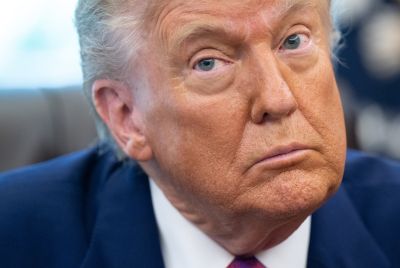
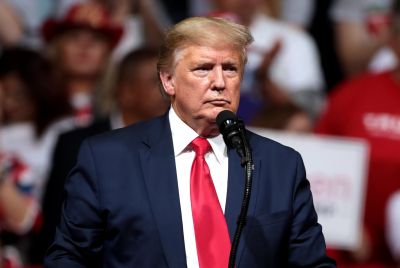
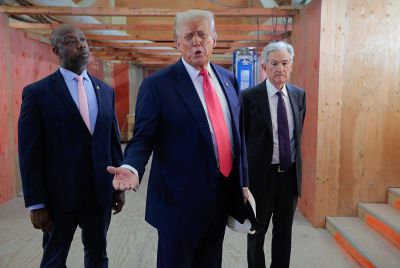
Speaking to reporters Thursday evening, Trump criticized the judges who ruled against the administration.
"Nothing surprises me with the courts," Trump said, referring to the judges in the majority as "radical left," according to CBS News.
The president also signaled that his administration would continue pursuing its tariff strategy despite the latest court setback.
"We always do it a different way," Trump said. "We get one ruling, and we do it a different way," CBS News reported.
The administration is also expected to begin issuing refunds this month to businesses that paid tariffs under the earlier IEEPA-based system.
© Copyright IBTimes 2026. All rights reserved.
- Recommended For You