China Made Humanoid Robots A National Priority. Now Beijing Is Slowing Their Rush To Go Public.
At least half a dozen Chinese humanoid-robot companies are preparing listings as investors demand more evidence of recurring commercial demand.


Chinese regulators are slowing a rush of humanoid-robot companies seeking stock-market listings, putting greater scrutiny on one of the country's hottest technology sectors after soaring valuations ran ahead of evidence that robots are being deployed commercially at scale.
Regulators have used informal "window guidance" to hold back some proposed listings, people familiar with the matter told Reuters. While no formal ban has been imposed, the tighter approach has effectively slowed humanoid-robot IPOs as regulators examine valuations and the commercial strength of companies seeking to go public.
The new approach follows a volatile first month on the market for Unitree Robotics, one of China's best-known makers of humanoid and quadruped robots. Unitree's shares surged more than fivefold when the company made its Shanghai debut on Aug. 19, but have since fallen 55% from their peak.
Unitree raised about 6.1 billion yuan, or roughly $900 million, in its listing on Shanghai's STAR Market. Its shares closed more than 460% above their offer price on their first trading day, CNBC reported at the time.
The China Securities Regulatory Commission has not publicly announced restrictions on humanoid-robot listings. The regulator recently gave informal guidance to some investment banks and investment firms that it was raising the threshold for approving such IPOs, Reuters reported earlier this month.
At least six Chinese humanoid-robot companies are preparing to go public, with Deep Robotics, X Square Robot and AGIBOT among those seeking listings. The companies did not tell the news agency whether their plans had been affected by the regulatory slowdown.
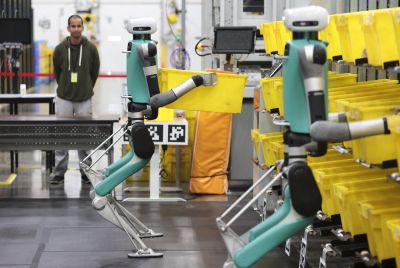
The scrutiny comes after years of government support helped turn humanoid robotics and "embodied intelligence" into major investment themes in China. Embodied AI combines artificial intelligence with machines capable of interacting with the physical world, including humanoid robots designed to perform tasks in factories and other workplaces.
Beijing has designated embodied intelligence as a strategic emerging industry, while local governments have established funds, demonstration projects and training centers to support robotics companies. The policy backing has drawn private investors into the sector and pushed up valuations for startups that have yet to establish large-scale commercial operations.
Leo Wang, a venture capitalist at Qianchuang Capital, told Reuters that the surge resembled "campaign-style innovation," a term used in China to describe capital and companies rapidly moving into sectors favored by government policy.
Some founders attracted dozens of potential investors within weeks and rejected conventional due-diligence processes, Wang said. Valuations for some private robotics projects have already been cut by between 30% and 50%.
Regulators are also examining the sources of revenue reported by humanoid-robot companies. Some have received substantial business from robot data-collection centers and joint ventures backed by local governments, where public entities can provide between 80% and 90% of the initial investment, people familiar with the sector told the news agency.
Those projects can provide companies with orders and revenue while supporting private-market valuations. Regulators are examining whether that revenue reflects demand from independent customers.
Removing revenue associated with data-collection centers could reduce valuations at some robotics companies by between 60% and 70%, a source close to humanoid-robot investors said.
The relatively limited size of the commercial market has also come into focus. About 7,000 humanoid robots were sold worldwide in 2025 for industrial and professional service applications, data from the International Federation of Robotics showed. Many went to research institutions and companies using them for AI development rather than deploying them as workers.
That figure remains small compared with established robotics markets. About 542,000 conventional industrial robots were installed globally in 2024, along with roughly 199,000 professional service robots, according to the federation.
Automakers are among the companies testing humanoids in real-world workplaces, but deployments remain limited. Manufacturers have used small numbers of the machines in pilot programs for tasks including material handling and factory work.
Chinese robotics companies have continued to attract capital despite growing scrutiny of the sector, with Mech-Mind Robotics beginning trading in Hong Kong on Sept. 1. Its shares have since fallen nearly 20% from their debut-day high.
The scrutiny of humanoid companies comes during a broader rebound in Chinese equity fundraising. Mainland companies have raised $148.9 billion through share sales and convertible offerings so far this year, 59% more than during the same period in 2025, LSEG data showed. Technology companies accounted for 41% of that total.
Hong Kong has also seen a sharp increase in new listings and secondary offerings. Companies have raised $45.8 billion there so far in 2026, nearly double the $24 billion raised during the same period last year, Reuters reported.
A wave of technology listings has added to competition for investor capital in Hong Kong, with Chinese AI offerings drawing money away from some existing stocks as several third-quarter technology listings traded below their initial levels following a broader tech selloff, Financial Times reported last week.
© Copyright IBTimes 2026. All rights reserved.
- Recommended For You