

Oil Prices Keep Soaring And Treasury Yields Remain High. Chances Of a Fed Hike Are Greater.
Odds of a rate hike next week are now above 70%, according to the CME Group's Fed Watch tool.

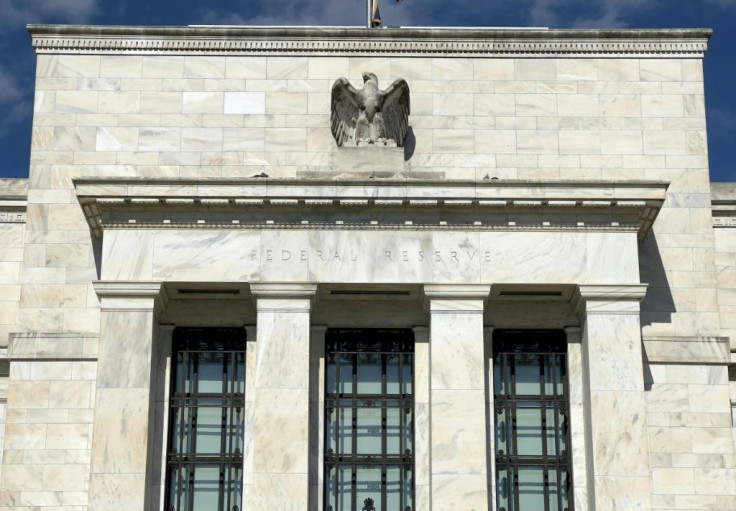
Odds of an interest rate hike by the Federal Reserve in next week's meeting climbed sharply on Thursday as oil prices and Treasury yields keep climbing.
Chances now stand at 71.6%, according to the CME Group's Fed Watch tool, compared to 61.2% on Wednesday.
Yields also climbed, gaining more than 2.32% at 2:10 p.m. ET, with the benchmark 10-year note standing at 4.951%.
The European Central Bank hiked rates on Thursday, noting that the war between the U.S. and Iran keeps putting pressure on prices.
The benchmark rate now stands at 2.5% compared to the previous 2.25%. The body noted in a statement that the decision "underscores the Governing Council's commitment to setting monetary policy to ensure that inflation stabilises at its 2% target in the medium term."
The body went on to say that its baseline projections now stand at 3% this year, 2.5% in 2027 and 2.1% in 2028. Core inflation, in turn, is set to be stickier: "the baseline foresees 2.5% in 2026, 2.6% in 2027 and 2.3% in 2028. Compared with June, the baseline projection for inflation in 2026 is unchanged, while it has been revised up for 2027 and 2028," the document says.
The ECB warned that outlooks remain "highly uncertain, with risks to the upside for inflation and to the downside for economic growth."
"In relation to the energy shock, the updated scenarios put together by staff illustrate the broad range of outcomes for how growth and inflation would evolve under different assumptions about its intensity and duration, as well as its indirect and second-round effects," the document adds.
Staffers concluded that the decision leaves the Governing Council "well positioned to navigate the uncertainty caused by the conflict." However, it added that it "stands ready to adjust all of its instruments within its mandate to ensure that inflation stabilises at its 2% target in the medium term and to preserve the smooth functioning of monetary policy transmission."
Oil prices also soared on Thursdays as the U.S. and Iran keep trading strikes in the Strait of Hormuz and a report detailed that President Donald Trump and advisors reportedly discussed the war dragging on past the end of his term.
The Wall Street Journal noted that Vice President JD Vance, Secretary of State Marco Rubio and other top officials talked about the possibility that Tehran could continue resisting the blockade imposed by the administration.
The conversation stands at odds with remarks from Trump on Wednesday, when he claimed that he believed "war's going to end immediately after the election because they can't hold out any longer." "Right after the election, oil prices are going to be tumbling downward," he added.
At the same time, Iran-backed Houthi rebels took over Yemen's port city of Mokha, potentially threatening shipping through the Red Sea, putting further pressure on prices.
© Copyright IBTimes 2026. All rights reserved.