

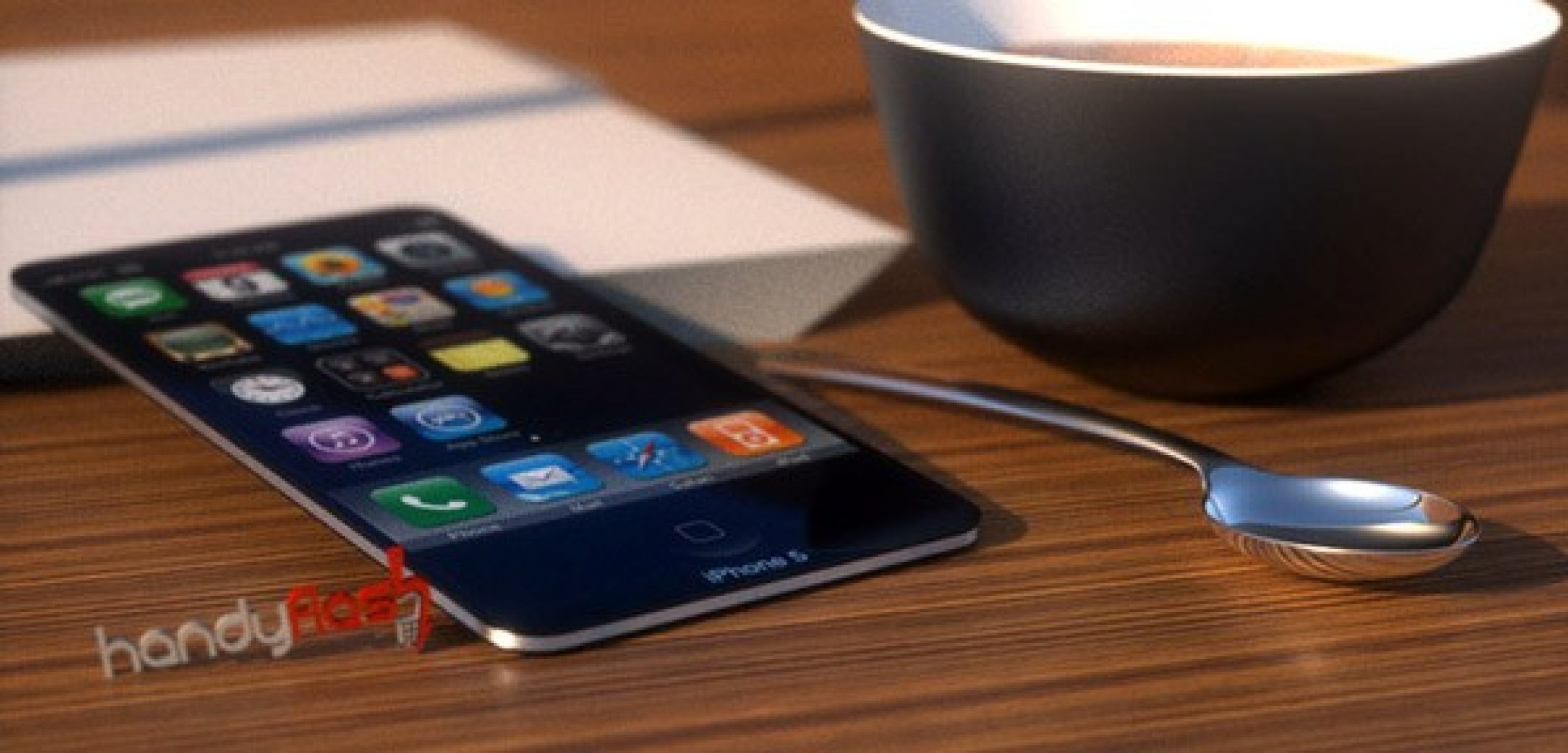
iPhone 5 Release Date 2012: 5 Reasons Why Apple Will Launch in October, Not June [PICTURES]

Since Apple introduced the first iPhone in June 2007, one question has dominated the conversation: When's the next one coming out?
From 2007 to 2011, Apple treated customers to a new iPhone experience in either June or July. Yet, the company's most recent iPhone, the iPhone 4S, was released in the fall, which throws off the pattern a bit. Now, customers don't know when to expect the next one, the sixth-generation iPhone, the iPhone 5: Will it be in June, or October?
While Apple keeps its lips sealed until the official unveiling, there are plenty of reasons why consumers shouldn't expect a new iPhone to debut in two to three months. The iPhone 5 is coming, but it's coming in October at the latest, not June. Here are five reasons why:
1. The 11-month pattern. Up until last year, each iPhone was released roughly one year apart, but why was the iPhone 4S released in the fall instead of summer? While there is no clear reason why the 4S was the only iPhone released in the fall, analysts believe the Cupertino, Calif.-based company attempted to implement LTE into the phone, and failed.
Even though LTE features significantly higher speeds compared to 3G networks, the first implementations of LTE in smartphones ravaged battery life, which was a key complaint from users. Apple wanted the fastest networks for its customers, but the only way to fit LTE into the iPhone 4S would've been to increase the phone's thickness to accommodate a larger circuit board and a bigger battery. Apple CEO Tim Cook, in a company earnings conference call in April 2011, said first-generation LTE chipsets force a lot of design compromises.
The iPhone 4 PCB [printed circuit board] is already incredibly small, not leaving any room for an extra chip to enable LTE without shrinking the size of the battery, said Anand Shimpi, a chip expert and CEO of Anandtech.
Fortunately, Qualcomm recently unveiled the fifth iteration of its new chip, which supports TD-SCDMA, TD-LTE, HSPA+, EV-DO, embedded GPS, and LTE on TDD and FDD networks worldwide. The chip works with Android and Windows 8 devices, but there's a high degree of likelihood that this will be the same chip inside the iPhone 5. Yet, the chip was only released in February, so Apple likely needs ample time to test the LTE chips inside the iPhone 5 before they're implemented.
Furthermore, Qualcomm said on Friday that it's having trouble meeting demand with its most advanced LTE chips, which means that Apple will almost certainly be unable to rollout millions of new iPhones with the LTE chips by June.
2. Capitalizing On The iPhone 4S. If it ain't broke, don't fix it. Apple released a new iPhone every summer to record-breaking success, but the first-ever fall release for an iPhone with the 4S proved to be even more lucrative. Sales of the iPhone 4S and its main feature, the AI personal assistant Siri, were largely responsible behind the best quarter in Apple's 35-year history for Q1 2012, claiming $46.33 billion overall, $13.1 billion in profit and $17.5 billion in cash for the quarter that ended Dec. 31, 2011. Some of that money and attention is also owed to the immense outpouring of sympathy following the death of the company's co-founder and chairman, Steve Jobs, but ultimately, people stood in line for iPhone 4S units because they wanted the phone.
Even though Apple could always return to its summer schedule, it likely wants to give the fall a try. Maybe Apple prefers using the summer to build hype around the iPhone, but in all likelihood, Apple wants to give itself plenty of time to consider each iPhone design. As Apple designer Jony Ive once mentioned, the company always builds lots of models of every iDevice, but it won't ship it without good reason. The company won't rush to get an iPhone in for WWDC in June unless it's ready; Apple applies deadlines to itself, and it owes nothing to the public if it's late with an iPhone. It will ship, as all great artists do, but consumers will appreciate the extra time and care given to the next iPhone.
3. Christmas sales. Even if Apple couldn't realistically ship the iPhone 4S any sooner than October, that fall release proved to be the best thing for the company. Sales hit an all-time high, but more importantly, Apple learned that an iPhone released near Christmastime is a gift unto itself.
Releasing the iPhone 4S in October was perfect timing for Christmas. The iPhone 4S was released on Oct. 14 but, as always, there were several weeks of backorders. But luckily, by the time iPhone 4S units were back on shelves -- around mid-November -- it was time for Christmas shopping.
Santa had a lot of iPhone 4S units to deliver. In addition to being the No. 1 item on teens' and young adults' wish lists for the 2011 holiday season, the iPhone 4S was one of the bestselling items before, during and after Christmas.
In fact, Apple broke its single-day sales record on Black Friday (Nov. 25), reaching its projected forecast by 7 p.m. and far exceeding those figures by the end of the day. Even though its product discounts were far from extraordinary, Apple again offered free shipping for all its products, as well as free engravings on the back of its iOS devices. Coupled with the fact that Apple rarely doles out discounts, consumers jumped at a chance to own Apple's stylish devices. Apple was the fifth-most visited online retail store that day, behind Amazon, Wal-Mart, Best buy and Target.
The company's bestselling item was the iPhone 4S, which got a boost from Siri. In the quarter, Apple sold two million more smartphones than Samsung, the company's prime competitor,shipped.
As if 2011 wasn't enough of a reason, it makes logical sense to release a new iPhone around Christmas. Everyone wants the latest technology for the holidays, be it a new video game, or a camera, or a tablet, laptop, or smartphone. The holiday season is all about getting the big gifts, and usually those are gadgets and gizmos. Christmas excitement and iPhone hype can be a dangerous combination, but if Apple wants to create noise with its iPhone launches, it would be crazy to distance itself much further than September or October for the release; again, if last year's formula worked so well, why fix it?
4. Apple's product schedule. Apple had an incredible spring with the launch of the new iPad, which was met with rave reviews across the board. From a marketing and revenue standpoint, Apple has no reason to try and steal its own thunder by releasing an iPhone release so soon.
On the contrary, recent news suggests the next Apple product to be rolled out will be a brand-new line-up of MacBook Pro laptops, which are said to be thinner, lighter, and much faster than previous models in connection and processor speed. If Apple releases the new laptops in either May or June, which many expect them to since they've started disappearing from the shelves of big-box retailers, that event -- in conjunction with the release of Mac OS 10.8 Mountain Lion -- would carry Apple into the fall. Just in time a holiday smartphone launch.
5. The Ritchie Rule. Earlier in April, Reuters reported Apple pegged the iPhone 5's release date around the second quarter of 2012. While this report would mean a release in June or July, contradicted what supply chain sources told the Japanese blog Macotakara, which said Apple would release the iPhone 5 in September or October, effectively abandoning mid-year iPhone launches for a 11-month upgrade cycle starting in the fall.
Of the two reports, it was Macotakara's that was backed by Rene Ritchie, the editor-in-chief at iMore. On March 23, Ritchie said the iPhone 5 will be released in October 2012.
When all else fails: follow the Ritchie Rule, which is, Believe Ritchie. In recent years, Ritchie's track record with Apple news has been stellar. Last August, Ritchie correctly reported Apple's next iPhone would be unveiled in the first week of October, but while all other reports called the speculative device the iPhone 5, Ritchie was one of the only individuals who called it the iPhone 4S. More recently, Ritchie also correctly pegged the new iPad's unveiling on March 7.
Of the limited number of reports out there, Ritchie can be trusted. He has valuable sources from within Apple, and his reports have always been highly reliable and accurate. And again, given the schedule of other Apple products in 2012, it makes the most sense to hold onto the iPhone and release it the closest to the holiday season when it has the most likelihood to gain traction with all age groups.
Other Features, Specs To Look For In The iPhone 5
Bigger screen. On March 21, Apple had reportedly ordered 4.6-inch screens, to be featured in the company's next iPhone. The report came from a South Korean publication, the Maeli Business Newspaper, which quoted an unnamed industry source, according to Reuters. But just two days later, iMore's Ritchie said the iPhone 5 would keep the same 3.5-inch screen -- the same size as all previous generation iPhones -- but said it could get a little bigger than its predecessors, although not nearly as big as the 4.5-inch-plus Android smartphones..
So who to believe, the Maeli Business Newspaper, or our old pal Ritchie? The truth seems to lie somewhere in the middle. In early January, as Apple was reportedly gearing up to begin production on the iPhone 5. A source from within China's Foxconn manufacturing plant told 9 to 5 Mac that various sample iPhone 5 prototypes were floating around the factory floor, but there were a number of common features among the phones, including a display that measured at least 4 inches, and a longer and wider form factor that did not match that of the iPhone 4 or 4S. The Foxconn sources believed the iPhone 5 would retain the rectangular shape of its predecessors, which, if true, would put to bed any rumors of a slimmer teardrop design.
OLED Display. Apple is reportedly testing iPhone 5 prototypes with an A5X chip, which is the quad-core graphics processor used to power the Retina Display in the new iPad. But why would Apple need such a powerful chip for an iPhone? Given that the A5X chip is a graphics powerhouse, if Apple doesn't drastically change the physical size of the screen to 4.6 inches, it may be changing the display's overall quality.
On April 4, the Korea Times reported that Apple is interested in switching from LCD to OLED displays for its next round of iPhones and iPads. The reason behind the potential move would be Samsung, which recently launched its spinoff company called Samsung Display that aims to pivot away from LCD to focus more on OLED technology. Apple is by far Samsung's biggest customer: The Cupertino, Calif.-based company bought $7.8 billion worth of components from Samsung in 2011, ranging from memory chips to LCD panels, but the company will reportedly buy $11 billion worth of parts this year, which could mean Apple is buying more expensive display material.
Apple has plenty of money to afford OLED screens in an iPhone-sized display, and it would make sense for Apple to ask Samsung to help build its iPhone 5 displays. Samsung knows how to build big, beautiful screens for any size device: Just imagine what Samsung could do with Apple's Retina technology implemented into an OLED. Apple would effectively put distance between the iPhone and all other smartphone competitors for another five years, at the very least.
Liquidmetal Encasing. Apple may make its next iPhone considerably thinner and lighter thanks to some recently-licensed patents for liquid metal, which the company acquired in 2010 from Delaware-based Liquidmetal Technologies. The report comes from a Korean publication called ETNews, which cites industry sources.
The next flagship phones of [Apple and Samsung] are expected to adopt unprecedented materials for their main bodies, that is, ceramic for the Galaxy S3 and liquid metal for iPhone 5, both being thin, light and highly resistant to external impacts, said ETNews' Kim In-Soon. The new phase of the rivalry is because neither one of them can get a decisive edge over the other solely with its OS and AP specifications, features or design.
Apple acquired the licensing rights to various patented amorphous metal alloys from Liquidmetal Technologies in August 2010, but ETNews claims Apple will create a liquid metal alloy of zirconium, titanium, nickel and copper to create an outer surface smooth like liquid.
LTE Connectivity. It's already a foregone conclusion that Apple will implement radio bands for 4G LTE in the iPhone 5, given that Apple introduced the high-speed network on its new iPad, released on March 16, which was likely done as a practice run.
LTE features significantly higher download and upload speeds compared to 3G technologies, but previous implementations of LTE in smartphones tended to ravage battery life, which was a major complaint from users. If Apple wanted LTE in the iPhone 4S at the time, it would have been forced to increase the phone's thickness to accommodate a larger circuit board and a bigger battery. Apple CEO Tim Cook, in a company earnings conference call in April 2011, said first-generation LTE chipsets force a lot of design compromises.
The iPhone 4 PCB [printed circuit board] is already incredibly small, not leaving any room for an extra chip to enable LTE without shrinking the size of the battery, said Anand Shimpi, a chip expert and CEO of Anandtech.
Fortunately, Qualcomm recently unveiled the fifth iteration of its new chip, which supports TD-SCDMA, TD-LTE, HSPA+, EV-DO, embedded GPS, and LTE on TDD and FDD networks worldwide. The chip works with Android and Windows 8 devices, but there's a great chance this will be the chip inside the iPhone 5.
The iWallet. Apple won a major patent on March 6 for a piece of technology called the iWallet, which is a digital system that gives users complete control over their subsidiary financial accounts on their iPhones, and also leverages Near-Field Communication (NFC) technology to complete credit card transactions directly on the phone as well. The iWallet has many different features, including giving users the ability to see their entire credit card profiles, view statements and messages from their banks, and even set parental controls for their children, should they also want to use their iPhones as digital wallets. Outside of the iPhone, users can keep track of their payments and statements within the iTunes billing system, which keeps credit card information and records safe and secure. There's a possibility that iWallet could also work with other Apple utilities, which could allow users to buy things like movie tickets directly within the apps, but only time will tell with that one.
3D Photography. Some may say 3D technology is nothing new, or possibly even overdone; Apple would argue that's nobody has done it right. Yet.
Apple says that while existing 3D cameras and video records can get three-dimensional information from bojects, they're generally incapable of getting detailed enough information in relation to the shapes, surfaces and depth of the objects. Apple's solution involves a series of systems, tools and methods to capture a 3D image by using multiple sensors and cameras. One sensor would capture a polarizing image, while two other sensors would capture two different non-polarizing images, and Apple's system would combine the images into a composite.
Apple has another solution involving different specialized sensors for capturing the image's surface information, color imaging and luminance, and combining the data into another composite that has information about the depth and plurality of surfaces. Together, these systems and methods of capturing light and image information would create an incredible 3D image that can be seen without glasses.
Advanced Haptics. In the days before Apple unveiled its new iPad in March, a rumor from left field said Apple would implement an advanced haptics system into the iPad, which would give users the sensation of texture when they touched an object on the screen. Android devices currently have a type of feedback when you press a button on a smartphone, so it's possible Apple will one-up its most fierce rival with unrivaled touch technology.
A touchscreen that created the sensation of textures would be an incredible piece of technology, but we're hoping Apple completes the puzzle with one important piece of technology from Microsoft. In mid-March, Microsoft engineers unveiled a lag-free touch screen that responds to your finger's touch in less than one millisecond. Current Apple devices only have a minor lag with their touchscreens, but this minor adjustment would make users feel like they're really touching their work, drawing a picture, or handwriting a note. Apple has proven to us time and again that simplity is the key to an enjoyable experience, but speeding up the touchscreen would make the already-popular iPhone into the best touchscreen experience ever.
Multi-player gaming. The iPhone 5 might also be the first phone to feature a new piece of software for multi-player gaming. On March 15, the U.S. Patent and Trademark Office published a patent application from Apple that describes a system for multi-player gaming, which allows groups of people to play the same game together and even see it from different perspectives according to the devices' physical relation to one another. The system actually mimics that of the Find My Friends app, in which a user's device detects other nearby devices that it recognizes as friends, and invites them to all join a common application. The technology also determines the relative position of those devices, so some games -- like turn-based role-playing games or card games -- can be played in a specific order.
Crack-proof glass. Apple's patent for crack-resistant glass, granted on Nov. 15, uses the same alumino silicate glass solution used in the iPhone 4 and 4S, but chemically treats it with potassium and sodium ions to achieve greater compression thresholds on the surface and edges of the glass, making it less susceptible to cracks.
Apple also included a handy feature that will appeal to everyone who's ever dropped their iPhone: The patent calls for a shock mount to be placed between the glass and the body of the device, which will instantly inflate if the device senses it's falling. If the iPhone's internal accelerometer senses it's falling, an actuator within the device sucks in the cover glass as it accelerates to the ground, protecting it from damage.
What else would you like to see in the iPhone 5? Would you rather see the iPhone 5 released earlier, or later for the holidays? Let us know in the comments section below.
















© Copyright IBTimes 2024. All rights reserved.
-
Microsoft Expands Its AI Empire Abroad
-

Oil: 'Mother Of Corruption' In Venezuela
-

'Extreme' Climate Blamed For World's Worst Wine Harvest In 62 Years
-

Macron Warns 'Mortal' Europe Needs Credible Defence
-
Bitcoin And Crypto Price Review - Another Myth Gets Busted?
-

Mass Cancellations Loom Despite French Air Union Cancelling Strike
-

Mired In Crisis, Boeing Reports Another Loss
-

Recycled 'Zombie' Misinformation Targets US Voters
-

Hackers Leak Part Of Source Code Of El Salvador's Bitcoin Wallet
-

Azerbaijan Says 'Closer Than Ever' To Armenia Peace Deal Amid Border Talks


