Fed Governor Cook Voted Against Hiking Rates. She Clarified She’s Ready To Act If Inflation Remains Above Target.
"If I do not see signs of continued disinflation soon, I am prepared to act," Lisa Cook said.


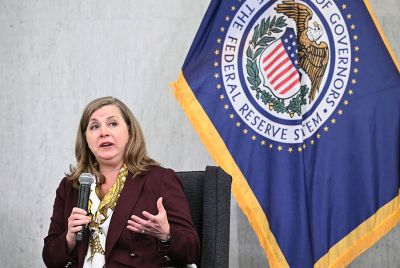
Federal Reserve Governor Lisa Cook said that even though she voted against hiking interest rates, she is ready to do so if inflation does not decrease towards the central bank's 2% goal.
Speaking during a speech in Alaska, she said she believes "the risks to the inflation side of the dual mandate higher than the risks to the employment side at this point."
"If I do not see signs of continued disinflation soon, I am prepared to act," she noted.
However, Cook said she believes the effects of tariffs imposed by the Trump administration on prices are already subsiding, even if the situation remains somewhat uncertain.
She also referred to energy increases resulting from the war in Iran, noting that forecasts say prices will decrease by the end of the year. As for AI components whose prices have increased, prices are set to come down along with the normalization of supply chains.
"For these three reasons, I felt it was appropriate not to change rates while we see how these factors evolve," she said.
Cook was one of nine Fed officials who voted in favor of maintaining rates last week. Some have defended their decisions since.
One of them is Philadelphia Fed President Anna Paulson, who said she believes the current level of interest rates is enough to drive inflation back to the central bank's goal.
Speaking to CNBC, she said that while she could reassess her position if circumstances change, the current policy "has been mildly restrictive to get underlying inflation back down to 2% in an acceptable time period." She went on to say that she needs go see "progress from here."
The remarks follow those of John Williams, the chair of New York's Federal Reserve, who also said he expects inflation to ease gradually at current rates.
Speaking to Reuters last week, Williams said that, if energy prices and tariffs have reached a peak, then "some of the big drivers that pushed up inflation" won't "be at play as much," allowing for "some of the disinflationary forces that we've been seeing" to continue acting.
As for dissenters, Cleveland Fed's Beth Hammack and Minneapolis counterpart Neel Kashkari, said last week that action is needed now.
The former said that in her view, the Fed needs to "act to speed the return of PCE inflation to our 2 percent objective and deliver on our commitment to price stability for the American people."
"The longer that high inflation persists, the more challenging and costly it can be to bring it back down," she added. Elsewhere, she noted that "supply-side factors, including energy prices, have boosted inflation this year, but I see inflationary pressures coming from the demand side of the economy, as well."
Kashkari, on his end, claimed said that a "potential series of small policy moves would be better than waiting and eventually concluding that even bolder actions were necessary." The third official who voted for a hike was Dallas Fed Lorie Logan, while the remaining nine favored a hold.
© Copyright IBTimes 2026. All rights reserved.
- Recommended For You