Fed’s Kashkari Backs His Vote To Hike Interest Rates: ‘Now Is The Time’
The president of the Minneapolis Federal Reserve said the most recent information shows the current monetary policy is not "particularly restrictive."

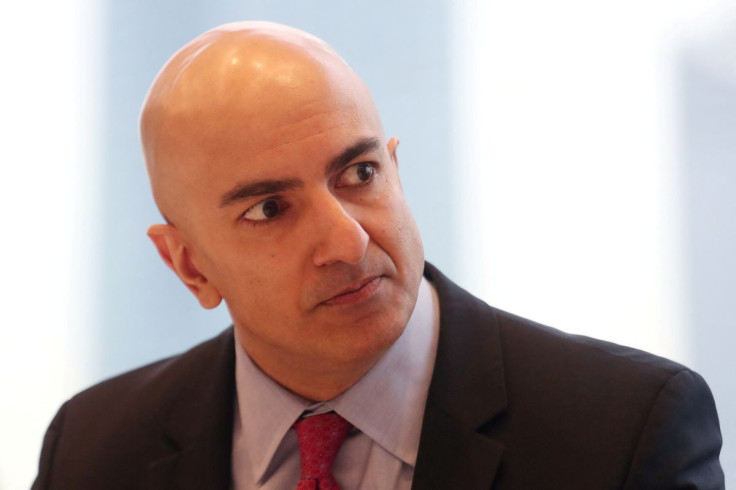
Minneapolis Federal Reserve President Neel Kashkari backed his decision to vote in favor of hiking interest rates in last week's meeting, saying now is "the time to start slowly moving up as we get more data in."
Speaking with CNBC, Kashkari said the most recent information shows the current monetary policy is not "particularly restrictive."
"Corporate earnings are through the roof. They're doing great. The consumer is hanging in there. The labor market is hanging in there. I look at this constellation and I say, what evidence do I have that monetary policy is particularly restrictive right now?" he said.
"So, I argued now is the time to start slowly moving up as we get more data in," he added, later clarifying that he is not "calling for a dramatic increase" as he needs to assess what he described as a series of supply shocks putting pressure on consumers.
"I'm simply saying I don't see evidence of monetary policy [being] marginally restrictive right now, and I think we have more work to do to get inflation back down. And I would rather get going now in small steps than wait till later, then we have a really entrenched inflation problem and have to raise rates aggressively," Kashkari said.
He was one of three officials who voted favor an interest rate hike. Cleveland Fed's Beth Hammack and Dallas' Lorie Logan voted the same way.
Hammack said that in her view, the Fed needs to "act to speed the return of PCE inflation to our 2 percent objective and deliver on our commitment to price stability for the American people."
"The longer that high inflation persists, the more challenging and costly it can be to bring it back down," she added. Elsewhere, she noted that "supply-side factors, including energy prices, have boosted inflation this year, but I see inflationary pressures coming from the demand side of the economy, as well."
Others, in contrast, said they believe current rates are enough. One of them is Philadelphia Fed President Anna Paulson, who told CNBC that while she could reassess her position if circumstances change, the current policy "has been mildly restrictive to get underlying inflation back down to 2% in an acceptable time period."
The remarks follow those of John Williams, the chair of New York's Federal Reserve, who also said he expects inflation to ease gradually at current rates.
Speaking to Reuters last week, Williams said that, if energy prices and tariffs have reached a peak, then "some of the big drivers that pushed up inflation" won't "be at play as much," allowing for "some of the disinflationary forces that we've been seeing" to continue acting.
© Copyright IBTimes 2026. All rights reserved.
- Recommended For You