A Prolonged Hormuz Closure Could Send Crude to $140 As U.S.-Iran Deal Remains Elusive
The longer the stalemate lasts, the more traders may have to increase the probability that the waterway will continue being disrupted.


Oil prices are edging higher as hopes for a swift reopening of the Strait of Hormuz fade, raising the risk that a prolonged disruption to one of the world's most important energy routes could send crude sharply higher.
Prices remain far below the surge above $100 a barrel last month and the peak of more than $110 reached in May, but analysts told CNBC the relative calm may become increasingly difficult to sustain.
Brent futures fell more than 7% last week after signals from Washington suggested an agreement with Tehran to reopen the Strait of Hormuz could be close. No deal has emerged, however, and the prospects for a breakthrough appeared to deteriorate over the weekend and throughout the week.
Iran is insisting that Washington meet several conditions before the strait can reopen. President Donald Trump, meanwhile, indicated that the U.S. may be shifting away from the threat of immediate new military strikes and toward economic pressure. Trump told Axios on Sunday that Washington was "low-keying it" as the standoff continues.
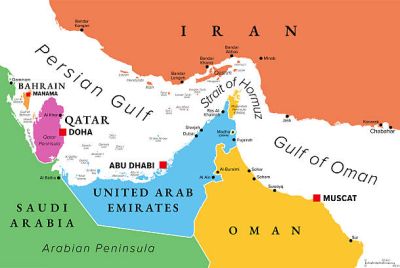
The Strait of Hormuz is one of the world's most critical maritime chokepoints for energy shipments, meaning a prolonged closure could eventually create much greater pressure on global supplies.
For now, markets have taken some comfort from negotiations between Iran and Oman over a possible temporary shipping route, as well as expectations that a new round of direct military escalation between Washington and Tehran could be avoided.
Traders remain "confident that we can get to some sort of agreement, even if it may be a fudge," Jefferies economist Modupe Adegbembo told CNBC's "Squawk Box Europe." "It may not be a great agreement, but it may be something that allows more oil and more things to flow through the Strait of Hormuz," she said.
But Adegbembo warned that the market's patience has limits. If the situation remains unresolved through the end of this week or into next week, she said, oil prices may no longer react in such a "benign way."
Kieran Tompkins, senior climate and commodities economist at Capital Economics, said current prices appear to reflect two competing possibilities: a relatively quick return of energy flows through the Strait of Hormuz or a much longer closure.
The longer the stalemate lasts, the more traders may have to increase the probability assigned to the second scenario. Tompkins said front-month oil futures would likely rise if the market begins focusing again on a potential "tipping point," when inventories can no longer absorb lost supply and higher prices are needed to force demand lower.
If the strait stays closed and oil inventories across OECD countries continue falling rapidly, Tompkins said that tipping point could arrive around the beginning of the fourth quarter. Under that scenario, crude could potentially reach between $120 and $140 a barrel, based on historical precedents.
Several factors have helped cushion the market so far, including alternative export routes that bypass Hormuz, weaker demand, increased production elsewhere and a temporary decline in Chinese oil imports.
But some of those buffers may be weakening. Amrita Sen, founder and director of research at Energy Aspects, told CNBC that China "singlehandedly balanced the market in May with its cut-back in [oil] imports."
Chinese crude imports recovered in July and are expected to increase further in August, potentially adding another source of upward pressure. "Crude can't stay down forever," Sen said.
Continued Houthi attacks on infrastructure in Saudi Arabia are adding another layer of uncertainty, particularly because the kingdom remains an important source of stability for global energy markets. "The crude set-up is more bullish on a fundamental basis," Sen concluded.
© Copyright IBTimes 2026. All rights reserved.
- Recommended For You