

South Carolina Tattoo Rules Face First Amendment Lawsuit Over Face And Neck Ink Ban
Federal lawsuit contests South Carolina's tattoo bans above the shoulders and near churches, citing First Amendment rights.
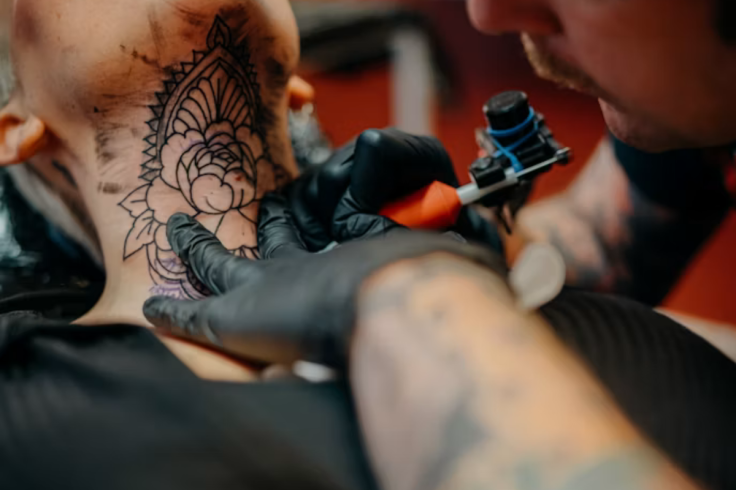
Getting a tattoo above the shoulders is a crime in South Carolina, and a new federal lawsuit argues the state is unconstitutionally restricting artistic expression through its tattoo laws.
A New York tattoo company and a Greenville couple filed suit in federal court on Friday challenging two of the state's restrictions: a criminal ban on tattooing anyone's head, face or neck, and a rule barring tattoo studios within 1,000 feet of any church, school or playground.
The plaintiffs, represented by the Pacific Legal Foundation, argue that tattooing is protected expression under the First Amendment and that South Carolina cannot use zoning maps and criminal law to decide which art deserves protection. The state, which banned tattooing entirely until 2004, has yet to respond.
A Complaint Filed In Federal Court Against The State's Top Health And Law Officers
The complaint, filed on 17 July in the US District Court for the District of South Carolina, names public health director Dr Brannon Traxler and Attorney General Alan Wilson as defendants. It asks the court to declare both restrictions violations of the First and Fourteenth Amendments and to bar the state from enforcing them.
The lead plaintiff is Tiny Zaps, a New York-based company specialising in small, artist-designed tattoos sold through online bookings and pop-up events. According to the Pacific Legal Foundation's case page, a boutique hotel in the heart of Charleston has expressed interest in hosting the company as an onsite pop-up, a partnership the company says has been stalled by the state's restrictions.
BREAKING: South Carolina bans tattoo studios within 1,000 feet of any church, school, or playground — a rule so broad it wipes out most of the state. And the state criminalized tattooing anyone’s head, face, or neck. We're challenging these on First Amendment grounds. pic.twitter.com/eWIyB8EVKn
— Pacific Legal 🗡⚖️ (@PacificLegal) July 17, 2026
Joining the company are Josh and Stephanie McDonald of Greenville, an electrician and a fitness instructor raising two young daughters, who say they value tattoos as self-expression and want additional ink above their shoulders, which no licensed artist in the state may legally give them.
A Criminal Ban Above The Shoulders And A Buffer Around 7,000 Churches
The first target is Section 44-34-100 of the state code, which declares it 'unlawful for a tattoo artist to tattoo any part of the head, face, or neck of another person'. Violations are misdemeanours punishable by a fine of up to £1,870 ($2,500), up to a year in prison, or both.
The second is the proximity rule, which forbids licensing any tattoo facility within 1,000 feet of a church, school, or playground. In a state with more than 7,000 churches, the plaintiff argues, the buffer leaves few viable locations anywhere, functioning less as a zoning measure than as a de facto exclusion of an entire art form from ordinary commercial life.
The complaint contends that neither rule makes tattooing safer, since South Carolina already regulates the trade through licensing, sanitation, training, and inspection requirements. Instead, the plaintiffs argue, the restrictions codify 'outdated stigma or moral discomfort', treating tattooing as second-class expression, something the First Amendment forbids regardless of the medium.
'Tiny Zaps and its customers deserve the freedom to create and receive lawful art without unconstitutional barriers,' senior attorney Caleb Trotter said.
A State That Outlawed Tattooing Entirely Until 2004
South Carolina's wariness of ink runs deep. The state prohibited tattooing altogether for decades, and its own Supreme Court upheld the total ban against a First Amendment challenge before the legislature finally legalised the trade in 2004, making South Carolina one of the last states in the nation to do so. The head, face, and neck prohibition and the church buffer were written into that legislation as conditions of it.
The complaint argues that the restrictions reflected the politics of the time rather than evidence about public safety. It says lawmakers attached the buffer zone and the head, face, and neck ban in response to moral objections surrounding tattooing, and that those restrictions continue to reflect outdated attitudes toward the art form.
Twenty-two years on, the plaintiffs argue, the state is still enforcing the discomfort of a previous generation.
Lawmakers have had chances to remove both rules but have declined. Bills introduced in the 2023 and 2025 legislative sessions would have deleted the above-the-shoulders ban and allowed a studio to open near a church or school with that institution's consent, but neither became law, leaving the two-decade-old restrictions intact until Friday's courtroom challenge.
The legal terrain has shifted since the state's high court last weighed in. Federal appeals courts, led by the Ninth Circuit, have recognised tattooing itself, not merely the finished image, as protected expression, reasoning that the act of creating art cannot be separated from the art. The complaint leans on that line of authority to argue that South Carolina's rules cannot survive any level of First Amendment scrutiny.
What A Victory Would Mean Beyond South Carolina
The case arrives as facial and neck tattoos migrate from the margins to the mainstream of American culture, worn by athletes, musicians, and a growing share of young professionals. South Carolina's ban means residents who want them must cross state lines, while artists who provide them at home risk a criminal record.
The foundation bringing the case has formed in this territory. Pacific Legal Foundation, the public-interest firm representing the plaintiffs at no cost, has previously fought a California city's exclusion of tattoo studios from its downtown and challenged restrictions on commercial speech from drone photography to happy hour advertising, treating occupational speech cases as a core part of its docket.
A ruling for the plaintiffs could affirm that governments cannot burden an expressive trade through zoning rules designed to exclude it, while a ruling for the state would preserve one of the country's strictest remaining tattoo regimes.
Two decades after South Carolina legalised tattooing, a federal court will now decide whether the state can continue dictating where tattoo artists may operate and where on the body they may legally work.
Originally published on IBTimes UK
This article is copyrighted by IBTimes.co.uk, the business news leader